Kadamba Transport Launches Eco-Friendly Electric Buses in Panaji
ROADS & HIGHWAYS

Kadamba Transport Launches Eco-Friendly Electric Buses in Panaji

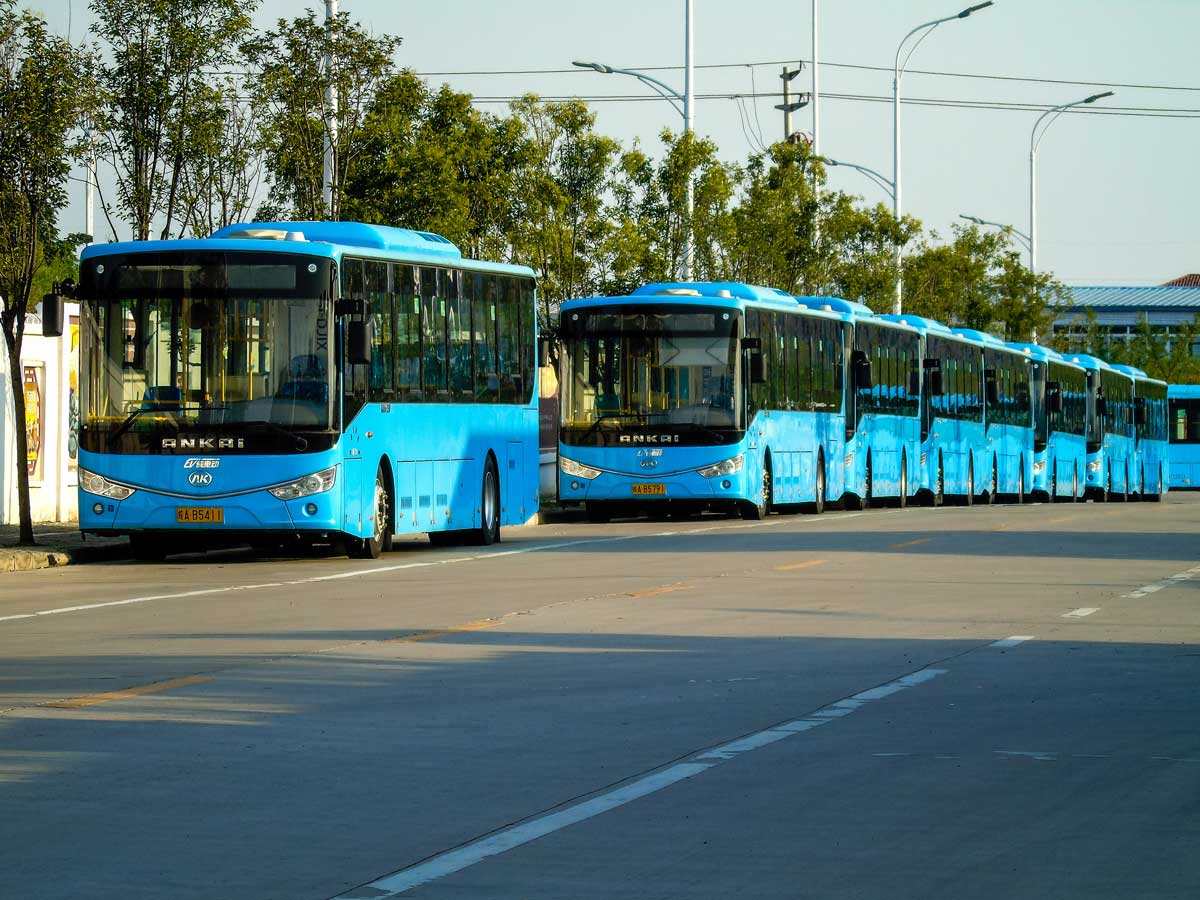
The Kadamba Transport Corporation (KTC) has taken a significant step towards sustainable transportation by introducing two 26-seater electric vehicles (EVs) in Panaji. This marks the beginning of a larger fleet that aims to revamp public commuting within the state capital.

Powered by a charging station located at the Porvorim depot, these eco-friendly buses will operate along the outer loops of Panaji, including a designated stop at the Goa University campus.

"The growing demand for these EVs is evident from requests we've received from schools and the new directorate of accounts building staff," remarked KTC Chairman Ulhas Tuenkar during the flag-off ceremony held at the Panaji bus terminus.

With a total of 48 electric vehicles planned, the fleet will cover seven loops connecting Panaji and its surrounding areas. The initial phase will involve the deployment of two EVs in the outer loop, starting from Goa University Road immediately after Diwali.

Despite this positive development, KTC faces ongoing challenges, particularly in addressing the shortage of buses, especially for school services.

"We urgently need 200 new buses, with a substantial portion dedicated to school transportation. Our goal is to gradually phase out private buses. Currently, 66 buses have joined our fleet, and we anticipate more to follow," stated Tuenkar.

In line with this objective, KTC has initiated the decommissioning of 52 non-operational buses stationed at the Porvorim depot, completing the tender process for their scrappage.

The Kadamba Transport Corporation (KTC) has taken a significant step towards sustainable transportation by introducing two 26-seater electric vehicles (EVs) in Panaji. This marks the beginning of a larger fleet that aims to revamp public commuting within the state capital. Powered by a charging station located at the Porvorim depot, these eco-friendly buses will operate along the outer loops of Panaji, including a designated stop at the Goa University campus. The growing demand for these EVs is evident from requests we've received from schools and the new directorate of accounts building staff, remarked KTC Chairman Ulhas Tuenkar during the flag-off ceremony held at the Panaji bus terminus. With a total of 48 electric vehicles planned, the fleet will cover seven loops connecting Panaji and its surrounding areas. The initial phase will involve the deployment of two EVs in the outer loop, starting from Goa University Road immediately after Diwali. Despite this positive development, KTC faces ongoing challenges, particularly in addressing the shortage of buses, especially for school services. We urgently need 200 new buses, with a substantial portion dedicated to school transportation. Our goal is to gradually phase out private buses. Currently, 66 buses have joined our fleet, and we anticipate more to follow, stated Tuenkar. In line with this objective, KTC has initiated the decommissioning of 52 non-operational buses stationed at the Porvorim depot, completing the tender process for their scrappage.

Next Story
Infrastructure Urban

TBO Tek Q2 Profit Climbs 12%, Revenue Surges 26% YoY

TBO Tek Limited one of the world’s largest travel distribution platforms, reported a solid performance for Q2 FY26 with a 26 per cent year-on-year increase in revenue to Rs 5.68 billion, reflecting broad-based growth and improving profitability.The company recorded a Gross Transaction Value (GTV) of Rs 8,901 crore, up 12 per cent YoY, driven by strong performance across Europe, MEA, and APAC regions. Adjusted EBITDA before acquisition-related costs stood at Rs 1.04 billion, up 16 per cent YoY, translating into an 18.32 per cent margin compared to 16.56 per cent in Q1 FY26. Profit after tax r..

Next Story
Infrastructure Energy

Northern Graphite, Rain Carbon Secure R&D Grant for Greener Battery Materials

Northern Graphite Corporation and Rain Carbon Canada Inc, a subsidiary of Rain Carbon Inc, have jointly received up to C$860,000 (€530,000) in funding under the Canada–Germany Collaborative Industrial Research and Development Programme to develop sustainable battery anode materials.The two-year, C$2.2 million project aims to transform natural graphite processing by-products into high-performance, battery-grade anode material (BAM). Supported by the National Research Council of Canada Industrial Research Assistance Programme (NRC IRAP) and Germany’s Federal Ministry for Economic Affairs a..

Next Story
Infrastructure Urban

Antony Waste Q2 Revenue Jumps 16%; Subsidiary Wins Rs 3,200 Cr WtE Projects

Antony Waste Handling Cell Limited (AWHCL), a leading player in India’s municipal solid waste management sector, announced a 16 per cent year-on-year increase in total operating revenue to Rs 2.33 billion for Q2 FY26. The growth was driven by higher waste volumes, escalated contracts, and strong operational execution.EBITDA rose 18 per cent to Rs 570 million, with margins steady at 21.6 per cent, while profit after tax stood at Rs 173 million, up 13 per cent YoY. Revenue from Municipal Solid Waste Collection and Transportation (MSW C&T) reached Rs 1.605 billion, and MSW Processing re..

Advertisement

Subscribe to Our Newsletter

Get daily newsletters around different themes from Construction world.

STAY CONNECTED

Advertisement

Advertisement

Advertisement

Get CW App