Kalindi Kunj to Get Rs 5 Billion Flyover, Interchange
ROADS & HIGHWAYS

Kalindi Kunj to Get Rs 5 Billion Flyover, Interchange

To tackle persistent congestion at the Kalindi Kunj intersection, the National Highways Authority of India (NHAI) plans to build an interchange facility and flyover aimed at easing traffic between Delhi, Noida, and Faridabad.

A 500-metre-long interchange, estimated to cost Rs 5 billion, is part of a long-term solution proposed to eliminate traffic conflicts at the Kalindi Kunj bridge, which links the Delhi-Noida Road and Agra Canal Road near Okhla Barrage.

The NHAI has invited bids from consultants to prepare a detailed project report (DPR), with submissions due by 23 June. This follows a feasibility study conducted in 2022 by the Uttar Pradesh Public Works Department, which recommended constructing flyovers and interchanges to improve traffic flow.

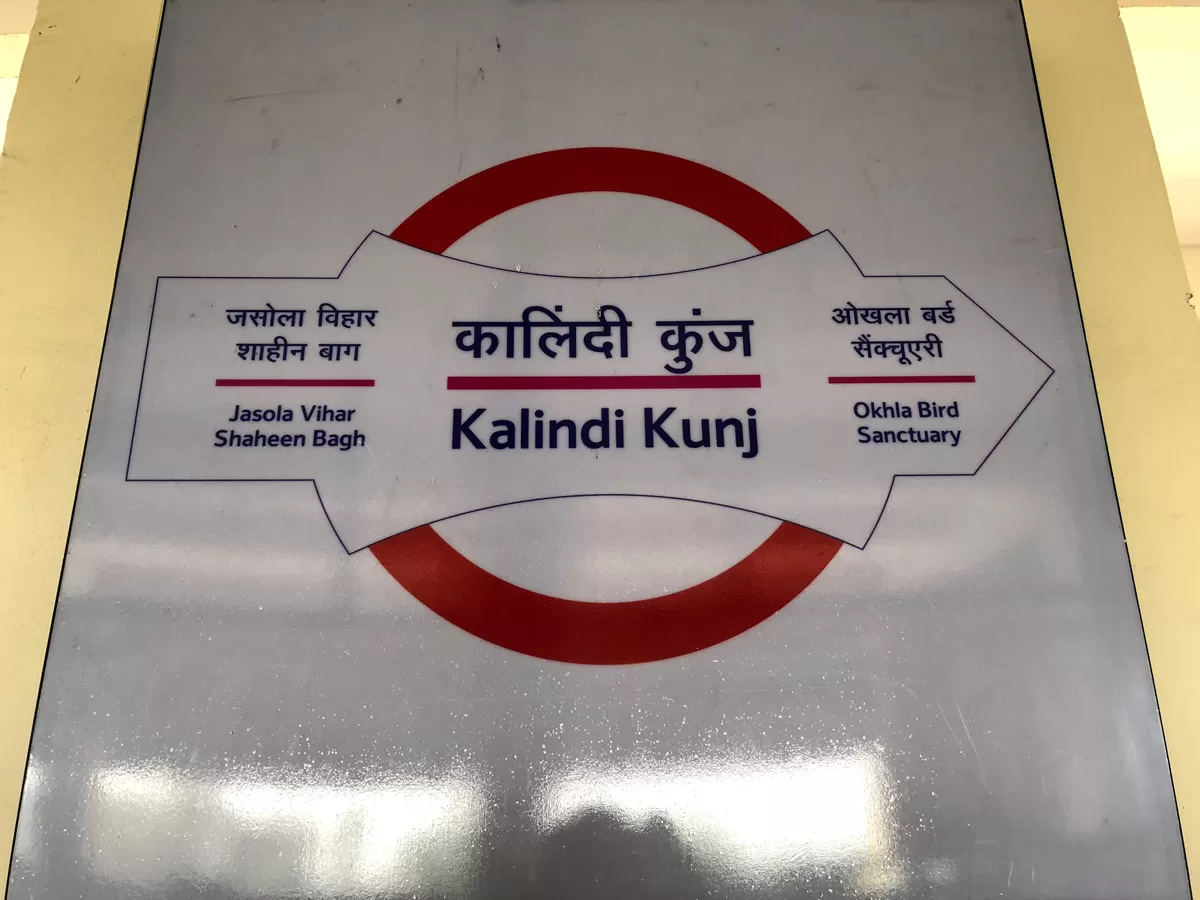
The Central Road Research Institute (CRRI), which analysed traffic patterns using data from the Kalindi Kunj metro station and key arterial roads, highlighted that traffic from South Delhi, Noida, and Faridabad converges at this junction, creating severe delays during rush hours.

The issue was recently discussed in a meeting between Union Road Transport Minister Nitin Gadkari and Delhi Chief Minister Rekha Gupta, where it was agreed that NHAI would take forward the DPR based on CRRI’s findings.

According to CRRI’s Chief Scientist Dr. S Velmurugan, an interchange or grade separator—similar to the Modi Mill flyover—could significantly reduce congestion.

Traffic pressure has intensified since the opening of the 24-km Delhi–Mumbai Expressway segment along the Agra Canal last November, which has led many commuters from Sarita Vihar, Okhla, and Faridabad to reroute via Kalindi Kunj to avoid Mathura Road jams.

The flyover and interchange project aims to provide a seamless traffic corridor and restore efficiency to one of the National Capital Region’s most bottlenecked junctions.

To tackle persistent congestion at the Kalindi Kunj intersection, the National Highways Authority of India (NHAI) plans to build an interchange facility and flyover aimed at easing traffic between Delhi, Noida, and Faridabad.A 500-metre-long interchange, estimated to cost Rs 5 billion, is part of a long-term solution proposed to eliminate traffic conflicts at the Kalindi Kunj bridge, which links the Delhi-Noida Road and Agra Canal Road near Okhla Barrage.The NHAI has invited bids from consultants to prepare a detailed project report (DPR), with submissions due by 23 June. This follows a feasibility study conducted in 2022 by the Uttar Pradesh Public Works Department, which recommended constructing flyovers and interchanges to improve traffic flow.The Central Road Research Institute (CRRI), which analysed traffic patterns using data from the Kalindi Kunj metro station and key arterial roads, highlighted that traffic from South Delhi, Noida, and Faridabad converges at this junction, creating severe delays during rush hours.The issue was recently discussed in a meeting between Union Road Transport Minister Nitin Gadkari and Delhi Chief Minister Rekha Gupta, where it was agreed that NHAI would take forward the DPR based on CRRI’s findings.According to CRRI’s Chief Scientist Dr. S Velmurugan, an interchange or grade separator—similar to the Modi Mill flyover—could significantly reduce congestion.Traffic pressure has intensified since the opening of the 24-km Delhi–Mumbai Expressway segment along the Agra Canal last November, which has led many commuters from Sarita Vihar, Okhla, and Faridabad to reroute via Kalindi Kunj to avoid Mathura Road jams.The flyover and interchange project aims to provide a seamless traffic corridor and restore efficiency to one of the National Capital Region’s most bottlenecked junctions.

Next Story
Infrastructure Transport

MMRDA advances 250 m on Orange Gate–Marine Drive tunnel

The Mumbai Metropolitan Region Development Authority (MMRDA) has completed 250 m of underground tunnelling for the Orange Gate–Marine Drive Urban Road Tunnel using India’s largest slurry shield tunnel boring machine (TBM) deployed for an urban road project.The project involves twin tunnels extending over 7 km beneath critical transport corridors, including Central Railway, Western Railway and Metro Line 3. The work requires high-precision engineering to navigate densely developed urban infrastructure.Once completed, the tunnel is expected to reduce travel time between Orange Gate and Marin..

Next Story
Infrastructure Urban

Hindustan Zinc Pays Rs 188.46 Billion in FY26

Hindustan Zinc contributed Rs 188.46 billion to the public exchequer in FY 2025-26, according to its 9th Tax Transparency Report. The contribution, equivalent to 46 per cent of the company’s revenue, included direct and indirect taxes, government royalties, dividends to the Government of India, withholding taxes and other statutory levies.The company’s five-year cumulative contribution to the exchequer stood at Rs 915.72 billion. In FY26, Hindustan Zinc reported revenue of Rs 408.44 billion, EBITDA of Rs 221.62 billion and profit after tax of Rs 138.32 billion. It also achieved its highest..

Next Story
Infrastructure Urban

World of Concrete India 2026 Opens in Mumbai

Informa Markets in India will host the 12th edition of World of Concrete India 2026 from 3–5 June 2026 at the Bombay Exhibition Centre, Mumbai. The specialised B2B exhibition will bring together manufacturers, suppliers, contractors, developers, architects, consultants, infrastructure companies, project leaders and government stakeholders.The event is expected to feature over 350 brands and more than 18,000 trade professionals. It will cover concrete and cement, dry mortar, precast technologies, formwork, construction chemicals, industrial and commercial flooring, scaffolding, safety solutio..

Advertisement

Subscribe to Our Newsletter

Get daily newsletters around different themes from Construction world.

STAY CONNECTED

Advertisement

Advertisement

Advertisement

-->