+
Karnataka HC directs NHAI to inspect quality of pothole filling work
ROADS & HIGHWAYS

Karnataka HC directs NHAI to inspect quality of pothole filling work

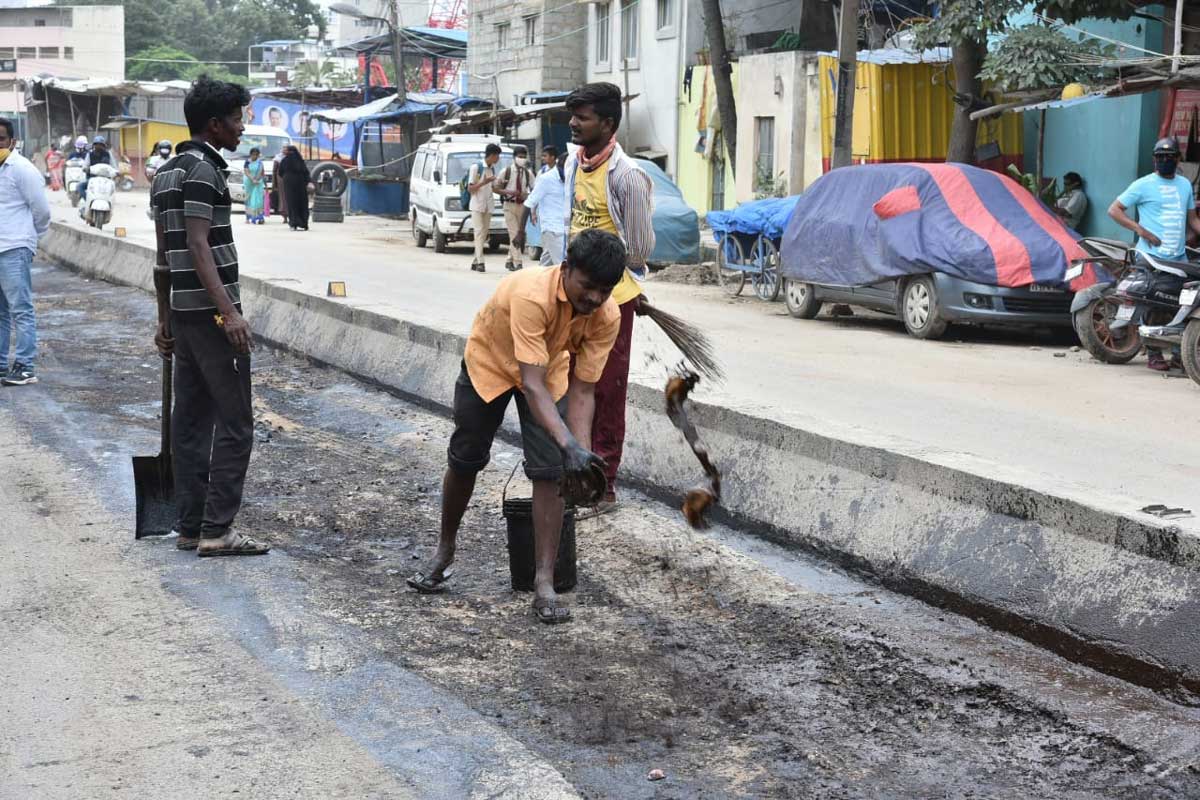
The Bruhat Bengaluru Mahanagara Palike (BBMP) and its contractors were ordered by the Karnataka High Court to perform an inspection on the quality of the pothole filling or repair work they were doing. They were also ordered to provide a thorough report within four weeks.

The decision was made by the bench, which was hearing a Public Interest Litigation (PIL) citing Bengaluru's poor road conditions and included Chief Justice P B Varale and Justice Ashok S Kinagi.

The city's civic body, BBMP, reported to the HC regarding the progress of the completed pothole-filling work.

It was claimed that 13,843 of the 25,032 potholes that were found had been repaired. There were 6,689 potholes that will be filled in approximately four weeks, and many more that were in various states of repair.

The HC observed that despite the PIL being in existence for six years, several decisions from the HC issued over the years, and numerous reports and affidavits provided by the BBMP, "the road conditions in Bengaluru city is not very positively changed and the unfortunate sufferers are the citizens of the city." The court, which also pointed to deaths due to potholes, said, "This court has observed in various orders that the condition of roads and particularly potholes led to unfortunate loss of precious human lives." It also noted during the hearing that BBMP seemed to be engaged in cosmetic surgery of roads in the city.

The court was informed that civic body officials themselves file a satisfaction certificate after the private contractors complete the work in response to a query on the calibre of the repair work carried out by the contractors to whom the BBMP has delegated the assignment.

However, the HC is not pleased with this procedure, stated: "There is no independent third party assessment of the work undertaken by private contractors assigned by BBMP." A senior engineer was then assigned to conduct the survey and write a report, or the NHAI head engineer was instructed to personally examine the work.

The NHAI official will inspect the pothole repair work to see if it adheres to the contract and is done well. After that, it will express an unbiased judgement of the pothole-filling efforts and offer recommendations. The report will also state whether the contractors and the BBMP have failed in their obligations.

The work already underway will not be halted by the NHAI survey, the court ruled, and BBMP may proceed.

In order to address specific concerns it has made regarding the pothole filling activity, the HC had specifically instructed the BBMP to submit a report.

The court has a few issues, including why the BBMP did not begin the process of hiring a replacement agency even after the initial contract ended in January 2022 and why it did not renew the contract of the firm that was patching potholes with sophisticated gear.

The BBMP provided a report on the various components of the pothole filling measures on Wednesday. One of these, according to the civic organisation, is the introduction of a smartphone app for users that uses GPS coordinates to find potholes. The BBMP and traffic police tested the programme, which was created by a private company, in May of this year, the court was informed.

See also:
Mumbai roads will be devoid of potholes in two years, says BMC
Gurugram civic body to fill potholes on all roads by November 15


The Bruhat Bengaluru Mahanagara Palike (BBMP) and its contractors were ordered by the Karnataka High Court to perform an inspection on the quality of the pothole filling or repair work they were doing. They were also ordered to provide a thorough report within four weeks. The decision was made by the bench, which was hearing a Public Interest Litigation (PIL) citing Bengaluru's poor road conditions and included Chief Justice P B Varale and Justice Ashok S Kinagi. The city's civic body, BBMP, reported to the HC regarding the progress of the completed pothole-filling work. It was claimed that 13,843 of the 25,032 potholes that were found had been repaired. There were 6,689 potholes that will be filled in approximately four weeks, and many more that were in various states of repair. The HC observed that despite the PIL being in existence for six years, several decisions from the HC issued over the years, and numerous reports and affidavits provided by the BBMP, the road conditions in Bengaluru city is not very positively changed and the unfortunate sufferers are the citizens of the city. The court, which also pointed to deaths due to potholes, said, This court has observed in various orders that the condition of roads and particularly potholes led to unfortunate loss of precious human lives. It also noted during the hearing that BBMP seemed to be engaged in cosmetic surgery of roads in the city. The court was informed that civic body officials themselves file a satisfaction certificate after the private contractors complete the work in response to a query on the calibre of the repair work carried out by the contractors to whom the BBMP has delegated the assignment. However, the HC is not pleased with this procedure, stated: There is no independent third party assessment of the work undertaken by private contractors assigned by BBMP. A senior engineer was then assigned to conduct the survey and write a report, or the NHAI head engineer was instructed to personally examine the work. The NHAI official will inspect the pothole repair work to see if it adheres to the contract and is done well. After that, it will express an unbiased judgement of the pothole-filling efforts and offer recommendations. The report will also state whether the contractors and the BBMP have failed in their obligations. The work already underway will not be halted by the NHAI survey, the court ruled, and BBMP may proceed. In order to address specific concerns it has made regarding the pothole filling activity, the HC had specifically instructed the BBMP to submit a report. The court has a few issues, including why the BBMP did not begin the process of hiring a replacement agency even after the initial contract ended in January 2022 and why it did not renew the contract of the firm that was patching potholes with sophisticated gear. The BBMP provided a report on the various components of the pothole filling measures on Wednesday. One of these, according to the civic organisation, is the introduction of a smartphone app for users that uses GPS coordinates to find potholes. The BBMP and traffic police tested the programme, which was created by a private company, in May of this year, the court was informed. See also: Mumbai roads will be devoid of potholes in two years, says BMC Gurugram civic body to fill potholes on all roads by November 15

Related Stories

Gold Stories

Next Story
Infrastructure Urban

We must become equally good at making cities liveable

India’s cities are growing rapidly but the focus must now shift from building more to creating better places to live. Suresh Babu, Organising Secretary, National Convention of Architectural Engineers, discusses the need for integrated, inclusive and people-centric urban development, and the role of technology and architectural engineering in shaping future cities.What is the central idea behind the convention?India aspires to become a developed nation by 2047 and cities will be central to that transformation. But development cannot be measured only by taller buildings, wider roads or larger ..

Next Story
Infrastructure Urban

Insurance is not a cost; it is protection for the balance sheet

As infrastructure projects grow larger and more complex, their risk profiles are evolving beyond physical damage. Underinsurance, business interruption, supply-chain disruptions, climate volatility, surety and transactional exposures can all have significant financial consequences. Mohan Agrawal, Director and Business Lead - Construction, Infra & Warehousing, EDME Insurance Brokers, discusses these emerging risks and the gaps in conventional insurance practices in a conversation with KAVITA PARAB, CW. He explains why infrastructure players need to view insurance not merely as a cost, but a..

Next Story
Equipment

Optimising Earthmoving

Constituting India’s biggest fleet of construction equipment by type, earthmovers positively impact project outcomes and company bottomlines if best practices are adopted. Here’s a guide from CW.Select the right machineOne of the biggest challenges in using earthmovers isn’t machine failure but using the wrong machine configuration for the application, according to Chaitanya Bhagde, P&M Head, SHC Projects. “Unless equipment is deployed after considering the soil type, excavation depth, haul distance and production target, the application will face low productivity, longer time depl..

Advertisement

Subscribe to Our Newsletter

Get daily newsletters around different themes from Construction world.

STAY CONNECTED

Advertisement

SPECIAL OFFER
QR Code