+
Minister Admits Causeway Issues In Palasa Plans High-Level Bridges
ROADS & HIGHWAYS

Minister Admits Causeway Issues In Palasa Plans High-Level Bridges

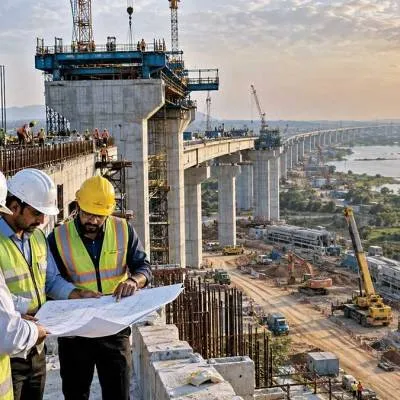
The state minister acknowledged persistent damage to low-lying causeways in Palasa and said the government will construct high-level bridges to prevent frequent disruptions. He accepted that existing causeways were vulnerable during seasonal rains and had affected movement of people and goods. The minister indicated that the decision followed reports from local officials and technical teams who documented recurring inundation and structural concerns. Authorities presented the new approach as necessary to secure all-weather road links and reduce risk to commuters.

Engineering assessments have been carried out to identify sites where elevated bridges will replace existing crossings and are expected to guide detailed designs. The minister described coordinated work with the district administration and state public works departments to carry out surveys, soil tests and hydrological studies. Plans will also consider environmental clearances and alignment options that minimise impact on nearby settlements and farmlands. Officials intend to prioritise locations with greatest disruption while preparing procurement schedules.

The proposed bridges are expected to improve resilience of the transport network and to reduce the frequency of emergency responses during floods. Stakeholders said better connectivity could support local markets by easing movement of agricultural produce and by securing access to schools and healthcare facilities. Temporary measures, including maintenance of alternative routes and deployment of warning systems, will be used while construction is advanced. The administration plans to communicate schedules and traffic arrangements to communities to limit inconvenience.

Officials noted that final designs, tendering and construction timelines will depend on technical clearances and budgetary approvals but described the initiative as a priority for the region. Local representatives will be engaged during planning to address specific concerns and to ensure that access is maintained for farming operations and emergency services. Progress reports will be issued periodically and the public will be informed of milestones and any changes to schedules. The minister reiterated that improving permanent infrastructure in Palasa is central to long term safety and connectivity goals.

The state minister acknowledged persistent damage to low-lying causeways in Palasa and said the government will construct high-level bridges to prevent frequent disruptions. He accepted that existing causeways were vulnerable during seasonal rains and had affected movement of people and goods. The minister indicated that the decision followed reports from local officials and technical teams who documented recurring inundation and structural concerns. Authorities presented the new approach as necessary to secure all-weather road links and reduce risk to commuters. Engineering assessments have been carried out to identify sites where elevated bridges will replace existing crossings and are expected to guide detailed designs. The minister described coordinated work with the district administration and state public works departments to carry out surveys, soil tests and hydrological studies. Plans will also consider environmental clearances and alignment options that minimise impact on nearby settlements and farmlands. Officials intend to prioritise locations with greatest disruption while preparing procurement schedules. The proposed bridges are expected to improve resilience of the transport network and to reduce the frequency of emergency responses during floods. Stakeholders said better connectivity could support local markets by easing movement of agricultural produce and by securing access to schools and healthcare facilities. Temporary measures, including maintenance of alternative routes and deployment of warning systems, will be used while construction is advanced. The administration plans to communicate schedules and traffic arrangements to communities to limit inconvenience. Officials noted that final designs, tendering and construction timelines will depend on technical clearances and budgetary approvals but described the initiative as a priority for the region. Local representatives will be engaged during planning to address specific concerns and to ensure that access is maintained for farming operations and emergency services. Progress reports will be issued periodically and the public will be informed of milestones and any changes to schedules. The minister reiterated that improving permanent infrastructure in Palasa is central to long term safety and connectivity goals.

Next Story
Infrastructure Urban

Implementation Status of Jal Jeevan Mission

Since August 2019 the Government has implemented Jal Jeevan Mission to provide assured potable water through household tap connections in rural India. At the start of the mission only 32.3 million (mn) rural households, representing 16.7 per cent, were reported to have tap water connections. States and union territories have reported that 125.8 mn additional rural households have since been provided with tap connections. As a result, of about 193.6 mn rural households roughly 158.2 mn, or 81.71 per cent, are reported to have tap water supply at home.\n\nThe State, district and village level st..

Next Story
Infrastructure Urban

Jal Jeevan Mission Reaches Eighty One Per Cent Rural Coverage

The Government reported substantial progress under the Jal Jeevan Mission, launched in August 2019 to provide tap water to every rural household. At launch only 32.3 million (mn) rural households had tap connections and states and Union territories reported provision of 125.8 mn additional households by March 2026. Consequently, out of about 193.6 mn rural households around 158.2 mn, or 81.71 per cent, are reported to have tap water at home. The Finance Minister announced extension of the mission until 2028 in the 2025-26 budget speech. The Swachh Bharat Mission Grameen, launched in October 20..

Next Story
Infrastructure Urban

Empowering Local Governance for Sustainable Rural Water Supply

The Ministry of Jal Shakti has aligned the Jal Jeevan Mission (JJM) with the 73rd Amendment to strengthen village level planning and community ownership of water supply. Gram Panchayats, village water and sanitation committees and Pani Samitis are to plan, implement, manage and maintain piped water systems, with gram sabha processes formalising handover and oversight. Implementation support agencies including non government organisations, community based organisations and self help groups have been empanelled to train local committees and promote women participation. Under JJM, the department ..

Advertisement

Subscribe to Our Newsletter

Get daily newsletters around different themes from Construction world.

STAY CONNECTED

Advertisement

Advertisement

Advertisement