Mobility groups demands government to allocate Rs. 29.5 bn to BMTC
ROADS & HIGHWAYS

Mobility groups demands government to allocate Rs. 29.5 bn to BMTC

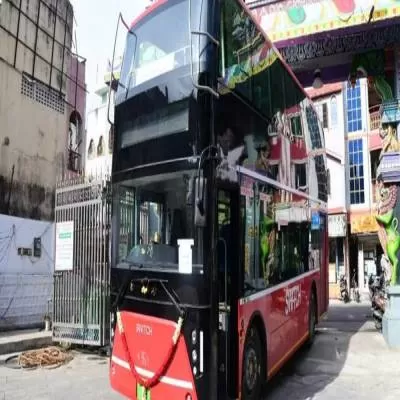
The Bengaluru Bus Prayanikara Vedike (BBPV) has requested chief minister Basavaraj Bommai to increase funding for public transportation in this year's budget, arguing that more buses equal more income. They are hoping that this additional funding will assist them in meeting their demands, which include offering free rides to underserved communities, lifting the hiring moratorium to allow for the hiring of more drivers and conductors, putting the 900 unused Bangalore Metropolitan Transport Corporation (BMTC) buses on city streets, expanding the fleet from 6,500 to 15,000 buses, and designing infrastructure to support public transportation rather than private automobiles.

Since February 1, BBPV has organised an offline and online campaign and has gotten support from about a thousand people. The mobility group wants the government to give the city's bus company roughly Rs 29.5 billion. Shaheen Shasa, a BBPV member, said: “There are free travel programmes for women using public transportation in Tamil Nadu, Punjab, and Delhi. According to a study by the Tamil Nadu Planning Board, this programme allowed women to save between Rs 756 and Rs 1,012 per month, enabling them to secure higher disposable incomes, higher employment rates, decreased reliance on family members for transportation, and new learning and networking opportunities. For other vulnerable groups like the elderly and the transgender community, similar access allowing is crucial.

The Bengaluru Bus Prayanikara Vedike (BBPV) has requested chief minister Basavaraj Bommai to increase funding for public transportation in this year's budget, arguing that more buses equal more income. They are hoping that this additional funding will assist them in meeting their demands, which include offering free rides to underserved communities, lifting the hiring moratorium to allow for the hiring of more drivers and conductors, putting the 900 unused Bangalore Metropolitan Transport Corporation (BMTC) buses on city streets, expanding the fleet from 6,500 to 15,000 buses, and designing infrastructure to support public transportation rather than private automobiles. Since February 1, BBPV has organised an offline and online campaign and has gotten support from about a thousand people. The mobility group wants the government to give the city's bus company roughly Rs 29.5 billion. Shaheen Shasa, a BBPV member, said: “There are free travel programmes for women using public transportation in Tamil Nadu, Punjab, and Delhi. According to a study by the Tamil Nadu Planning Board, this programme allowed women to save between Rs 756 and Rs 1,012 per month, enabling them to secure higher disposable incomes, higher employment rates, decreased reliance on family members for transportation, and new learning and networking opportunities. For other vulnerable groups like the elderly and the transgender community, similar access allowing is crucial.

Next Story
Infrastructure Urban

Implementation Status of Jal Jeevan Mission

Since August 2019 the Government has implemented Jal Jeevan Mission to provide assured potable water through household tap connections in rural India. At the start of the mission only 32.3 million (mn) rural households, representing 16.7 per cent, were reported to have tap water connections. States and union territories have reported that 125.8 mn additional rural households have since been provided with tap connections. As a result, of about 193.6 mn rural households roughly 158.2 mn, or 81.71 per cent, are reported to have tap water supply at home.\n\nThe State, district and village level st..

Next Story
Infrastructure Urban

Jal Jeevan Mission Reaches Eighty One Per Cent Rural Coverage

The Government reported substantial progress under the Jal Jeevan Mission, launched in August 2019 to provide tap water to every rural household. At launch only 32.3 million (mn) rural households had tap connections and states and Union territories reported provision of 125.8 mn additional households by March 2026. Consequently, out of about 193.6 mn rural households around 158.2 mn, or 81.71 per cent, are reported to have tap water at home. The Finance Minister announced extension of the mission until 2028 in the 2025-26 budget speech. The Swachh Bharat Mission Grameen, launched in October 20..

Next Story
Infrastructure Urban

Empowering Local Governance for Sustainable Rural Water Supply

The Ministry of Jal Shakti has aligned the Jal Jeevan Mission (JJM) with the 73rd Amendment to strengthen village level planning and community ownership of water supply. Gram Panchayats, village water and sanitation committees and Pani Samitis are to plan, implement, manage and maintain piped water systems, with gram sabha processes formalising handover and oversight. Implementation support agencies including non government organisations, community based organisations and self help groups have been empanelled to train local committees and promote women participation. Under JJM, the department ..

Advertisement

Subscribe to Our Newsletter

Get daily newsletters around different themes from Construction world.

STAY CONNECTED

Advertisement

Advertisement

Advertisement