Mumbai Coastal Road to Decongest Western Express Highway
ROADS & HIGHWAYS

Mumbai Coastal Road to Decongest Western Express Highway

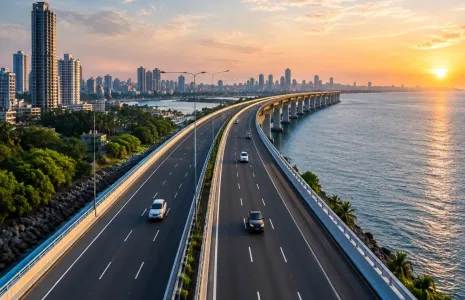
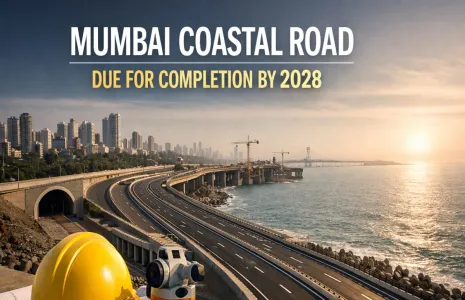
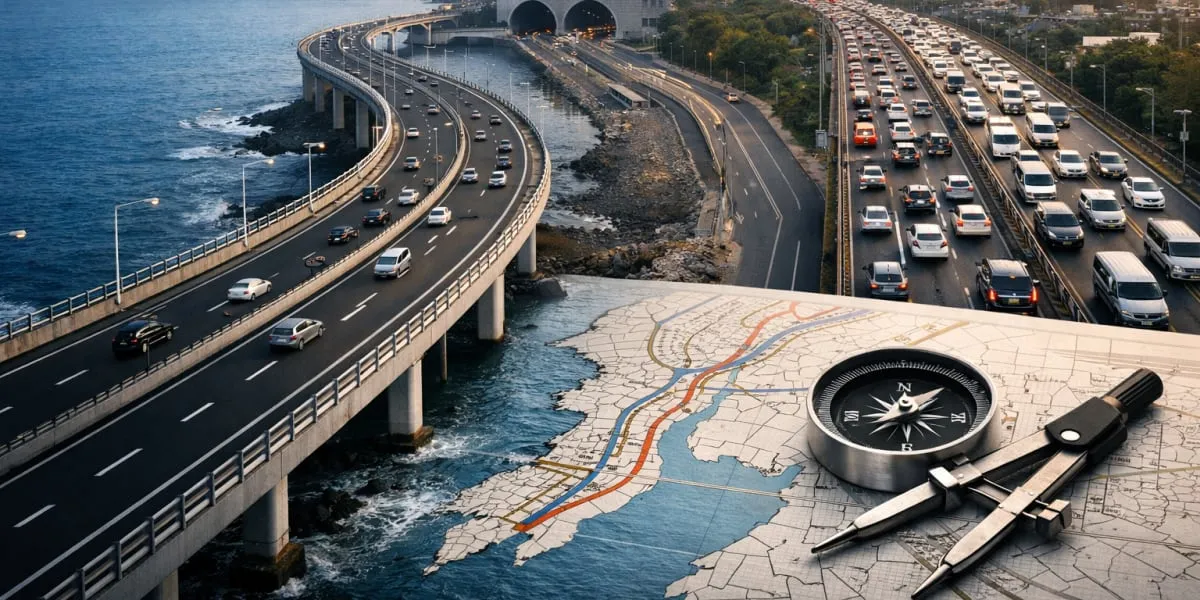
Maharashtra Chief Minister Devendra Fadnavis said the Mumbai Coastal Road project (MCR) will decongest the Western Express Highway, which carries around 60 per cent of the city's traffic, and that the Bandra-Versova section is targeted for completion by March 2028. He described the MCR as a parallel signal-free corridor needed because of the city's length, complementing the metro network that has reduced pressure on roads. Fadnavis said the project was undertaken after considering traffic patterns and the need for a continuous coastal link.

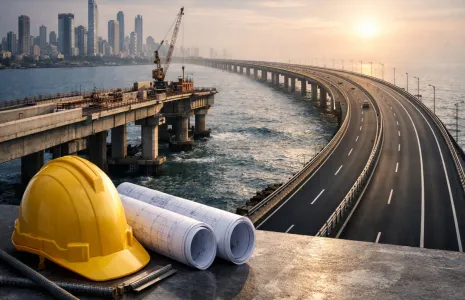
Work on the Bandra-Versova sea link and the Versova-Bhayandar connectors is progressing despite rough sea conditions and high waves, and the stretches are designed to converge in the north after a project review. He noted that several court cases had been resolved in favour of the project and that work would accelerate after the monsoon. The government is aiming to complete the Bandra-Versova section by March 2028 and to finish the Versova-Bhayandar stretch and its connectors by December 2028.

Separate plans have been prepared for monsoon and fair-weather periods, and a war room mechanism monitors progress daily to ensure timely execution. The administration expects construction management to maintain momentum and mitigate sea-related challenges through engineering and scheduling. Officials consider the coastal link part of a broader strategy to improve connectivity along the western corridor.

Fadnavis said Maharashtra and the Mumbai Metropolitan Region (MMR) recorded an increase in mangrove cover according to the Forest Survey of India, crediting sustained plantation drives, mangrove parks and conservation efforts. He added that when some mangroves must be shifted for infrastructure, the state has remained a leader in conservation.

Preparatory works for next year's Kumbh Mela are under way at Trimbakeshwar, Ghrishneshwar and Parli Vaijnath, while Bhimashankar poses challenges because of forest cover, biodiversity and the habitat of the Indian giant squirrel. A village near Bhimashankar has agreed to relocate about one-and-a-half km and will be developed as an ideal village, and temple-related works planned to take one-and-a-half years were completed in six months.

Maharashtra Chief Minister Devendra Fadnavis said the Mumbai Coastal Road project (MCR) will decongest the Western Express Highway, which carries around 60 per cent of the city's traffic, and that the Bandra-Versova section is targeted for completion by March 2028. He described the MCR as a parallel signal-free corridor needed because of the city's length, complementing the metro network that has reduced pressure on roads. Fadnavis said the project was undertaken after considering traffic patterns and the need for a continuous coastal link. Work on the Bandra-Versova sea link and the Versova-Bhayandar connectors is progressing despite rough sea conditions and high waves, and the stretches are designed to converge in the north after a project review. He noted that several court cases had been resolved in favour of the project and that work would accelerate after the monsoon. The government is aiming to complete the Bandra-Versova section by March 2028 and to finish the Versova-Bhayandar stretch and its connectors by December 2028. Separate plans have been prepared for monsoon and fair-weather periods, and a war room mechanism monitors progress daily to ensure timely execution. The administration expects construction management to maintain momentum and mitigate sea-related challenges through engineering and scheduling. Officials consider the coastal link part of a broader strategy to improve connectivity along the western corridor. Fadnavis said Maharashtra and the Mumbai Metropolitan Region (MMR) recorded an increase in mangrove cover according to the Forest Survey of India, crediting sustained plantation drives, mangrove parks and conservation efforts. He added that when some mangroves must be shifted for infrastructure, the state has remained a leader in conservation. Preparatory works for next year's Kumbh Mela are under way at Trimbakeshwar, Ghrishneshwar and Parli Vaijnath, while Bhimashankar poses challenges because of forest cover, biodiversity and the habitat of the Indian giant squirrel. A village near Bhimashankar has agreed to relocate about one-and-a-half km and will be developed as an ideal village, and temple-related works planned to take one-and-a-half years were completed in six months.

Next Story
Infrastructure Transport

Surya Roshni delivers customised lighting for NCRTC RRTS stations

Surya Roshni has supplied customised indoor lighting solutions for 18 elevated stations on the National Capital Region Transport Corporation's (NCRTC) Rapid Rail Transit System (RRTS), strengthening its presence in India's infrastructure lighting segment.The project involved the design and deployment of lighting systems for platforms, concourses, foot overbridges (FOBs) and back-of-house (BOH) areas. According to the company, the luminaires were developed specifically to meet NCRTC's design, operational and performance requirements rather than using standard products.Surya introduced two custo..

Next Story
Real Estate

Hilton debuts Tapestry Collection brand in Vietnam

Hilton has opened NHAAN Resort & Spa Hoi An, Tapestry Collection by Hilton, marking the debut of the Tapestry Collection brand in Vietnam and expanding its lifestyle hospitality portfolio in Southeast Asia.Located along the Co Co River in Cam Thanh village, the 174-key resort provides access to Hoi An Ancient Town, Cua Dai Beach and the Cam Thanh Nipa Forest. The property has been designed by Vietnamese architect Vo Trong Nghia, incorporating biophilic architecture, locally sourced materials and riverfront landscapes.The resort offers a mix of guest rooms and suites, including family-frien..

Next Story
Building Material

Electrent expands lithium energy storage system portfolio

Electrent Energy has expanded its lithium-based energy storage portfolio with the launch of the ESS 850 and ESS 1050, targeting compact and maintenance-free power backup solutions for Indian homes.The new systems integrate a Home UPS and a LiFePO4 lithium battery into a single unit, extending the company's product range following the launch of its ESS 1350 and ESS 2500 models.Designed for apartments and smaller homes, the ESS 850 provides up to 1 hour 15 minutes of backup, while the ESS 1050 offers up to 1 hour 45 minutes on a typical 400 W household load. The systems can power essential appli..

Advertisement

Subscribe to Our Newsletter

Get daily newsletters around different themes from Construction world.

STAY CONNECTED

Advertisement

Advertisement

Advertisement