Mumbai's coastal road project partially operational by H1 2024
ROADS & HIGHWAYS

Mumbai's coastal road project partially operational by H1 2024

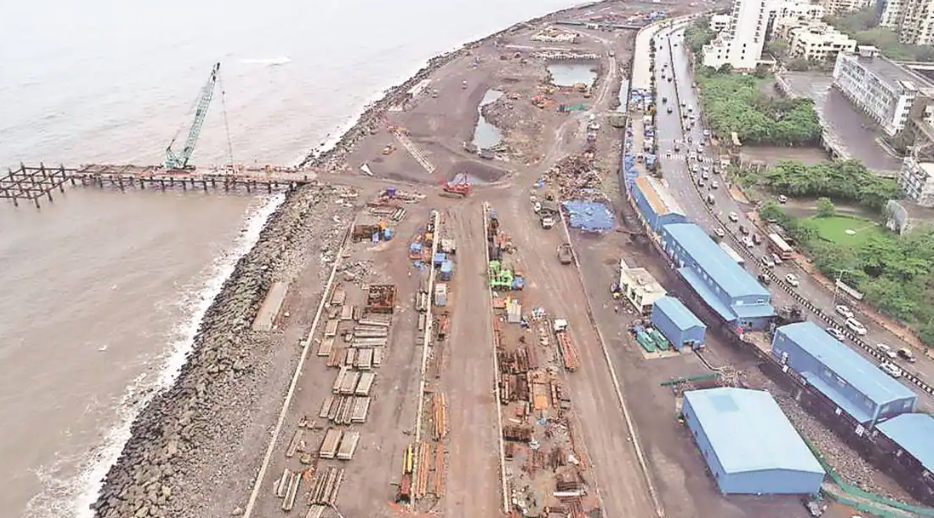
Iqbal Singh Chahal, Municipal Commissioner, announced that the deadline for the Mumbai Coastal Road Project (MCRP) had been extended by seven months due to alterations in the design of various sections. The project, initially scheduled to be inaugurated by the end of November, is now expected to become operational in the first half of 2024.

Chahal explained that the extension was necessary because of changes in the design of certain segments of the high-speed corridor project. He stated, "For the past few years, members of the Koli community had been requesting an increase in the gap between the pillars of the bridge connecting the coastal road with the Bandra-Worli sea link. This adjustment aims to facilitate the navigation of boats for the fisherfolk."

As per the corporation's initial plan, the gap between the two pillars was intended to be 60 metres. However, members of the fishing community insisted that this gap should be at least 200 meters. They argued that anything less would jeopardise their boats during the monsoon, and the presence of a rock bed in shallow waters could pose a threat to boats during high tides.

Continuous protests by the fishing community at the lotus jetty in Worli led to frequent halts in construction works. Chahal's statement conveyed the reasons behind the deadline extension, emphasising the importance of accommodating the concerns raised by the Koli community in the project's design.

Iqbal Singh Chahal, Municipal Commissioner, announced that the deadline for the Mumbai Coastal Road Project (MCRP) had been extended by seven months due to alterations in the design of various sections. The project, initially scheduled to be inaugurated by the end of November, is now expected to become operational in the first half of 2024.Chahal explained that the extension was necessary because of changes in the design of certain segments of the high-speed corridor project. He stated, For the past few years, members of the Koli community had been requesting an increase in the gap between the pillars of the bridge connecting the coastal road with the Bandra-Worli sea link. This adjustment aims to facilitate the navigation of boats for the fisherfolk.As per the corporation's initial plan, the gap between the two pillars was intended to be 60 metres. However, members of the fishing community insisted that this gap should be at least 200 meters. They argued that anything less would jeopardise their boats during the monsoon, and the presence of a rock bed in shallow waters could pose a threat to boats during high tides.Continuous protests by the fishing community at the lotus jetty in Worli led to frequent halts in construction works. Chahal's statement conveyed the reasons behind the deadline extension, emphasising the importance of accommodating the concerns raised by the Koli community in the project's design.

Next Story
Infrastructure Urban

Implementation Status of Jal Jeevan Mission

Since August 2019 the Government has implemented Jal Jeevan Mission to provide assured potable water through household tap connections in rural India. At the start of the mission only 32.3 million (mn) rural households, representing 16.7 per cent, were reported to have tap water connections. States and union territories have reported that 125.8 mn additional rural households have since been provided with tap connections. As a result, of about 193.6 mn rural households roughly 158.2 mn, or 81.71 per cent, are reported to have tap water supply at home.\n\nThe State, district and village level st..

Next Story
Infrastructure Urban

Jal Jeevan Mission Reaches Eighty One Per Cent Rural Coverage

The Government reported substantial progress under the Jal Jeevan Mission, launched in August 2019 to provide tap water to every rural household. At launch only 32.3 million (mn) rural households had tap connections and states and Union territories reported provision of 125.8 mn additional households by March 2026. Consequently, out of about 193.6 mn rural households around 158.2 mn, or 81.71 per cent, are reported to have tap water at home. The Finance Minister announced extension of the mission until 2028 in the 2025-26 budget speech. The Swachh Bharat Mission Grameen, launched in October 20..

Next Story
Infrastructure Urban

Empowering Local Governance for Sustainable Rural Water Supply

The Ministry of Jal Shakti has aligned the Jal Jeevan Mission (JJM) with the 73rd Amendment to strengthen village level planning and community ownership of water supply. Gram Panchayats, village water and sanitation committees and Pani Samitis are to plan, implement, manage and maintain piped water systems, with gram sabha processes formalising handover and oversight. Implementation support agencies including non government organisations, community based organisations and self help groups have been empanelled to train local committees and promote women participation. Under JJM, the department ..

Advertisement

Subscribe to Our Newsletter

Get daily newsletters around different themes from Construction world.

STAY CONNECTED

Advertisement

Advertisement

Advertisement