NHAI Hosts Workshop on Automated & Intelligent Machine-Aided Construction
ROADS & HIGHWAYS

NHAI Hosts Workshop on Automated & Intelligent Machine-Aided Construction

To enhance National Highway construction prowess by leveraging ‘Automated & Intelligent Machine-Aided Construction’(AIMC) technology, NHAI organised a stakeholder consultation workshop in New Delhi to deliberate and provide suggestions to enhance the recently released draft policy for the ‘Adoption of Automated & Intelligent Machine-aided Construction (AIMC) in National Highways Projects’ by MoRTH. The draft policy underlines various aspects and potential of Automated & Intelligent Machine-Aided Construction in transforming National Highway development across the country. The chief guest for the workshop was Nitin Gadkari, Minister for Road Transport and Highways. Ajay Tamta, Minister of State for Road Transport and Highways; V Umashankar, Secretary, MoRTH; Senior officials from MoRTH, NHAI, NHIDCL, technology providers, concessioners, consultants, machine equipment manufacturers and other stakeholders were also present on the occasion.

The Automated & Intelligent Machine-Aided Construction offers various benefits during the construction of National Highway corridors. These include automatic machine guided construction, repository of digitized construction data that can be used for Digital Twin applications, real time documentation, high adherence to design specifications, time efficient & reduces wastage, time bound construction without compromising quality of construction, improved rideability, enhanced performance durability & longevity, increased productivity, better transparency and minimum human interventions.

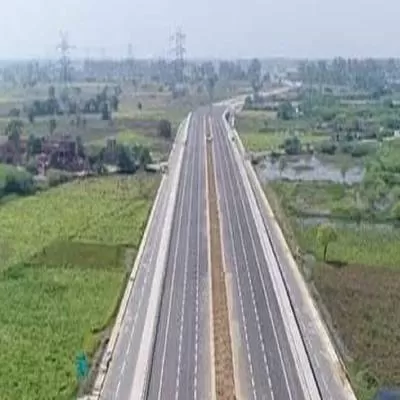
Recently, NHAI is successfully implementing pilot project of AIMC on the Lucknow-Kanpur Expressway, wherein Automated & Intelligent Machines such as GPS aided Motor Grader, Intelligent Compactor and stringless Paver have been used. Based on evaluation of efficacy of AIMC demonstrated in this project, along with feedback from the project stakeholders and considering the International Guidelines/specifications, NHAI will undertake adoption of AIMC for the construction of a few more Greenfield Expressways / Access-Controlled corridor projects.

Speaking on the occasion, Gadkari said, “National Highways are our national assets, and we have put a lot of emphasis on enhancing their quality and safety. We have taken measures to fix contractors’ responsibility to enhance the quality of construction and also to improve transparency in our system. Technology is a great enabler and adoption of Automated & Intelligent Machine-Aided Construction is a step in the right direction. We have achieved success in the Lucknow-Kanpur Expressway pilot project and soon we will implement this technology to other projects also.”

In his address. Tamta said, “India has made remarkable strides in developing world-class roads and highways that has significantly enhanced our infrastructure. Every stakeholder plays a vital role in this transformation. As we move forward, leveraging advanced technology such as sensors, satellites, and real-time monitoring will be key to accelerating progress. With continuous technological advancements we are committed to align India’s road infrastructure with Vision 2047 and take our National Highway network to the world class level."

Addressing the audience Secretary Umashankar said, “The roads and highways that we construct today will serve our nation for many years to come. Therefore, time and quality of construction are the two critical parameters that we have been focusing on. Compaction is one of the critical aspects of road construction and technology that is available today enable us to address the challenges related to compaction. I am sure that deliberations at this workshop will provide critical insights that will help us in adopting AIMC technology for the enhancement of National Highway construction.”

In his welcome address Vishal Chauhan, Member (Administration), NHAI emphasised that the inputs from this stakeholders consultation workshop will contribute in transforming conventional NH construction methods into a data-driven approach by integrating AI-MC technology. Also, Anil Choudhary, Member (Projects), NHAI presented the brief on stakeholder consultation held during the workshop.

The stakeholder consultation workshop not only helped in identifying enhancement areas of the draft policy but will also go a long way to promote technology integration in the construction of National Highway network across the country.

To enhance National Highway construction prowess by leveraging ‘Automated & Intelligent Machine-Aided Construction’(AIMC) technology, NHAI organised a stakeholder consultation workshop in New Delhi to deliberate and provide suggestions to enhance the recently released draft policy for the ‘Adoption of Automated & Intelligent Machine-aided Construction (AIMC) in National Highways Projects’ by MoRTH. The draft policy underlines various aspects and potential of Automated & Intelligent Machine-Aided Construction in transforming National Highway development across the country. The chief guest for the workshop was Nitin Gadkari, Minister for Road Transport and Highways. Ajay Tamta, Minister of State for Road Transport and Highways; V Umashankar, Secretary, MoRTH; Senior officials from MoRTH, NHAI, NHIDCL, technology providers, concessioners, consultants, machine equipment manufacturers and other stakeholders were also present on the occasion. The Automated & Intelligent Machine-Aided Construction offers various benefits during the construction of National Highway corridors. These include automatic machine guided construction, repository of digitized construction data that can be used for Digital Twin applications, real time documentation, high adherence to design specifications, time efficient & reduces wastage, time bound construction without compromising quality of construction, improved rideability, enhanced performance durability & longevity, increased productivity, better transparency and minimum human interventions. Recently, NHAI is successfully implementing pilot project of AIMC on the Lucknow-Kanpur Expressway, wherein Automated & Intelligent Machines such as GPS aided Motor Grader, Intelligent Compactor and stringless Paver have been used. Based on evaluation of efficacy of AIMC demonstrated in this project, along with feedback from the project stakeholders and considering the International Guidelines/specifications, NHAI will undertake adoption of AIMC for the construction of a few more Greenfield Expressways / Access-Controlled corridor projects. Speaking on the occasion, Gadkari said, “National Highways are our national assets, and we have put a lot of emphasis on enhancing their quality and safety. We have taken measures to fix contractors’ responsibility to enhance the quality of construction and also to improve transparency in our system. Technology is a great enabler and adoption of Automated & Intelligent Machine-Aided Construction is a step in the right direction. We have achieved success in the Lucknow-Kanpur Expressway pilot project and soon we will implement this technology to other projects also.” In his address. Tamta said, “India has made remarkable strides in developing world-class roads and highways that has significantly enhanced our infrastructure. Every stakeholder plays a vital role in this transformation. As we move forward, leveraging advanced technology such as sensors, satellites, and real-time monitoring will be key to accelerating progress. With continuous technological advancements we are committed to align India’s road infrastructure with Vision 2047 and take our National Highway network to the world class level. Addressing the audience Secretary Umashankar said, “The roads and highways that we construct today will serve our nation for many years to come. Therefore, time and quality of construction are the two critical parameters that we have been focusing on. Compaction is one of the critical aspects of road construction and technology that is available today enable us to address the challenges related to compaction. I am sure that deliberations at this workshop will provide critical insights that will help us in adopting AIMC technology for the enhancement of National Highway construction.” In his welcome address Vishal Chauhan, Member (Administration), NHAI emphasised that the inputs from this stakeholders consultation workshop will contribute in transforming conventional NH construction methods into a data-driven approach by integrating AI-MC technology. Also, Anil Choudhary, Member (Projects), NHAI presented the brief on stakeholder consultation held during the workshop. The stakeholder consultation workshop not only helped in identifying enhancement areas of the draft policy but will also go a long way to promote technology integration in the construction of National Highway network across the country.

Related Stories

Gold Stories

Next Story
Infrastructure Urban

KONE Opens India's First Digital Experience Centre in Pune

KONE, a global elevator and escalator manufacturer, has inaugurated its first Digital Experience Centre (DEC) in India, located in Pune. The facility aims to showcase how artificial intelligence (AI), connectivity and data-driven technologies can enhance customer experiences and improve building operations.The centre was inaugurated by Jussi Herlin, Executive Vice Chair, KONE Corporation; Philippe Delorme, President and CEO, KONE; and Nandan Nilekani, Co-founder and Chairman of the Board, Infosys.Designed as an interactive customer environment, the facility demonstrates digital solutions cover..

Next Story
Infrastructure Urban

CII GreenCo Launches Circularity Guidelines for Indian Industry

The Confederation of Indian Industry (CII) GreenCo Council has launched the CII GreenCo Circularity Guidelines – Pilot Version at the 17th CII GreenCo Waste & Resource Management Summit 2026 in Chennai. The initiative aims to strengthen resource efficiency, waste reduction and circular economy practices across Indian manufacturing and process industries.The guidelines introduce a structured framework with circularity indices covering raw materials, consumables, packaging and other resource inputs. These indicators will help industries assess existing practices, identify opportunities to ..

Next Story
Infrastructure Energy

Global Electronics Association Launches IPC-1783-CO2E Standard

The Global Electronics Association has introduced IPC-1783-CO2E, a new international standard aimed at improving consistency, transparency and comparability in product carbon footprint reporting across the electronics manufacturing industry.The standard, titled International Standard for Data Collection and Reporting of CO2 Equivalent (CO2e) Emissions for the Electronics Manufacturing Supply Chain, provides industry-specific guidance for collecting, estimating and reporting carbon emissions data.With increasing regulatory requirements and customer expectations, electronics manufacturers face c..

Advertisement

Subscribe to Our Newsletter

Get daily newsletters around different themes from Construction world.

STAY CONNECTED

Advertisement

SPECIAL OFFER
QR Code