NHAI nears completion of Ghaziabad's Grand Trunk Road revamp
ROADS & HIGHWAYS

NHAI nears completion of Ghaziabad's Grand Trunk Road revamp

Officials familiar with the matter revealed that the National Highways Authority of India (NHAI) is on the verge of finalising the comprehensive project report (CPR) concerning the revitalisation of a 14-kilometer segment of Ghaziabad's Grand Trunk Road (GT Road). The undertaking, estimated at a cost of Rs 3.95 billion, will encompass multiple facets of development, including a budget of approximately Rs 1.1 billion allocated for the relocation of utilities, a responsibility slated for state government departments to oversee.

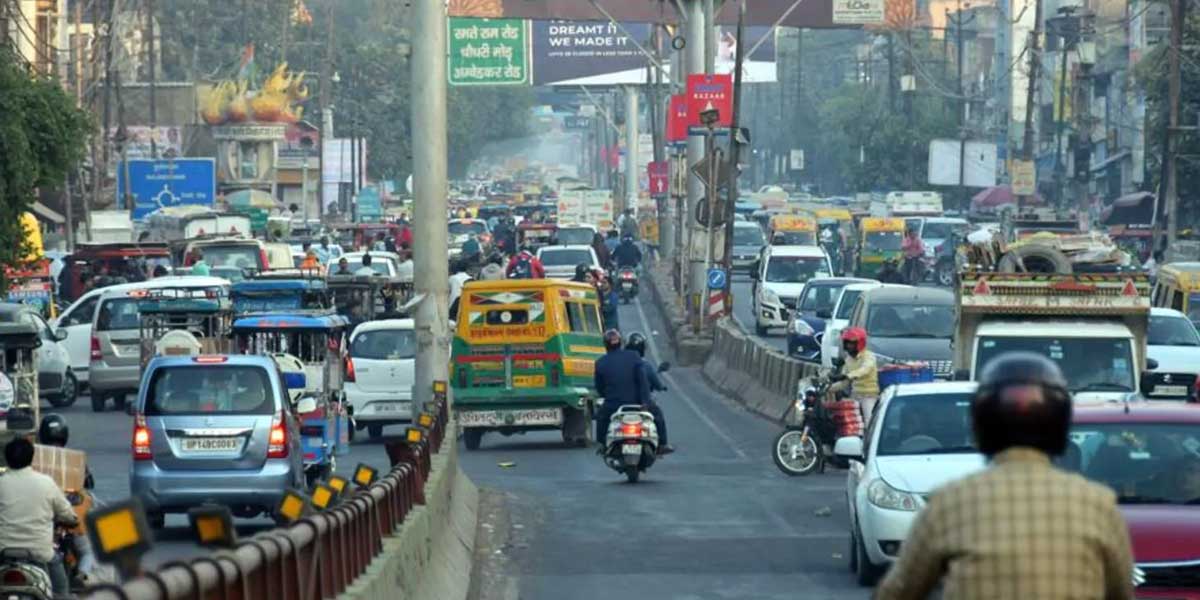
This bustling 14-kilometer expanse interlinks the Gyani Border in close proximity to Delhi with the Lal Kuan junction, encompassing pivotal urban intersections, including the heavily congested Chaudhary Morh. This strip of road accommodates a host of malls, significant markets, commercial hubs, eateries, and retail establishments. The GT Road tract serves as a vital conduit for commuters heading towards Delhi, Gautam Budh Nagar, National Highway 9/Delhi-Meerut Expressway, in addition to the Delhi-Meerut Road and Hapur Road.

According to an NHAI official who opted for anonymity, "The comprehensive expense of the venture is approximated at Rs 3.95 billion, with Rs 1.1 billion of that sum earmarked for utility relocation. State government entities will take charge of this relocation process, which could potentially involve clearing encroachments. Our aim is to finalise the requisite alterations within a fortnight and initiate the tendering phase."

Among the notable elements of this redevelopment initiative are the incorporation of two novel flyovers, an elevated corridor spanning 1.5 kilometres, road broadening, the construction of pedestrian overpasses, and an enhancement of the overall aesthetic. The vicinities flanking the GT Road, such as Delhi Gate, the vicinity of MMG Hospital, and Ghanta Ghar, contend with a substantial number of encroachments. Clearing these encroachments poses a formidable challenge for authorities in their endeavour to expand the existing four-lane road.

Officials familiar with the matter revealed that the National Highways Authority of India (NHAI) is on the verge of finalising the comprehensive project report (CPR) concerning the revitalisation of a 14-kilometer segment of Ghaziabad's Grand Trunk Road (GT Road). The undertaking, estimated at a cost of Rs 3.95 billion, will encompass multiple facets of development, including a budget of approximately Rs 1.1 billion allocated for the relocation of utilities, a responsibility slated for state government departments to oversee.This bustling 14-kilometer expanse interlinks the Gyani Border in close proximity to Delhi with the Lal Kuan junction, encompassing pivotal urban intersections, including the heavily congested Chaudhary Morh. This strip of road accommodates a host of malls, significant markets, commercial hubs, eateries, and retail establishments. The GT Road tract serves as a vital conduit for commuters heading towards Delhi, Gautam Budh Nagar, National Highway 9/Delhi-Meerut Expressway, in addition to the Delhi-Meerut Road and Hapur Road.According to an NHAI official who opted for anonymity, The comprehensive expense of the venture is approximated at Rs 3.95 billion, with Rs 1.1 billion of that sum earmarked for utility relocation. State government entities will take charge of this relocation process, which could potentially involve clearing encroachments. Our aim is to finalise the requisite alterations within a fortnight and initiate the tendering phase.Among the notable elements of this redevelopment initiative are the incorporation of two novel flyovers, an elevated corridor spanning 1.5 kilometres, road broadening, the construction of pedestrian overpasses, and an enhancement of the overall aesthetic. The vicinities flanking the GT Road, such as Delhi Gate, the vicinity of MMG Hospital, and Ghanta Ghar, contend with a substantial number of encroachments. Clearing these encroachments poses a formidable challenge for authorities in their endeavour to expand the existing four-lane road.

Next Story
Resources

Jyoti Structures Launches Heat Safety Drive Across Sites

Jyoti Structures (JSL) has strengthened heat safety measures across its project sites and manufacturing facilities as temperatures rise across India. The company has implemented a Summer Safety Plan covering all transmission line projects to address risks related to heat stress, dehydration and worker fatigue.The initiative includes rescheduling work away from peak afternoon temperatures, provision of drinking water, ORS and lemon-salt solutions, and installation of rest shelters near work areas. Daily toolbox talks, worker health monitoring, first-aid preparedness, emergency transport arrange..

Next Story
Real Estate

MHADA Declares 82 Buildings Most Dangerous in Central and South Mumbai

The Maharashtra Housing and Area Development Authority (MHADA) has declared 82 buildings as most dangerous across Central and South Mumbai and has appealed to residents to vacate immediately. The list, prepared after structural assessments by the authority, identifies buildings judged to pose imminent risk to occupants and to passersby. Local civic bodies have been asked to coordinate evacuations and to make arrangements for temporary shelter and rehabilitation for displaced households. Officials said the authority prioritised buildings with visible structural distress, severe cracking, tiltin..

Next Story
Infrastructure Transport

Damage Reported At Halwara Airport Terminal After First Rains

Severe damage was reported at the terminal of Halwara Airport during the first major rain spell of the season, prompting immediate concern among aviation and local authorities. Images from the site showed water ingress and visible deterioration of the terminal interior, affecting passenger areas and ancillary services. The airport authority suspended certain operations temporarily to assess structural safety and ensure passenger wellbeing. Preliminary inspections have prioritised electrical systems and roof seals to prevent further water ingress. State aviation officials ordered a formal inqui..

Advertisement

Subscribe to Our Newsletter

Get daily newsletters around different themes from Construction world.

STAY CONNECTED

Advertisement

Advertisement

Advertisement