+
NHAI road projects in Chennai take a hit as migrant workers return home
ROADS & HIGHWAYS

NHAI road projects in Chennai take a hit as migrant workers return home

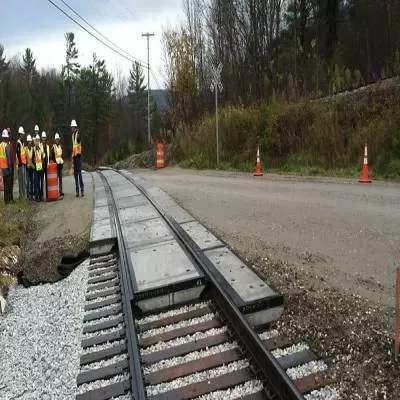
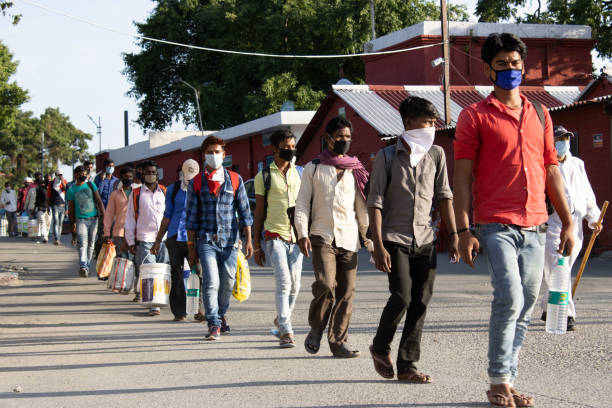
Several NHAI projects across Chennai have slowed down as half of its workforce has fled the state due to the announcement of a complete lockdown amid the second wave of Covid-19.

In total, the state is working on 22 NHAI road projects worth Rs 17,000 crore. Aside from a labour shortage, there is a scarcity of earth and other raw materials.

According to officials, nearly 60% of the total workforce of the contractors hired by the NHAI for road projects was made up of workers from Uttar Pradesh, West Bengal, Bihar, Jharkhand, and Chhattisgarh. They have gradually left the state in the last week.

Pawan Kumar, regional officer of NHAI in Chennai told the media that the ongoing projects in Chennai have slowed down as migrant workers are returning to their homes amid the second wave of the Covid-19 pandemic.

Until 10 days ago, nearly 1,000 workers were involved in the four-laning of the Thanjavur-Vikravandi road project. The workforce has now been reduced to less than half of its original size. Around 70 of the workers who stayed behind were infected with coronavirus and hospitalised. Those who survived were isolated and cared for.

Senior officials in the Coimbatore project implementation unit said the contractors have been instructed to take care of the workforce's well-being.

Another official overseeing the six-laning of the Sriperumbudur-Walajapet stretch of the Chennai-Bengaluru national highway said the government had allowed the ongoing road projects to continue. However, they were unable to keep up the pace of work because the number of labourers had been reduced to 200 from 450 a week ago.

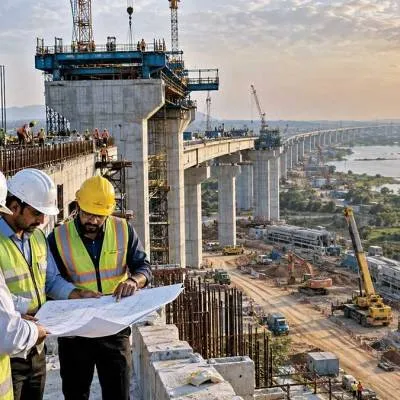
Construction of structures such as bridges, flyovers, and underpasses is hampered due to a lack of skilled labourers.

According to the official, a lack of oxygen cylinders for industrial use has severely hampered the supply of many raw materials for construction work. Work has come to a halt at many sites due to a lack of raw materials, said the official.

Image Source


Also read: Highway Construction: NHAI sets target for 4,600 km in FY22

Also read: Second wave of Covid-19 hits Gujarat road transport industry

Several NHAI projects across Chennai have slowed down as half of its workforce has fled the state due to the announcement of a complete lockdown amid the second wave of Covid-19. In total, the state is working on 22 NHAI road projects worth Rs 17,000 crore. Aside from a labour shortage, there is a scarcity of earth and other raw materials. According to officials, nearly 60% of the total workforce of the contractors hired by the NHAI for road projects was made up of workers from Uttar Pradesh, West Bengal, Bihar, Jharkhand, and Chhattisgarh. They have gradually left the state in the last week. Pawan Kumar, regional officer of NHAI in Chennai told the media that the ongoing projects in Chennai have slowed down as migrant workers are returning to their homes amid the second wave of the Covid-19 pandemic. Until 10 days ago, nearly 1,000 workers were involved in the four-laning of the Thanjavur-Vikravandi road project. The workforce has now been reduced to less than half of its original size. Around 70 of the workers who stayed behind were infected with coronavirus and hospitalised. Those who survived were isolated and cared for. Senior officials in the Coimbatore project implementation unit said the contractors have been instructed to take care of the workforce's well-being. Another official overseeing the six-laning of the Sriperumbudur-Walajapet stretch of the Chennai-Bengaluru national highway said the government had allowed the ongoing road projects to continue. However, they were unable to keep up the pace of work because the number of labourers had been reduced to 200 from 450 a week ago. Construction of structures such as bridges, flyovers, and underpasses is hampered due to a lack of skilled labourers. According to the official, a lack of oxygen cylinders for industrial use has severely hampered the supply of many raw materials for construction work. Work has come to a halt at many sites due to a lack of raw materials, said the official. Image Source Also read: Highway Construction: NHAI sets target for 4,600 km in FY22 Also read: Second wave of Covid-19 hits Gujarat road transport industry

Next Story
Resources

Vedanta Power Reports 29 Per Cent Women Workforce

Vedanta Power marked International Women’s Day by highlighting rising gender diversity across its workforce, with women now comprising nearly 29 per cent of employees in FY2026, among the highest levels in India’s thermal power sector. At Talwandi Sabo Power Limited (TSPL) in Punjab, women account for about 52 per cent of the workforce. Other assets also show increasing representation, with Meenakshi Energy reporting 26 per cent women employees and Vedanta Limited Chhattisgarh Thermal Power Plant (VLCTPP) recording 19.5 per cent. Women are contributing across engineering and plant operat..

Next Story
Real Estate

DRA Homes Debuts AI Sales Assistant At Fairpro

DRA Homes has launched Chennai’s first multi-lingual Virtual Sales AI Assistant at the CREDAI Chennai Fairpro exhibition, marking a step towards technology-led customer engagement in the city’s real estate sector. Designed as a digital sales assistant, the AI-powered tool enables prospective buyers to access project information, pricing details, configuration options and amenity specifications. It also allows users to schedule site visits, helping buyers explore projects with greater convenience. Ranjeeth Rathod, Managing Director – DRA Homes, said, “Innovation in real estate is no l..

Next Story
Real Estate

Women Buyers Shift To Premium Housing, says ANAROCK report

Women homebuyers in India are increasingly opting for higher-value properties, according to ANAROCK’s H2 2025 Consumer Sentiment Survey. The share of women seeking homes priced above Rs 9 million has risen from 25 per cent in 2019 to 61 per cent. Among these buyers, 37 per cent prefer homes priced between Rs 9 million and Rs 15 million, while 14 per cent favour properties in the Rs 15 million to Rs 25 million range. Around 10 per cent are considering homes priced above Rs 25 million. The survey also shows residential real estate as the preferred investment asset for women, with over 71 per..

Advertisement

Subscribe to Our Newsletter

Get daily newsletters around different themes from Construction world.

STAY CONNECTED

Advertisement

Advertisement

Advertisement

Open In App