



Nitin Gadkari inspects Delhi-Mumbai expressway
ROADS & HIGHWAYS

Nitin Gadkari inspects Delhi-Mumbai expressway

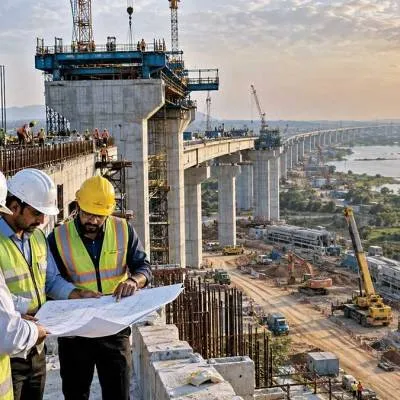
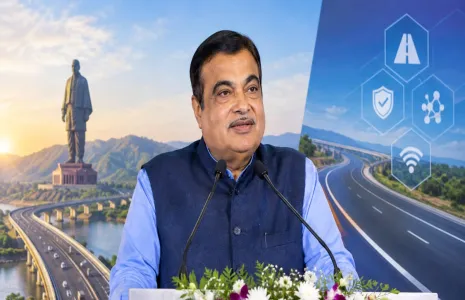
Nitin Gadkari, the Union Minister of Road Transport & Highways, conducted an inspection of the construction progress at the Faridabad Bypass site and the Delhi-Mumbai Expressway. The inspection covered National Highway-148 NA, along with the ongoing development of Package 1 and 2 of the Delhi-Noida-Delhi (DND) Sohna Road. This ambitious project, part of the Bharatmala initiative, is estimated to cost Rs 35.65 billion and will span 33 kilometres. The roads are being developed under a hybrid annuity model.

Minister of State for Power and Heavy Industries, Krishan Pal Gurjar, was also present during the inspection. Gadkari, accompanied by National Highway Authority of India (NHAI) officers, examined the Delhi-Mumbai Vadodara Link Expressway, offering crucial guidance to the authorities. The Deputy Commissioner, Vikram Singh, welcomed the Union Ministers in Faridabad.

The DND-Faridabad-Sohna and Jewar Highway (NH-148NA), stretching over a 60 km corridor, initiates near the DND flyover, passes through Faridabad, crosses NH-19 near Ballabhgarh Bypass and Kail village, and concludes at the Peripheral Expressway near Sohna, intersecting with the Kundli-Manesar-Palwal (KMP) section of the west.

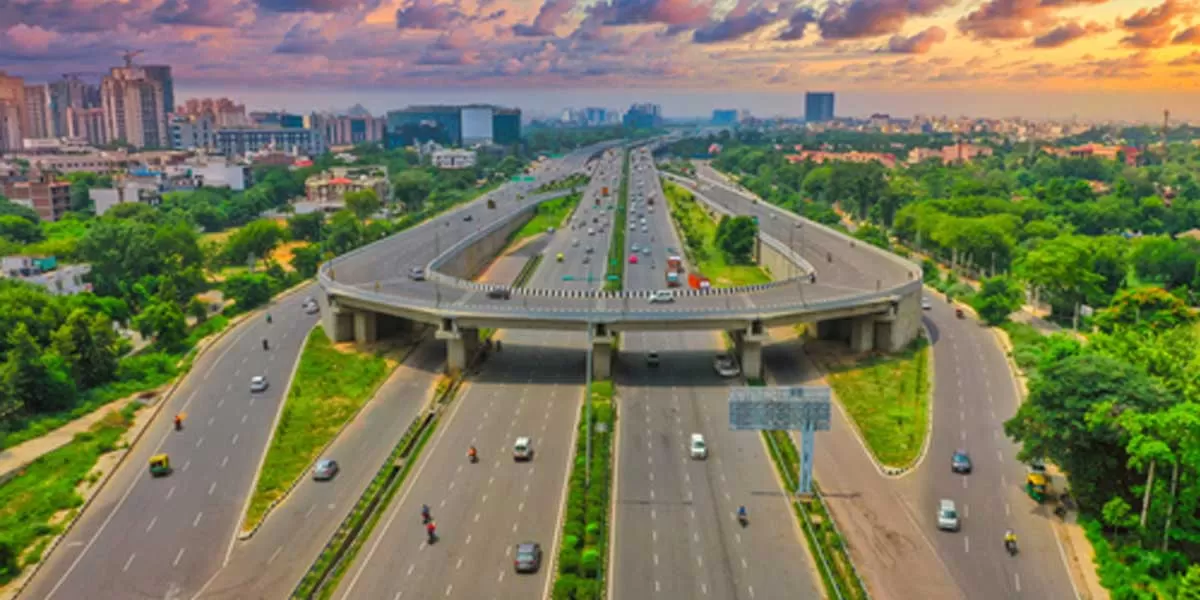
The Delhi Mumbai Expressway, divided into three construction packages (PKG 1, 2, and 3), aims to provide direct connectivity for traffic heading towards North-East Delhi, Noida, Ghaziabad, Jaipur, Ahmedabad, Vadodara, Mumbai on NH-48 (old NH-8), Kanpur, Lucknow, Kolkata, thereby alleviating congestion in Delhi through NH-19 (old NH-2). Additionally, connectivity to Jewar International Airport in the NCR region is under development.

The current physical progress of the project stands at 73%, with an anticipated completion date in December 2024. Package 1, which commenced in August 2021, is 83% complete and is expected to finish by May 2024. Package 2 starts near Jaitpur Pushta Road and ends near the junction of Sector 62-65 dividing road with HSVP. Package 3 begins near Sector 62-65 dividing road and concludes at the Kundli-Manesar-Palwal (KMP) intersection.

The construction of the Expressway near Sohna was finished in May 2023, seamlessly connecting major highways such as Delhi-Noida-Delhi Flyway, Delhi-Meerut, Kundli-Manesar-Palwal (KMP), NH-2 (Delhi-Agra), Delhi-Mumbai Expressway, and Jewar Airport Connectivity Road.

The extensive infrastructure includes 6-lane access-controlled highways on both sides of the Brownfield stretch, service roads, 10 flyovers, 6 underpasses, 11 elevated U-turns, and 13 small bridges, incorporating 1 ROB, 1 RUB, 6 bus bays, and 102 box culverts.

Nitin Gadkari, the Union Minister of Road Transport & Highways, conducted an inspection of the construction progress at the Faridabad Bypass site and the Delhi-Mumbai Expressway. The inspection covered National Highway-148 NA, along with the ongoing development of Package 1 and 2 of the Delhi-Noida-Delhi (DND) Sohna Road. This ambitious project, part of the Bharatmala initiative, is estimated to cost Rs 35.65 billion and will span 33 kilometres. The roads are being developed under a hybrid annuity model. Minister of State for Power and Heavy Industries, Krishan Pal Gurjar, was also present during the inspection. Gadkari, accompanied by National Highway Authority of India (NHAI) officers, examined the Delhi-Mumbai Vadodara Link Expressway, offering crucial guidance to the authorities. The Deputy Commissioner, Vikram Singh, welcomed the Union Ministers in Faridabad. The DND-Faridabad-Sohna and Jewar Highway (NH-148NA), stretching over a 60 km corridor, initiates near the DND flyover, passes through Faridabad, crosses NH-19 near Ballabhgarh Bypass and Kail village, and concludes at the Peripheral Expressway near Sohna, intersecting with the Kundli-Manesar-Palwal (KMP) section of the west. The Delhi Mumbai Expressway, divided into three construction packages (PKG 1, 2, and 3), aims to provide direct connectivity for traffic heading towards North-East Delhi, Noida, Ghaziabad, Jaipur, Ahmedabad, Vadodara, Mumbai on NH-48 (old NH-8), Kanpur, Lucknow, Kolkata, thereby alleviating congestion in Delhi through NH-19 (old NH-2). Additionally, connectivity to Jewar International Airport in the NCR region is under development. The current physical progress of the project stands at 73%, with an anticipated completion date in December 2024. Package 1, which commenced in August 2021, is 83% complete and is expected to finish by May 2024. Package 2 starts near Jaitpur Pushta Road and ends near the junction of Sector 62-65 dividing road with HSVP. Package 3 begins near Sector 62-65 dividing road and concludes at the Kundli-Manesar-Palwal (KMP) intersection. The construction of the Expressway near Sohna was finished in May 2023, seamlessly connecting major highways such as Delhi-Noida-Delhi Flyway, Delhi-Meerut, Kundli-Manesar-Palwal (KMP), NH-2 (Delhi-Agra), Delhi-Mumbai Expressway, and Jewar Airport Connectivity Road. The extensive infrastructure includes 6-lane access-controlled highways on both sides of the Brownfield stretch, service roads, 10 flyovers, 6 underpasses, 11 elevated U-turns, and 13 small bridges, incorporating 1 ROB, 1 RUB, 6 bus bays, and 102 box culverts.

Next Story
Infrastructure Transport

India Becomes First to Produce Bio-Bitumen for Roads

India has become the first country in the world to commercially produce bio-bitumen for use in road construction, according to Road, Transport and Highways Minister Nitin Gadkari. Bitumen, a black and viscous hydrocarbon derived from crude oil, is a key binding material in road building, and the bio-based alternative is expected to significantly improve the sector’s environmental footprint.Addressing the CSIR Technology Transfer Ceremony in New Delhi, Mr Gadkari congratulated Council of Scientific and Industrial Research on achieving the milestone, noting that the initiative would help curb ..

Next Story
Infrastructure Urban

HILT Policy Seen Boosting Telangana Revenue Sharply

The Hyderabad Industrial Land Transformation (HILT) Policy is expected to generate around Rs 1.08 billion in revenue for the Telangana state exchequer, according to Deputy Chief Minister Bhatti Vikramarka Mallu. Speaking in the Telangana Legislative Assembly, he said the policy would be implemented within a six-month timeframe in a transparent manner, with uniform rules applicable to all stakeholders. Mr Vikramarka noted that without the HILT Policy, the state would have earned only about Rs 1.2 million per acre. Under the new framework, however, revenue is projected to rise sharply to Rs 70 ..

Next Story
Infrastructure Urban

India Post, MoRD Tie Up to Boost Rural Inclusion

The Department of Posts and the Ministry of Rural Development have signed a Memorandum of Understanding to accelerate rural transformation and expand financial, digital and logistics services for Self-Help Groups (SHGs) and rural households across India. The agreement was signed in the presence of Union Minister of Communications and Development of North Eastern Region Jyotiraditya M. Scindia and Union Minister of Rural Development and Agriculture and Farmers’ Welfare Shivraj Singh Chouhan. The collaboration aligns with the government’s “Dak Sewa, Jan Sewa” vision and seeks to repositi..

Advertisement

Subscribe to Our Newsletter

Get daily newsletters around different themes from Construction world.

STAY CONNECTED

Advertisement

Advertisement

Advertisement

Advertisement

Open In App