
Road Widening in Chennai Begins
ROADS & HIGHWAYS

Road Widening in Chennai Begins

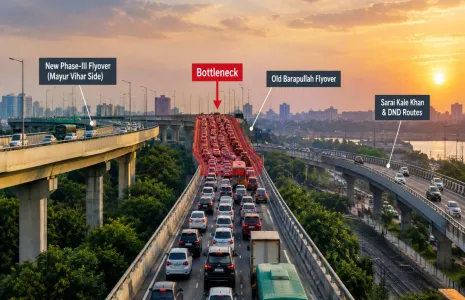
The widening of major roads in Chennai is set to begin in various parts of the city, aiming to alleviate traffic congestion and improve transportation infrastructure. The Greater Chennai Corporation (GCC) has identified key areas for this development, including T. Nagar, Velachery, and OMR (Old Mahabalipuram Road). These regions are notorious for heavy traffic, especially during peak hours. By expanding the roads, the GCC hopes to enhance the flow of vehicles, reduce travel time, and ensure safer commutes for residents.

Key aspects of the project include the removal of encroachments, relocation of utilities, and the construction of additional lanes. The process will also involve widening bridges and culverts to accommodate the expanded roads. In T. Nagar, for instance, the bustling commercial hub will see significant improvements, easing the daily travel woes of shoppers and traders. Similarly, Velachery and OMR, both crucial residential and IT corridor areas, will benefit from smoother and faster traffic movement.

The GCC has set aside a substantial budget for this initiative, reflecting the importance of enhancing the city's infrastructure. Environmental concerns have been taken into account, with plans to transplant affected trees wherever possible and compensate for any green cover loss by planting new saplings. The project also includes improving pedestrian pathways and ensuring better drainage systems to prevent waterlogging during the monsoon season.

Public cooperation is deemed essential for the successful execution of this project. Residents and businesses in the affected areas are encouraged to support the efforts by adhering to guidelines and facilitating the smooth relocation of utilities. The GCC has promised to minimize inconvenience during the construction phase by implementing a phased approach and ensuring continuous communication with the public about progress and any temporary disruptions.

In conclusion, the road widening project in Chennai represents a significant step towards modernizing the city's transportation network, addressing current traffic challenges, and preparing for future growth. Key areas, T. Nagar, Velachery, OMR, encroachments, utilities, additional lanes, bridges, culverts, budget, environmental concerns, tree transplanting, saplings, pedestrian pathways, drainage systems, public cooperation, guidelines, relocation, phased approach, communication, progress, disruptions, modernization, traffic challenges, future growth.

The widening of major roads in Chennai is set to begin in various parts of the city, aiming to alleviate traffic congestion and improve transportation infrastructure. The Greater Chennai Corporation (GCC) has identified key areas for this development, including T. Nagar, Velachery, and OMR (Old Mahabalipuram Road). These regions are notorious for heavy traffic, especially during peak hours. By expanding the roads, the GCC hopes to enhance the flow of vehicles, reduce travel time, and ensure safer commutes for residents. Key aspects of the project include the removal of encroachments, relocation of utilities, and the construction of additional lanes. The process will also involve widening bridges and culverts to accommodate the expanded roads. In T. Nagar, for instance, the bustling commercial hub will see significant improvements, easing the daily travel woes of shoppers and traders. Similarly, Velachery and OMR, both crucial residential and IT corridor areas, will benefit from smoother and faster traffic movement. The GCC has set aside a substantial budget for this initiative, reflecting the importance of enhancing the city's infrastructure. Environmental concerns have been taken into account, with plans to transplant affected trees wherever possible and compensate for any green cover loss by planting new saplings. The project also includes improving pedestrian pathways and ensuring better drainage systems to prevent waterlogging during the monsoon season. Public cooperation is deemed essential for the successful execution of this project. Residents and businesses in the affected areas are encouraged to support the efforts by adhering to guidelines and facilitating the smooth relocation of utilities. The GCC has promised to minimize inconvenience during the construction phase by implementing a phased approach and ensuring continuous communication with the public about progress and any temporary disruptions. In conclusion, the road widening project in Chennai represents a significant step towards modernizing the city's transportation network, addressing current traffic challenges, and preparing for future growth. Key areas, T. Nagar, Velachery, OMR, encroachments, utilities, additional lanes, bridges, culverts, budget, environmental concerns, tree transplanting, saplings, pedestrian pathways, drainage systems, public cooperation, guidelines, relocation, phased approach, communication, progress, disruptions, modernization, traffic challenges, future growth.

Related Stories

Gold Stories

Next Story
Infrastructure Urban

KONE Opens India's First Digital Experience Centre in Pune

KONE, a global elevator and escalator manufacturer, has inaugurated its first Digital Experience Centre (DEC) in India, located in Pune. The facility aims to showcase how artificial intelligence (AI), connectivity and data-driven technologies can enhance customer experiences and improve building operations.The centre was inaugurated by Jussi Herlin, Executive Vice Chair, KONE Corporation; Philippe Delorme, President and CEO, KONE; and Nandan Nilekani, Co-founder and Chairman of the Board, Infosys.Designed as an interactive customer environment, the facility demonstrates digital solutions cover..

Next Story
Infrastructure Urban

CII GreenCo Launches Circularity Guidelines for Indian Industry

The Confederation of Indian Industry (CII) GreenCo Council has launched the CII GreenCo Circularity Guidelines – Pilot Version at the 17th CII GreenCo Waste & Resource Management Summit 2026 in Chennai. The initiative aims to strengthen resource efficiency, waste reduction and circular economy practices across Indian manufacturing and process industries.The guidelines introduce a structured framework with circularity indices covering raw materials, consumables, packaging and other resource inputs. These indicators will help industries assess existing practices, identify opportunities to ..

Next Story
Infrastructure Energy

Global Electronics Association Launches IPC-1783-CO2E Standard

The Global Electronics Association has introduced IPC-1783-CO2E, a new international standard aimed at improving consistency, transparency and comparability in product carbon footprint reporting across the electronics manufacturing industry.The standard, titled International Standard for Data Collection and Reporting of CO2 Equivalent (CO2e) Emissions for the Electronics Manufacturing Supply Chain, provides industry-specific guidance for collecting, estimating and reporting carbon emissions data.With increasing regulatory requirements and customer expectations, electronics manufacturers face c..

Advertisement

Subscribe to Our Newsletter

Get daily newsletters around different themes from Construction world.

STAY CONNECTED

Advertisement

SPECIAL OFFER
QR Code