+
Rs 2.82 Billion Approved for NH-48 Flyovers, Footbridges
ROADS & HIGHWAYS

Rs 2.82 Billion Approved for NH-48 Flyovers, Footbridges

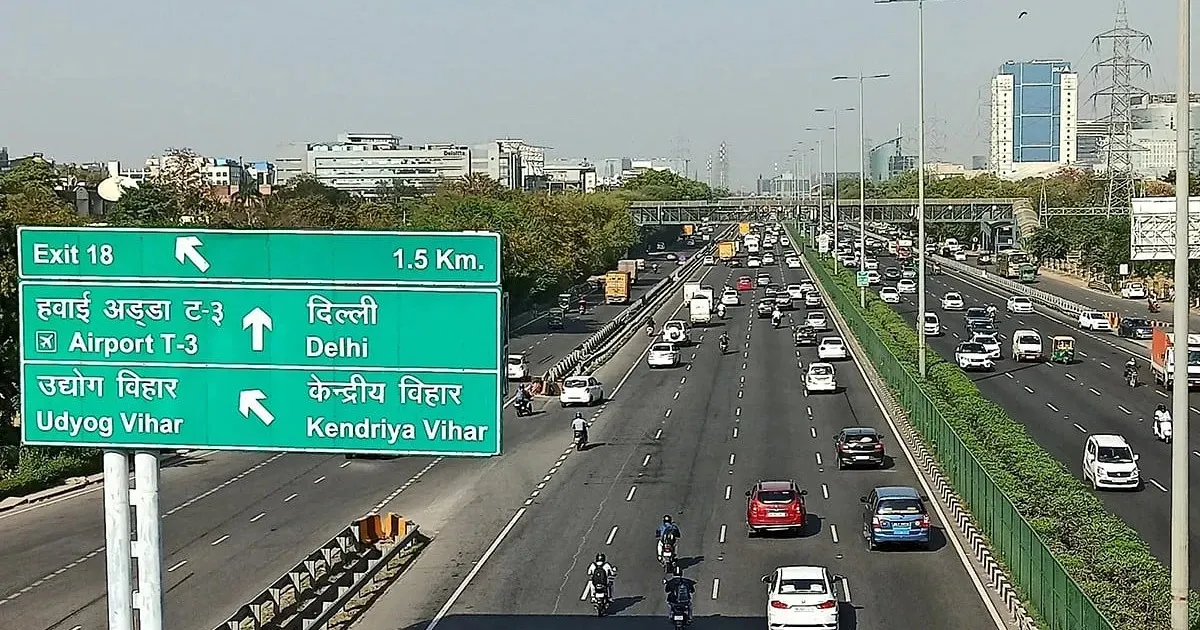
Gurugram’s section of National Highway 48 is set for a significant infrastructure upgrade, with the Central Government approving Rs 2.82 billion for the construction of four flyovers and nine foot overbridges along the Gurgaon–Kotputli–Jaipur corridor. This initiative aims to ease congestion, improve commuter safety, and boost regional connectivity, according to officials.
The planned flyovers will be built at Panchgaon Chowk, Rathiwas, near the Hero Company, and Sahlawas. The nine foot overbridges will be constructed at Shikhopur, Manesar, Binola, Rathiwas, Malpura, Jaisinghpurkhera, Sidhrawali, Kharkhara, and Khijuri. These structures will include staircases, ramps, and lighting to ensure pedestrian safety and accessibility. Additional civil and engineering works are also part of the project to enable smoother vehicular flow.
Strategic National Development
This project is part of a broader national strategy to expand and modernise India’s highway infrastructure. Since 2014, the country’s national highways have expanded from 91,000 km to over 146,000 km, making it the second-largest network in the world. High-speed corridors have grown from 93 km to 2,474 km, while four-lane and above roads have increased 2.5 times over the past decade.
Highway construction has accelerated significantly, reaching 33.8 km per day in FY 2023–24, up from 12.1 km per day in 2014–15. This progress is attributed to increased government spending and focused allocations towards critical infrastructure.
Regional Impact and Urban Mobility
Officials expect the NH-48 upgrades to substantially improve traffic conditions in Gurugram, Rewari, and nearby districts. The new flyovers will reduce bottlenecks at high-traffic junctions, while footbridges will make crossing safer for pedestrians.
In the broader Delhi-NCR region, related infrastructure projects include the Delhi–Amritsar–Katra and Delhi–Dehradun expressways, UER-II extensions, and elevated corridors. Already, projects covering 1,679 km worth Rs 80.55 billion have been completed, strengthening India’s urban infrastructure and economic resilience.
Experts emphasise that such strategic investments not only support regional trade but also raise the quality of life through improved urban design, mobility, and road safety. The Gurugram–Jaipur NH-48 project is anticipated to become a model for integrating efficient traffic management with sustainable urban planning.

Gurugram’s section of National Highway 48 is set for a significant infrastructure upgrade, with the Central Government approving Rs 2.82 billion for the construction of four flyovers and nine foot overbridges along the Gurgaon–Kotputli–Jaipur corridor. This initiative aims to ease congestion, improve commuter safety, and boost regional connectivity, according to officials.The planned flyovers will be built at Panchgaon Chowk, Rathiwas, near the Hero Company, and Sahlawas. The nine foot overbridges will be constructed at Shikhopur, Manesar, Binola, Rathiwas, Malpura, Jaisinghpurkhera, Sidhrawali, Kharkhara, and Khijuri. These structures will include staircases, ramps, and lighting to ensure pedestrian safety and accessibility. Additional civil and engineering works are also part of the project to enable smoother vehicular flow.Strategic National DevelopmentThis project is part of a broader national strategy to expand and modernise India’s highway infrastructure. Since 2014, the country’s national highways have expanded from 91,000 km to over 146,000 km, making it the second-largest network in the world. High-speed corridors have grown from 93 km to 2,474 km, while four-lane and above roads have increased 2.5 times over the past decade.Highway construction has accelerated significantly, reaching 33.8 km per day in FY 2023–24, up from 12.1 km per day in 2014–15. This progress is attributed to increased government spending and focused allocations towards critical infrastructure.Regional Impact and Urban MobilityOfficials expect the NH-48 upgrades to substantially improve traffic conditions in Gurugram, Rewari, and nearby districts. The new flyovers will reduce bottlenecks at high-traffic junctions, while footbridges will make crossing safer for pedestrians.In the broader Delhi-NCR region, related infrastructure projects include the Delhi–Amritsar–Katra and Delhi–Dehradun expressways, UER-II extensions, and elevated corridors. Already, projects covering 1,679 km worth Rs 80.55 billion have been completed, strengthening India’s urban infrastructure and economic resilience.Experts emphasise that such strategic investments not only support regional trade but also raise the quality of life through improved urban design, mobility, and road safety. The Gurugram–Jaipur NH-48 project is anticipated to become a model for integrating efficient traffic management with sustainable urban planning.

Related Stories

Gold Stories

Next Story
Infrastructure Urban

KONE Opens India's First Digital Experience Centre in Pune

KONE, a global elevator and escalator manufacturer, has inaugurated its first Digital Experience Centre (DEC) in India, located in Pune. The facility aims to showcase how artificial intelligence (AI), connectivity and data-driven technologies can enhance customer experiences and improve building operations.The centre was inaugurated by Jussi Herlin, Executive Vice Chair, KONE Corporation; Philippe Delorme, President and CEO, KONE; and Nandan Nilekani, Co-founder and Chairman of the Board, Infosys.Designed as an interactive customer environment, the facility demonstrates digital solutions cover..

Next Story
Infrastructure Urban

CII GreenCo Launches Circularity Guidelines for Indian Industry

The Confederation of Indian Industry (CII) GreenCo Council has launched the CII GreenCo Circularity Guidelines – Pilot Version at the 17th CII GreenCo Waste & Resource Management Summit 2026 in Chennai. The initiative aims to strengthen resource efficiency, waste reduction and circular economy practices across Indian manufacturing and process industries.The guidelines introduce a structured framework with circularity indices covering raw materials, consumables, packaging and other resource inputs. These indicators will help industries assess existing practices, identify opportunities to ..

Next Story
Infrastructure Energy

Global Electronics Association Launches IPC-1783-CO2E Standard

The Global Electronics Association has introduced IPC-1783-CO2E, a new international standard aimed at improving consistency, transparency and comparability in product carbon footprint reporting across the electronics manufacturing industry.The standard, titled International Standard for Data Collection and Reporting of CO2 Equivalent (CO2e) Emissions for the Electronics Manufacturing Supply Chain, provides industry-specific guidance for collecting, estimating and reporting carbon emissions data.With increasing regulatory requirements and customer expectations, electronics manufacturers face c..

Advertisement

Subscribe to Our Newsletter

Get daily newsletters around different themes from Construction world.

STAY CONNECTED

Advertisement

SPECIAL OFFER
QR Code