Stalled Delhi Infra Projects Await Final Govt Clearances
ROADS & HIGHWAYS

Stalled Delhi Infra Projects Await Final Govt Clearances

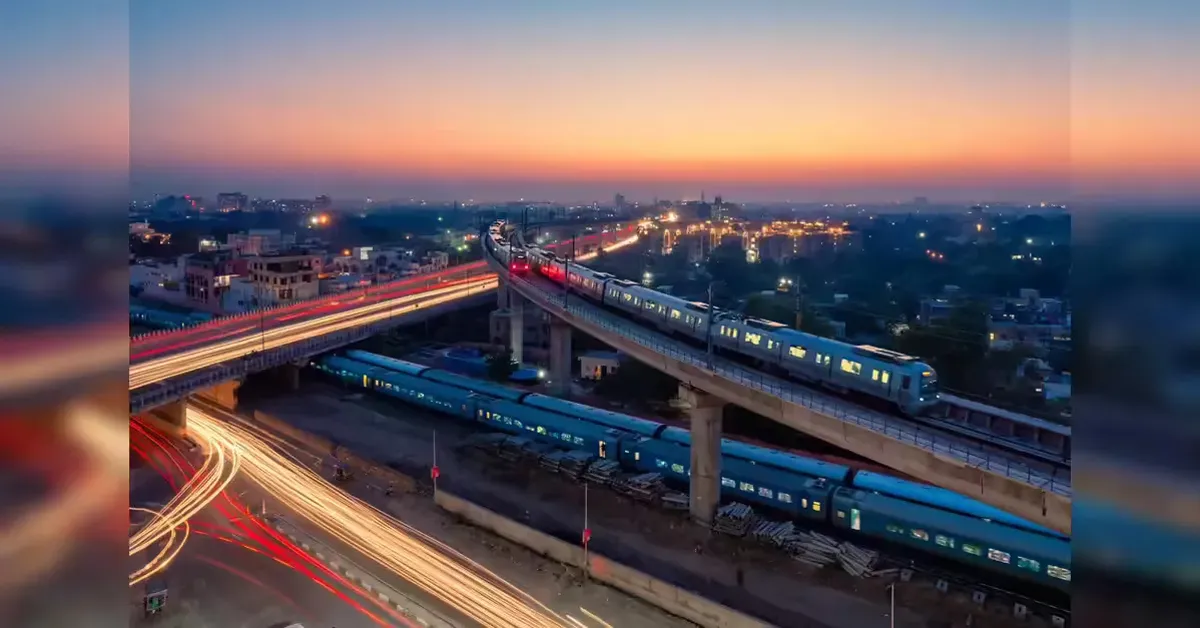
Several vital infrastructure projects across Delhi—including those in public transport, healthcare, and urban mobility—remain stalled despite reaching 70 to 90 per cent completion, owing to delayed administrative approvals and inter-departmental clearances. Officials have cited bottlenecks in budget sanctions, environmental permissions, and agency coordination as key reasons behind the hold-up, even as significant investments and construction milestones have already been achieved.
Projects currently affected include the DTC bus depot at Sawda Ghevra, flyovers at Nand Nagri and Gagan Cinema junction, the final underpass of the Pragati Maidan transit corridor, Barapullah Phase III elevated roadway, and a network of 11 greenfield hospitals across the capital. The Sawda Ghevra bus depot, aimed at expanding city-wide transit infrastructure, is 85 per cent complete, but its commissioning—initially expected in December 2023—has been pushed back due to pending approvals from the transport department.
The Nand Nagri and Gagan Cinema flyover project, which is seen as critical to alleviating traffic congestion in northeast Delhi, is at 90 per cent construction progress. However, it awaits final permissions for tree cutting and transplantation before it can be inaugurated.
Likewise, the underpass forming part of the Pragati Maidan transit corridor, stuck at 98 per cent completion, has faced prolonged delays since 2022 because of unresolved technical issues with Northern Railways. Officials have said that work is now expected to resume following the finalisation of a detailed plan for soil stabilisation and grouting to mitigate disruption to train services.
Healthcare infrastructure, too, has been significantly affected. Hospitals under construction in areas such as Jwalapuri, Madipur, and Siraspur have achieved between 78 and 90 per cent completion but remain awaiting budgetary approvals for finalisation. Other ICU-focused hospitals in Shalimar Bagh, Sultanpuri, and Sarita Vihar are between 58 and 63 per cent complete, while the Kirari facility has yet to break ground. Escalating costs and the requirement for renewed financial approvals have added further delays.
One of the most prominent stalled projects is the Barapullah Phase III elevated corridor, a key urban mobility link between Sarai Kale Khan and Mayur Vihar. Originally budgeted at Rs 9.64 billion, the project's cost has ballooned to Rs 13.3 billion following years of delays. Only 690 metres of construction remain pending, with officials awaiting tree-felling clearance from the Central Empowered Committee to proceed.
Despite these obstacles, authorities emphasised that all these projects are critical to improving Delhi’s long-term sustainability, healthcare delivery, and transport capacity. Fast-tracking administrative clearances, they say, could unlock immense social and economic value while bringing long-overdue infrastructure to underserved neighbourhoods. 

Several vital infrastructure projects across Delhi—including those in public transport, healthcare, and urban mobility—remain stalled despite reaching 70 to 90 per cent completion, owing to delayed administrative approvals and inter-departmental clearances. Officials have cited bottlenecks in budget sanctions, environmental permissions, and agency coordination as key reasons behind the hold-up, even as significant investments and construction milestones have already been achieved.Projects currently affected include the DTC bus depot at Sawda Ghevra, flyovers at Nand Nagri and Gagan Cinema junction, the final underpass of the Pragati Maidan transit corridor, Barapullah Phase III elevated roadway, and a network of 11 greenfield hospitals across the capital. The Sawda Ghevra bus depot, aimed at expanding city-wide transit infrastructure, is 85 per cent complete, but its commissioning—initially expected in December 2023—has been pushed back due to pending approvals from the transport department.The Nand Nagri and Gagan Cinema flyover project, which is seen as critical to alleviating traffic congestion in northeast Delhi, is at 90 per cent construction progress. However, it awaits final permissions for tree cutting and transplantation before it can be inaugurated.Likewise, the underpass forming part of the Pragati Maidan transit corridor, stuck at 98 per cent completion, has faced prolonged delays since 2022 because of unresolved technical issues with Northern Railways. Officials have said that work is now expected to resume following the finalisation of a detailed plan for soil stabilisation and grouting to mitigate disruption to train services.Healthcare infrastructure, too, has been significantly affected. Hospitals under construction in areas such as Jwalapuri, Madipur, and Siraspur have achieved between 78 and 90 per cent completion but remain awaiting budgetary approvals for finalisation. Other ICU-focused hospitals in Shalimar Bagh, Sultanpuri, and Sarita Vihar are between 58 and 63 per cent complete, while the Kirari facility has yet to break ground. Escalating costs and the requirement for renewed financial approvals have added further delays.One of the most prominent stalled projects is the Barapullah Phase III elevated corridor, a key urban mobility link between Sarai Kale Khan and Mayur Vihar. Originally budgeted at Rs 9.64 billion, the project's cost has ballooned to Rs 13.3 billion following years of delays. Only 690 metres of construction remain pending, with officials awaiting tree-felling clearance from the Central Empowered Committee to proceed.Despite these obstacles, authorities emphasised that all these projects are critical to improving Delhi’s long-term sustainability, healthcare delivery, and transport capacity. Fast-tracking administrative clearances, they say, could unlock immense social and economic value while bringing long-overdue infrastructure to underserved neighbourhoods. 

Related Stories

Gold Stories

Next Story
Resources

Schindler named among Forbes’ World’s Best Employers 2026

Schindler has been named among Forbes’ World’s Best Employers 2026, a global ranking recognising companies for their workplace environments.Compiled by Forbes in partnership with Statista, the ranking is based on independent employee feedback, including whether employees would recommend their organisation to friends and family.The company said the recognition reflected its focus on creating a workplace where employees can develop their expertise and build careers. ..

Next Story
Infrastructure Urban

India needs an export-execution mindset: Vishesh Jain

Interview with Vishesh Jain, Founder & CEO, EximpleWhat gaps in India’s global trade ecosystem led you to build Eximple, and what problem did you see businesses struggling with most?Eximple came out of a problem that all three founders had seen from different choke points in the trade ecosystem. India has millions of MSMEs and manufacturers, and many of them can make products that are genuinely competitive on quality. Yet only a small fraction is able to build meaningful international businesses. In our experience, the gap is usually not manufacturing capability; it is the ability to exe..

Next Story
Building Material

Nuvoco reports 13.5% revenue growth in Q2 FY27

Nuvoco Vistas Corp. Ltd. reported consolidated revenue of Rs 27.9 billion for Q2 FY27, up 13.5% year on year. Cement sales volume rose 9% to 4.7 million tonnes (MMT), while EBITDA increased 11% to Rs 4.11 billion.The company said it began its cement operations in 2014 with a 2.3 MMT per annum (MMTPA) operation at Nimbol. It now aims to reach 35 MMTPA of cement capacity by FY28, nearly 15 times its initial capacity. Its portfolio spans cement, ready-mix concrete and modern building materials.On sustainability and cost efficiency, Nuvoco partnered with CleanMax for a 46.4 MW wind-solar hybrid re..

Advertisement

Subscribe to Our Newsletter

Get daily newsletters around different themes from Construction world.

STAY CONNECTED

Advertisement

SPECIAL OFFER
QR Code