Suzuki to continue aggressive investment in India's auto industry
ROADS & HIGHWAYS

Suzuki to continue aggressive investment in India's auto industry

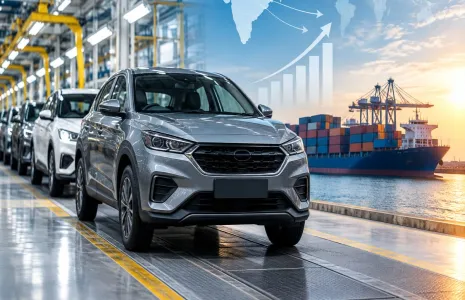
A senior official from Suzuki Motor Corporation stated that the company will continue to invest aggressively to expand the automobile industry in India. Executive VP Kenichi Ayukawa said, "We will continue to make investments aggressively to grow the industry and make people happy in India and continuously contribute to Atmanirbhar Bharat.

In a tweet from the Finance Ministry, Ayukawa announced that Maruti Suzuki India had increased its annual production capacity by one million units the previous month. "This could never have happened without the continuous support from the government of India," Ayukawa, who previously headed Maruti Suzuki India, noted.

He added that India is now the third-largest automobile market in the world and is expected to expand in the future. "The automobile industry requires long-term, large scale capital investment. In this regard, the consistent support by the government to the manufacturing sector is very very important, also including the PLI scheme is highly appreciative," Ayukawa said.

Suzuki Motor Corporation holds approximately 56% stake in Maruti Suzuki India. After an interaction with the Finance Minister, Ajay Singh, managing executive officer, Mitsui OSK Lines Ltd, said that the company's subsidiary had invested Rs 3,500 crore in the last year.

Executive Vice-President of the Japan External Trade Organisation, Kazuya Nakajo, said that India's investment in the expansion of logistic infrastructure is inevitable.

Finance Minister Nirmala Sitharaman, who is on a two-day visit to Japan to attend the G-7 meeting, while addressing investors, stated that India is committed to building and expanding the logistics and infrastructure sector.

As an investment destination, India has won the game, but facilitating investment is the next task, she added.

Yoshihiro Mineno, Daikin Global Business in-charge, said that the company plans to scale up manufacturing to make India a manufacturing hub.

Also Read
NMMC's road concretisation enhances infra in MIDC region
Srinagar smart city projects inaugurated by Lt. Governor Sinha

A senior official from Suzuki Motor Corporation stated that the company will continue to invest aggressively to expand the automobile industry in India. Executive VP Kenichi Ayukawa said, We will continue to make investments aggressively to grow the industry and make people happy in India and continuously contribute to Atmanirbhar Bharat. In a tweet from the Finance Ministry, Ayukawa announced that Maruti Suzuki India had increased its annual production capacity by one million units the previous month. This could never have happened without the continuous support from the government of India, Ayukawa, who previously headed Maruti Suzuki India, noted. He added that India is now the third-largest automobile market in the world and is expected to expand in the future. The automobile industry requires long-term, large scale capital investment. In this regard, the consistent support by the government to the manufacturing sector is very very important, also including the PLI scheme is highly appreciative, Ayukawa said. Suzuki Motor Corporation holds approximately 56% stake in Maruti Suzuki India. After an interaction with the Finance Minister, Ajay Singh, managing executive officer, Mitsui OSK Lines Ltd, said that the company's subsidiary had invested Rs 3,500 crore in the last year. Executive Vice-President of the Japan External Trade Organisation, Kazuya Nakajo, said that India's investment in the expansion of logistic infrastructure is inevitable. Finance Minister Nirmala Sitharaman, who is on a two-day visit to Japan to attend the G-7 meeting, while addressing investors, stated that India is committed to building and expanding the logistics and infrastructure sector. As an investment destination, India has won the game, but facilitating investment is the next task, she added. Yoshihiro Mineno, Daikin Global Business in-charge, said that the company plans to scale up manufacturing to make India a manufacturing hub. Also Read NMMC's road concretisation enhances infra in MIDC region Srinagar smart city projects inaugurated by Lt. Governor Sinha

Next Story
Infrastructure Urban

Implementation Status of Jal Jeevan Mission

Since August 2019 the Government has implemented Jal Jeevan Mission to provide assured potable water through household tap connections in rural India. At the start of the mission only 32.3 million (mn) rural households, representing 16.7 per cent, were reported to have tap water connections. States and union territories have reported that 125.8 mn additional rural households have since been provided with tap connections. As a result, of about 193.6 mn rural households roughly 158.2 mn, or 81.71 per cent, are reported to have tap water supply at home.\n\nThe State, district and village level st..

Next Story
Infrastructure Urban

Jal Jeevan Mission Reaches Eighty One Per Cent Rural Coverage

The Government reported substantial progress under the Jal Jeevan Mission, launched in August 2019 to provide tap water to every rural household. At launch only 32.3 million (mn) rural households had tap connections and states and Union territories reported provision of 125.8 mn additional households by March 2026. Consequently, out of about 193.6 mn rural households around 158.2 mn, or 81.71 per cent, are reported to have tap water at home. The Finance Minister announced extension of the mission until 2028 in the 2025-26 budget speech. The Swachh Bharat Mission Grameen, launched in October 20..

Next Story
Infrastructure Urban

Empowering Local Governance for Sustainable Rural Water Supply

The Ministry of Jal Shakti has aligned the Jal Jeevan Mission (JJM) with the 73rd Amendment to strengthen village level planning and community ownership of water supply. Gram Panchayats, village water and sanitation committees and Pani Samitis are to plan, implement, manage and maintain piped water systems, with gram sabha processes formalising handover and oversight. Implementation support agencies including non government organisations, community based organisations and self help groups have been empanelled to train local committees and promote women participation. Under JJM, the department ..

Advertisement

Subscribe to Our Newsletter

Get daily newsletters around different themes from Construction world.

STAY CONNECTED

Advertisement

Advertisement

Advertisement