Telangana Outlines Major Rural Roads Push Under Vision 2047
ROADS & HIGHWAYS

Telangana Outlines Major Rural Roads Push Under Vision 2047

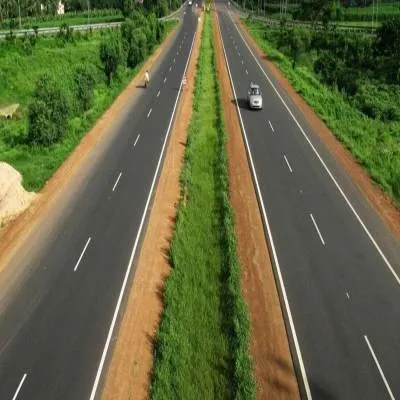
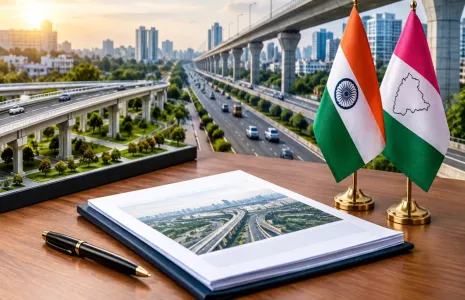
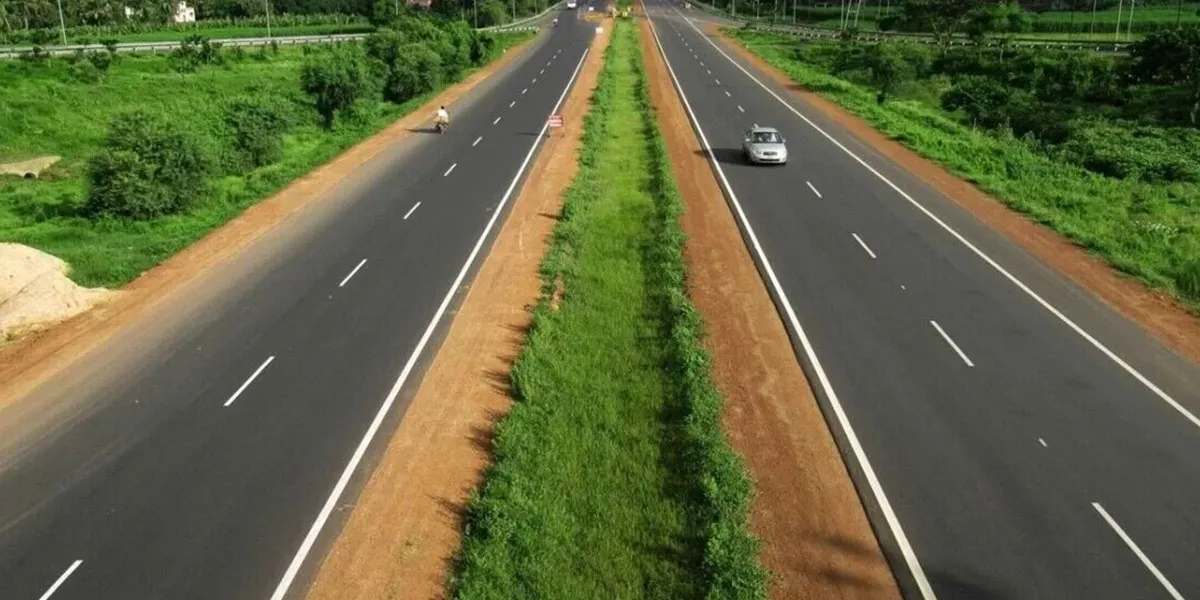
The Telangana government has unveiled an ambitious rural mobility blueprint under its Telangana Rising 2047 vision, proposing two major road networks — the 770-kilometre Praja Valayam rural ring road and the 1,150-kilometre Telangana Maniharam corridor. Both corridors form part of a radio-centric grid designed to strengthen connectivity between rural communities, production centres, markets, and urban and semi-urban regions.

Developed under the RARE (Rural Agriculture Region Economy) model, the blueprint envisions a comprehensive mobility ecosystem featuring a Regional Rapid Transit System, the North–South Dedicated Freight Corridor (NSDFC), a network of radials, ring roads and major cross-state corridors. The 430-kilometre North–South Corridor and the 375-kilometre East–West Corridor will be integrated with Praja Valayam and Telangana Maniharam to create seamless rural-urban linkages.

According to the vision document, the primary goal is to boost rural prosperity by improving farmers’ access to markets, reducing transport bottlenecks for agricultural produce and ensuring rural populations become active participants in the state’s economic expansion. Enhanced connectivity is expected to spur the growth of food-processing units and agro-based industries, attracting investment and generating jobs in rural areas.

The government also plans to connect the rural mobility grid with the Regional Ring Road (RRR) and state borders, creating a continuous circulation network across Telangana. The policy calls for preparing a detailed master plan for a unified road system and identifying a core road network to guide long-term infrastructure development.

A major expansion of key road categories has also been proposed:

National Highways: from 4,983 km to 6,500 km

State Highways: from 1,687 km to 8,600 km

Major District Roads: from 11,536 km to 14,800 km

Other District Roads: from 15,852 km to 20,560 km

This represents one of the largest planned upgrades in the state’s road transport infrastructure.

The Telangana government has unveiled an ambitious rural mobility blueprint under its Telangana Rising 2047 vision, proposing two major road networks — the 770-kilometre Praja Valayam rural ring road and the 1,150-kilometre Telangana Maniharam corridor. Both corridors form part of a radio-centric grid designed to strengthen connectivity between rural communities, production centres, markets, and urban and semi-urban regions. Developed under the RARE (Rural Agriculture Region Economy) model, the blueprint envisions a comprehensive mobility ecosystem featuring a Regional Rapid Transit System, the North–South Dedicated Freight Corridor (NSDFC), a network of radials, ring roads and major cross-state corridors. The 430-kilometre North–South Corridor and the 375-kilometre East–West Corridor will be integrated with Praja Valayam and Telangana Maniharam to create seamless rural-urban linkages. According to the vision document, the primary goal is to boost rural prosperity by improving farmers’ access to markets, reducing transport bottlenecks for agricultural produce and ensuring rural populations become active participants in the state’s economic expansion. Enhanced connectivity is expected to spur the growth of food-processing units and agro-based industries, attracting investment and generating jobs in rural areas. The government also plans to connect the rural mobility grid with the Regional Ring Road (RRR) and state borders, creating a continuous circulation network across Telangana. The policy calls for preparing a detailed master plan for a unified road system and identifying a core road network to guide long-term infrastructure development. A major expansion of key road categories has also been proposed: National Highways: from 4,983 km to 6,500 km State Highways: from 1,687 km to 8,600 km Major District Roads: from 11,536 km to 14,800 km Other District Roads: from 15,852 km to 20,560 km This represents one of the largest planned upgrades in the state’s road transport infrastructure.

Next Story
Equipment

Schwing Stetter India Unveils New Innovations at Excon 2025

Schwing Stetter India unveiled more than 20 new machines at Excon 2025, marking one of its most significant showcases and introducing several India-first technologies to the construction equipment sector. The company launched the country’s first 56-metre boom pump designed and manufactured in India, the first fully electric truck mixer, the first CNG mixer variant and the first hybrid boom pump. Executives said the launch portfolio was engineered to support India’s move toward faster, greener and more vertically oriented infrastructure through advanced engineering, clean-energy solutions a..

Next Story
Infrastructure Energy

SEPC Resolves Hindustan Copper Dispute, Wins Rs 725 Mn Order

Engineering, procurement and construction firm SEPC Ltd has recently settled a dispute with Hindustan Copper Ltd (HCL) and secured a mining infrastructure order valued at Rs 725 million from the state-owned company. SEPC informed the stock exchanges that it has executed a settlement deed with HCL, bringing closure to all inter-se claims and counterclaims arising from arbitration proceedings. As part of the settlement, SEPC will receive Rs 304.5 million as full and final payment, marking the resolution of all pending disputes between the two entities. The company also stated that Hindustan Co..

Next Story
Infrastructure Energy

20% Ethanol Blending Cuts India’s CO2 Emissions by 73.6 Mn Tonnes

Union Road Transport and Highways Minister Nitin Gadkari recently said that India has reduced carbon dioxide emissions by 73.6 million metric tonnes due to the adoption of 20 per cent ethanol blending in petrol. He made the statement while replying to supplementary questions during the Question Hour in the Lok Sabha. Describing ethanol as a green fuel, the minister said it plays a key role in reducing pollution while also supporting higher incomes for farmers. He underlined that ethanol blending contributes both to environmental sustainability and rural economic growth. Nitin Gadkari also po..

Advertisement

Subscribe to Our Newsletter

Get daily newsletters around different themes from Construction world.

STAY CONNECTED

Advertisement

Advertisement

Advertisement

Advertisement

Open In App