TN section of Bengaluru-Chennai Expressway likely done by August 2025
ROADS & HIGHWAYS

TN section of Bengaluru-Chennai Expressway likely done by August 2025

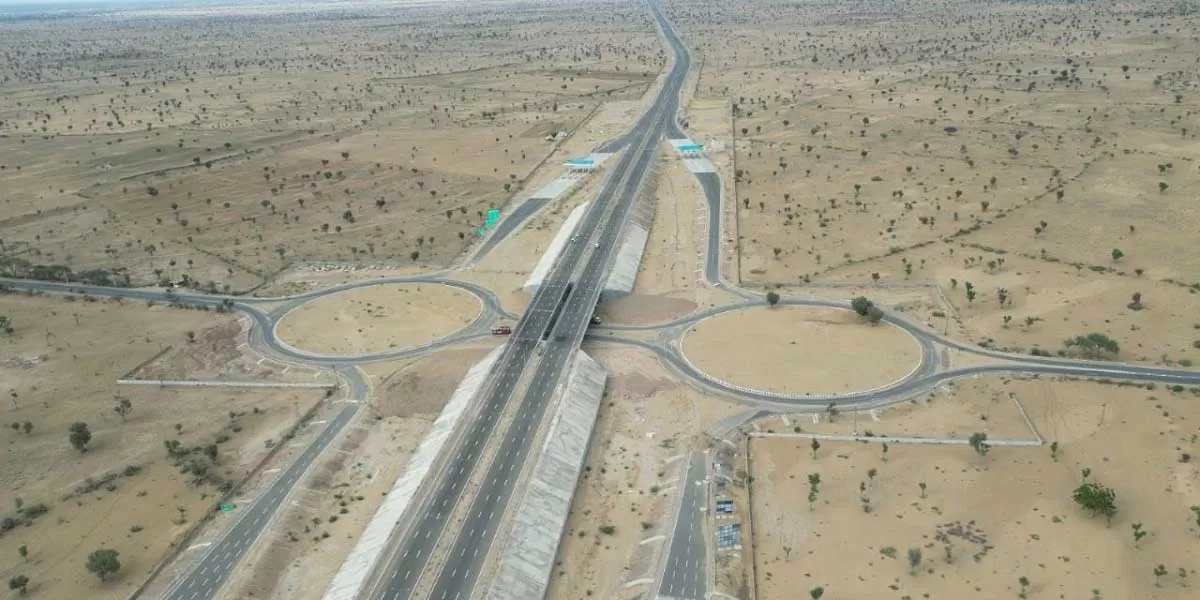
Approximately 65 per cent of the work on the four-lane, access-controlled greenfield Bengaluru-Chennai Expressway (BCE) in Tamil Nadu has been completed. The expressway spans 105.7 km across several districts, including Tiruvallur, Kancheepuram, Vellore, and Ranipet. It starts at Sriperumbudur and ends at Gudipala in Andhra Pradesh, from where it will continue to Bengaluru. The remaining work in Tamil Nadu is expected to be finished by August 2025, which will significantly reduce the travel time and distance between Chennai and Bengaluru, according to the National Highways Authority of India (NHAI).

The package between Walajapet and Arakkonam, covering 24.5 km, has made the most progress, with over 84 per cent of the work completed. The civil work for this section cost Rs 6.62 billion, while utilities amounted to Rs 200.46 million. Following this, around 70 per cent of the work has been completed on the 24 km Gudipala-Walajapet section. Over 64 per cent of the work has been completed on the 31.07 km stretch from Kancheepuram to Sriperumbudur. The section between Arakkonam and Kancheepuram, however, has seen the least progress, with only about 52 per cent of the work completed, as reported by officials.

An engineer associated with the Rs 170-billion project mentioned that, as the project is greenfield, land acquisition has not been a major issue, since most of the road passes through open land. However, challenges arose in relocating electricity towers that were situated along the expressway's route, which required time to obtain approval from the respective revenue department authorities.

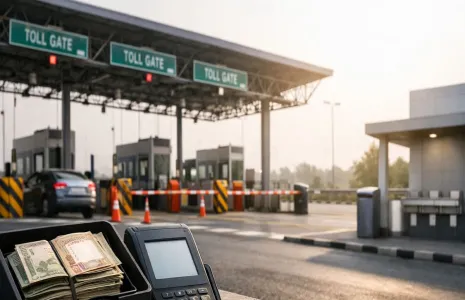
The project will feature 34 major and 31 minor bridges, totalling a combined length of 15 km. The longest bridge will stretch for 840 meters. The Tamil Nadu portion of the expressway will also include six toll plazas, which will be situated at the interchanges.

Approximately 65 per cent of the work on the four-lane, access-controlled greenfield Bengaluru-Chennai Expressway (BCE) in Tamil Nadu has been completed. The expressway spans 105.7 km across several districts, including Tiruvallur, Kancheepuram, Vellore, and Ranipet. It starts at Sriperumbudur and ends at Gudipala in Andhra Pradesh, from where it will continue to Bengaluru. The remaining work in Tamil Nadu is expected to be finished by August 2025, which will significantly reduce the travel time and distance between Chennai and Bengaluru, according to the National Highways Authority of India (NHAI). The package between Walajapet and Arakkonam, covering 24.5 km, has made the most progress, with over 84 per cent of the work completed. The civil work for this section cost Rs 6.62 billion, while utilities amounted to Rs 200.46 million. Following this, around 70 per cent of the work has been completed on the 24 km Gudipala-Walajapet section. Over 64 per cent of the work has been completed on the 31.07 km stretch from Kancheepuram to Sriperumbudur. The section between Arakkonam and Kancheepuram, however, has seen the least progress, with only about 52 per cent of the work completed, as reported by officials. An engineer associated with the Rs 170-billion project mentioned that, as the project is greenfield, land acquisition has not been a major issue, since most of the road passes through open land. However, challenges arose in relocating electricity towers that were situated along the expressway's route, which required time to obtain approval from the respective revenue department authorities. The project will feature 34 major and 31 minor bridges, totalling a combined length of 15 km. The longest bridge will stretch for 840 meters. The Tamil Nadu portion of the expressway will also include six toll plazas, which will be situated at the interchanges.

Next Story
Infrastructure Transport

MMRDA advances 250 m on Orange Gate–Marine Drive tunnel

The Mumbai Metropolitan Region Development Authority (MMRDA) has completed 250 m of underground tunnelling for the Orange Gate–Marine Drive Urban Road Tunnel using India’s largest slurry shield tunnel boring machine (TBM) deployed for an urban road project.The project involves twin tunnels extending over 7 km beneath critical transport corridors, including Central Railway, Western Railway and Metro Line 3. The work requires high-precision engineering to navigate densely developed urban infrastructure.Once completed, the tunnel is expected to reduce travel time between Orange Gate and Marin..

Next Story
Infrastructure Urban

Hindustan Zinc Pays Rs 188.46 Billion in FY26

Hindustan Zinc contributed Rs 188.46 billion to the public exchequer in FY 2025-26, according to its 9th Tax Transparency Report. The contribution, equivalent to 46 per cent of the company’s revenue, included direct and indirect taxes, government royalties, dividends to the Government of India, withholding taxes and other statutory levies.The company’s five-year cumulative contribution to the exchequer stood at Rs 915.72 billion. In FY26, Hindustan Zinc reported revenue of Rs 408.44 billion, EBITDA of Rs 221.62 billion and profit after tax of Rs 138.32 billion. It also achieved its highest..

Next Story
Infrastructure Urban

World of Concrete India 2026 Opens in Mumbai

Informa Markets in India will host the 12th edition of World of Concrete India 2026 from 3–5 June 2026 at the Bombay Exhibition Centre, Mumbai. The specialised B2B exhibition will bring together manufacturers, suppliers, contractors, developers, architects, consultants, infrastructure companies, project leaders and government stakeholders.The event is expected to feature over 350 brands and more than 18,000 trade professionals. It will cover concrete and cement, dry mortar, precast technologies, formwork, construction chemicals, industrial and commercial flooring, scaffolding, safety solutio..

Advertisement

Subscribe to Our Newsletter

Get daily newsletters around different themes from Construction world.

STAY CONNECTED

Advertisement

Advertisement

Advertisement

-->