

Tough Bidding Norms Slow NHAI Road Project Awards
ROADS & HIGHWAYS

Tough Bidding Norms Slow NHAI Road Project Awards

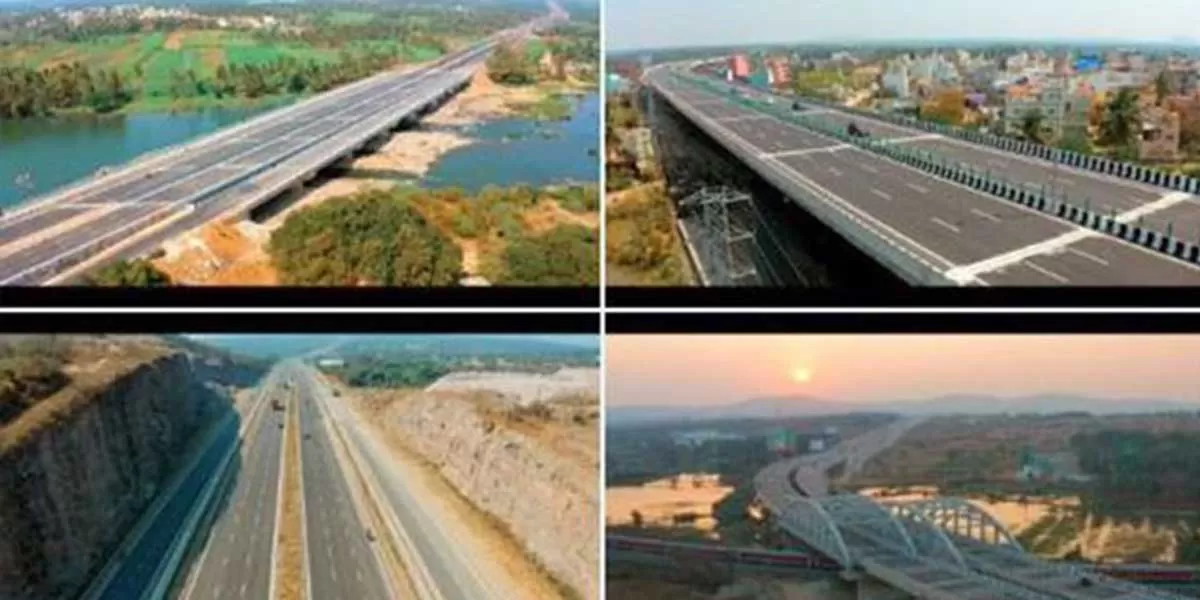
Stringent bidding rules imposed by the Ministry of Road Transport & Highways (MoRTH) have led to a slowdown in project awards by the National Highways Authority of India (NHAI), despite a robust Rs 3.5 trillion pipeline. According to an HDFC Securities report, the shift to more cautious developer models now favours firms with strong balance sheets, as tighter qualification norms limit aggressive bidders.
The revised norms mandate additional performance security, targeting the exclusion of players that previously submitted low bids—often 25 to 40 per cent below NHAI cost estimates—raising concerns over long-term road quality. This has particularly impacted small, unlisted firms that had earlier dominated bidding due to relaxed entry barriers.
While sectors such as buildings, power transmission, and urban infrastructure have recently seen stronger order flows, road construction activity has markedly declined. This has affected the revenue visibility and valuations of construction firms heavily reliant on highway contracts.
The report suggests that engineering, procurement, and construction (EPC) players could mitigate risk by diversifying into solar energy, battery energy storage systems (BESS), river interlinking, and transmission. A recovery in order flow, it notes, would support sectoral re-rating, especially for diversified infrastructure players positioned beyond roads.

Stringent bidding rules imposed by the Ministry of Road Transport & Highways (MoRTH) have led to a slowdown in project awards by the National Highways Authority of India (NHAI), despite a robust Rs 3.5 trillion pipeline. According to an HDFC Securities report, the shift to more cautious developer models now favours firms with strong balance sheets, as tighter qualification norms limit aggressive bidders.The revised norms mandate additional performance security, targeting the exclusion of players that previously submitted low bids—often 25 to 40 per cent below NHAI cost estimates—raising concerns over long-term road quality. This has particularly impacted small, unlisted firms that had earlier dominated bidding due to relaxed entry barriers.While sectors such as buildings, power transmission, and urban infrastructure have recently seen stronger order flows, road construction activity has markedly declined. This has affected the revenue visibility and valuations of construction firms heavily reliant on highway contracts.The report suggests that engineering, procurement, and construction (EPC) players could mitigate risk by diversifying into solar energy, battery energy storage systems (BESS), river interlinking, and transmission. A recovery in order flow, it notes, would support sectoral re-rating, especially for diversified infrastructure players positioned beyond roads.

Next Story
Infrastructure Transport

India Becomes First to Produce Bio-Bitumen for Roads

India has become the first country in the world to commercially produce bio-bitumen for use in road construction, according to Road, Transport and Highways Minister Nitin Gadkari. Bitumen, a black and viscous hydrocarbon derived from crude oil, is a key binding material in road building, and the bio-based alternative is expected to significantly improve the sector’s environmental footprint.Addressing the CSIR Technology Transfer Ceremony in New Delhi, Mr Gadkari congratulated Council of Scientific and Industrial Research on achieving the milestone, noting that the initiative would help curb ..

Next Story
Infrastructure Urban

HILT Policy Seen Boosting Telangana Revenue Sharply

The Hyderabad Industrial Land Transformation (HILT) Policy is expected to generate around Rs 1.08 billion in revenue for the Telangana state exchequer, according to Deputy Chief Minister Bhatti Vikramarka Mallu. Speaking in the Telangana Legislative Assembly, he said the policy would be implemented within a six-month timeframe in a transparent manner, with uniform rules applicable to all stakeholders. Mr Vikramarka noted that without the HILT Policy, the state would have earned only about Rs 1.2 million per acre. Under the new framework, however, revenue is projected to rise sharply to Rs 70 ..

Next Story
Infrastructure Urban

India Post, MoRD Tie Up to Boost Rural Inclusion

The Department of Posts and the Ministry of Rural Development have signed a Memorandum of Understanding to accelerate rural transformation and expand financial, digital and logistics services for Self-Help Groups (SHGs) and rural households across India. The agreement was signed in the presence of Union Minister of Communications and Development of North Eastern Region Jyotiraditya M. Scindia and Union Minister of Rural Development and Agriculture and Farmers’ Welfare Shivraj Singh Chouhan. The collaboration aligns with the government’s “Dak Sewa, Jan Sewa” vision and seeks to repositi..

Advertisement

Subscribe to Our Newsletter

Get daily newsletters around different themes from Construction world.

STAY CONNECTED

Advertisement

Advertisement

Advertisement

Advertisement

Open In App