UP Deputy CM bats for environment-friendly roads
ROADS & HIGHWAYS

UP Deputy CM bats for environment-friendly roads

Deputy Chief Minister Keshav Prasad Maurya said that for the balanced and holistic development of villages, an important dimension was to plant saplings of perennial species along the rural roads, this would give impetus to the Mission Life campaign.

Maurya said that the FDR (Full Depth Reclamation) technology been adopted in the construction of Pradhan Mantri Gramin Sadak Yojna (PMGSY) roads in Uttar Pradesh was proving beneficial and useful for the Mission Life campaign.

Maurya was addressing a workshop based on Green/New Technology under Mission Life at the Ganna Sansthan. The workshop was organised by Uttar Pradesh Rural Road Development Agency (UPRRDA). The deputy chief minister called upon the representatives from different states to do more research work in addition to FDR technology in the construction of roads, which would promote environment and water conservation.

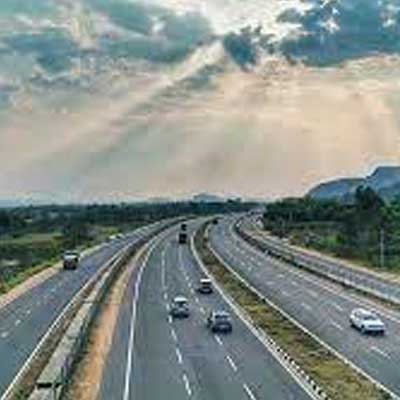
Maurya said that Uttar Pradesh was leading in adopting FDR technology in the construction of PMGSY roads. He said that the roads should be designed in such a way that along with the convenience of transportation, it also proved beneficial from the point of view of environmental friendliness.

He said that while moving ahead in any field, environmental protection should be our priority. He said that Uttar Pradesh was the leader in adopting green technology. The construction work of 5400 kilometres (684 routes) under the Pradhan Mantri Gramin Sadak Yojana was being done on green technology due in which 900 kilometres of construction had been completed. In this technology, separate aggregate was not used, due to which natural resources were not exploited. He said that in the construction of PMGSY routes under 5400 km FDR in Uttar Pradesh, about 86 lakh cubic metres of aggregate and its relative saving of 650 lakh litres of fuel in transportation had been estimated. Thus, carbon footprint was being reduced through FDR technology and this technology was environment friendly. The roads been built using FDR technology were low cost, high quality and also more durable.

Deputy Chief Minister Keshav Prasad Maurya said that for the balanced and holistic development of villages, an important dimension was to plant saplings of perennial species along the rural roads, this would give impetus to the Mission Life campaign. Maurya said that the FDR (Full Depth Reclamation) technology been adopted in the construction of Pradhan Mantri Gramin Sadak Yojna (PMGSY) roads in Uttar Pradesh was proving beneficial and useful for the Mission Life campaign. Maurya was addressing a workshop based on Green/New Technology under Mission Life at the Ganna Sansthan. The workshop was organised by Uttar Pradesh Rural Road Development Agency (UPRRDA). The deputy chief minister called upon the representatives from different states to do more research work in addition to FDR technology in the construction of roads, which would promote environment and water conservation. Maurya said that Uttar Pradesh was leading in adopting FDR technology in the construction of PMGSY roads. He said that the roads should be designed in such a way that along with the convenience of transportation, it also proved beneficial from the point of view of environmental friendliness. He said that while moving ahead in any field, environmental protection should be our priority. He said that Uttar Pradesh was the leader in adopting green technology. The construction work of 5400 kilometres (684 routes) under the Pradhan Mantri Gramin Sadak Yojana was being done on green technology due in which 900 kilometres of construction had been completed. In this technology, separate aggregate was not used, due to which natural resources were not exploited. He said that in the construction of PMGSY routes under 5400 km FDR in Uttar Pradesh, about 86 lakh cubic metres of aggregate and its relative saving of 650 lakh litres of fuel in transportation had been estimated. Thus, carbon footprint was being reduced through FDR technology and this technology was environment friendly. The roads been built using FDR technology were low cost, high quality and also more durable.

Next Story
Infrastructure Urban

Implementation Status of Jal Jeevan Mission

Since August 2019 the Government has implemented Jal Jeevan Mission to provide assured potable water through household tap connections in rural India. At the start of the mission only 32.3 million (mn) rural households, representing 16.7 per cent, were reported to have tap water connections. States and union territories have reported that 125.8 mn additional rural households have since been provided with tap connections. As a result, of about 193.6 mn rural households roughly 158.2 mn, or 81.71 per cent, are reported to have tap water supply at home.\n\nThe State, district and village level st..

Next Story
Infrastructure Urban

Jal Jeevan Mission Reaches Eighty One Per Cent Rural Coverage

The Government reported substantial progress under the Jal Jeevan Mission, launched in August 2019 to provide tap water to every rural household. At launch only 32.3 million (mn) rural households had tap connections and states and Union territories reported provision of 125.8 mn additional households by March 2026. Consequently, out of about 193.6 mn rural households around 158.2 mn, or 81.71 per cent, are reported to have tap water at home. The Finance Minister announced extension of the mission until 2028 in the 2025-26 budget speech. The Swachh Bharat Mission Grameen, launched in October 20..

Next Story
Infrastructure Urban

Empowering Local Governance for Sustainable Rural Water Supply

The Ministry of Jal Shakti has aligned the Jal Jeevan Mission (JJM) with the 73rd Amendment to strengthen village level planning and community ownership of water supply. Gram Panchayats, village water and sanitation committees and Pani Samitis are to plan, implement, manage and maintain piped water systems, with gram sabha processes formalising handover and oversight. Implementation support agencies including non government organisations, community based organisations and self help groups have been empanelled to train local committees and promote women participation. Under JJM, the department ..

Advertisement

Subscribe to Our Newsletter

Get daily newsletters around different themes from Construction world.

STAY CONNECTED

Advertisement

Advertisement

Advertisement