Central Railway adds 4 more sites generating solar power
RAILWAYS & METRO RAIL

Central Railway adds 4 more sites generating solar power

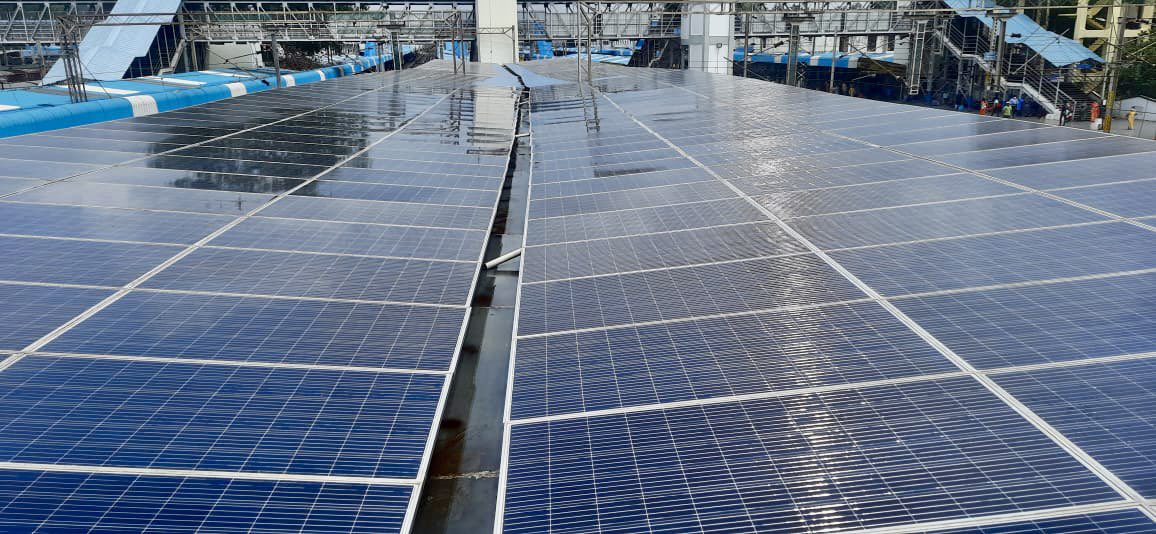
Rooftop solar installations in four more railway properties have started to generate solar power in the Central Railway zone. The four newly added sites are Igatpuri railway hospital, Kasara railway station, Igatpuri railway station, and Titwala cabin. Central Railway now has a total of 48 sites in the solar power network.

These 48 sites shall now produce green energy of 2.5 million units which will help the railways in saving around Rs 1.9 crore each year which instead would be spent on fuel.

Central Railway CPRO, Shivaji Sutar said the transition of Central Railways to clean energy will cut down the annual carbon emissions of approximately 412 tonnes as well as help the national transporter to save Rs 1.9 crore in the fuel expenditure every year.

An annual inspection was conducted by the Central Railway General Manager, Anil Kumar Lahoti on the Igatpuri – Kalyan section falling under the Mumbai Division, as the solar panels in the four locations went live.

Lahoti paid a visit to the new solar power installations and inspected the crew lobby, inspected reservation counters, running room, and the training coach which was made out of a discarded coach. The Central Railway General Manager further inspected the Bio-Toilet evolution model which has helped in making railway tracks and stations cleaner. He also inaugurated a herbal garden along with a solar-powered rolling in and rolling out hut.

Now over a thousand Indian railway stations are installed by rooftop solar. These include some of the prime installations such as New Delhi, Agra, Jaipur, Guwahati, Varanasi, Old Delhi, Kolkata, Howrah, Secunderabad, and Katra.

Furthermore, there are plans to install rooftop solar on over 7000 railway stations in India.

Image Source

Also read: North Central Railway generates 16% more energy using solar power

Rooftop solar installations in four more railway properties have started to generate solar power in the Central Railway zone. The four newly added sites are Igatpuri railway hospital, Kasara railway station, Igatpuri railway station, and Titwala cabin. Central Railway now has a total of 48 sites in the solar power network. These 48 sites shall now produce green energy of 2.5 million units which will help the railways in saving around Rs 1.9 crore each year which instead would be spent on fuel. Central Railway CPRO, Shivaji Sutar said the transition of Central Railways to clean energy will cut down the annual carbon emissions of approximately 412 tonnes as well as help the national transporter to save Rs 1.9 crore in the fuel expenditure every year. An annual inspection was conducted by the Central Railway General Manager, Anil Kumar Lahoti on the Igatpuri – Kalyan section falling under the Mumbai Division, as the solar panels in the four locations went live. Lahoti paid a visit to the new solar power installations and inspected the crew lobby, inspected reservation counters, running room, and the training coach which was made out of a discarded coach. The Central Railway General Manager further inspected the Bio-Toilet evolution model which has helped in making railway tracks and stations cleaner. He also inaugurated a herbal garden along with a solar-powered rolling in and rolling out hut. Now over a thousand Indian railway stations are installed by rooftop solar. These include some of the prime installations such as New Delhi, Agra, Jaipur, Guwahati, Varanasi, Old Delhi, Kolkata, Howrah, Secunderabad, and Katra. Furthermore, there are plans to install rooftop solar on over 7000 railway stations in India. Image Source Also read: North Central Railway generates 16% more energy using solar power

Next Story
Infrastructure Urban

India Expands Semiconductor Training To 500 Institutions

Under the Chips to Startups programme of the India Semiconductor Mission, the Union minister responsible for Railways, Information and Broadcasting, and Electronics and IT reported notable progress in talent development. He indicated that over the past four years substantial steps have been taken towards a 10-year target of training 85,000 engineers in semiconductor design. World-class EDA tools have been deployed in 315 academic institutions across the country to provide students with practical exposure to chip design. These EDA tools are supported by leading global firms and are accessible t..

Next Story
Infrastructure Urban

Delhi Institutions Support India Semiconductor Mission

The Government of India has prioritised talent development through training, upskilling and workforce development under the Chips to Startups initiative of the India Semiconductor Mission, with officials noting progress in four years towards a 10-year target of training 85,000 engineers in semiconductor design. Electronic design automation tools provided by Synopsys, Cadence, Siemens, Renesas, Ansys and AMD have been deployed in 315 academic institutions, enabling students to gain practical chip design experience. Chips have been fabricated and tested at the Semiconductor Laboratory, Mohali, a..

Next Story
Infrastructure Urban

NHA Announces Winners Of NHCX Hackathon At IIT Hyderabad

The National Health Authority (NHA) has concluded the NHCX Hackathon under the Ayushman Bharat Digital Mission (ABDM) to stimulate innovation around the National Health Claims Exchange (NHCX). The winning teams presented their solutions at the NHCX Innovation Meet held at IIT Hyderabad during a two-day event in March 2026 that also served as the hackathon grand finale. The hackathon itself ran from 22 to 28 February 2026 and aimed to accelerate paperless, transparent claims processing across India. The event was organised with a range of ecosystem partners, including the Insurance Regulatory a..

Advertisement

Subscribe to Our Newsletter

Get daily newsletters around different themes from Construction world.

STAY CONNECTED

Advertisement

Advertisement

Advertisement