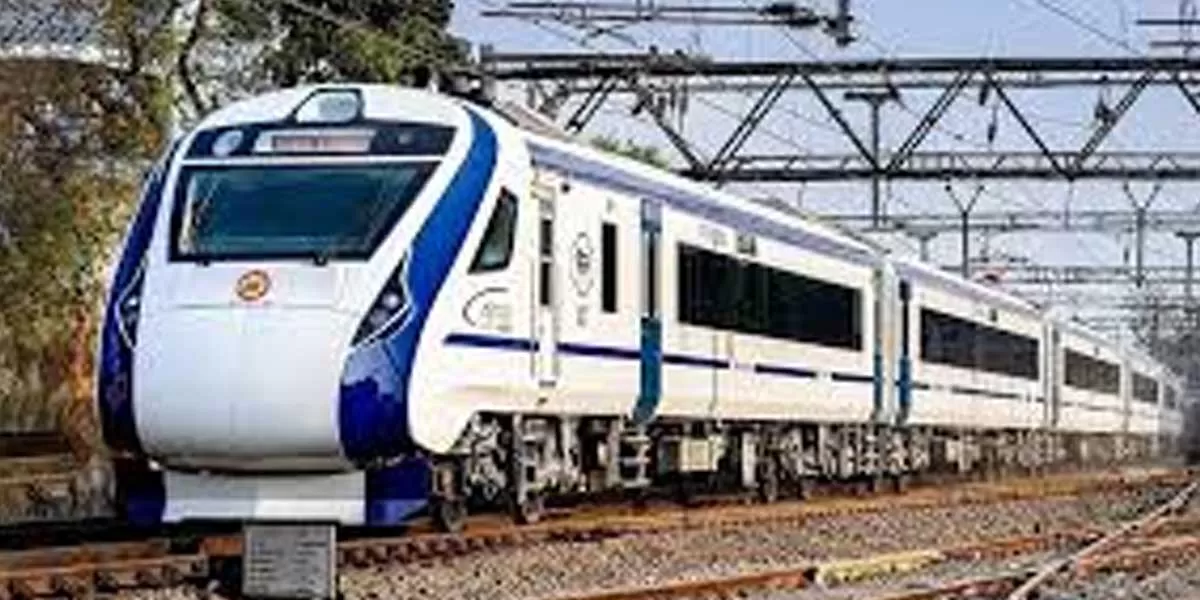
136 Vande Bharat Trains Transforming Indian Railways
RAILWAYS & METRO RAIL

136 Vande Bharat Trains Transforming Indian Railways

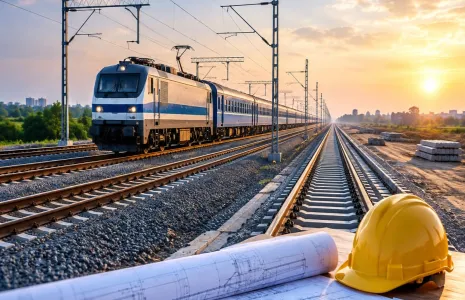
Indian Railways has made significant strides in its transformation in 2024, marking a milestone with 136 Vande Bharat trains now operational across the network. These semi-high-speed trains, which embody India’s aspirations for modern and comfortable travel, reflect the Railways' commitment to world-class service, technological innovation, and national progress.

In 2024 alone, 62 new Vande Bharat services were introduced. The trains feature state-of-the-art amenities, including Kavach safety technology, 360-degree rotating seats, accessible toilets for Divyangjan, and Braille signages.

Additionally, Indian Railways electrified 3,210 km of rail track, extending the electrification of the broad gauge network to 97%. The ‘Amrit Bharat Station Scheme’ has identified 1,337 stations for redevelopment, with work underway in 1,198 stations.

Indian Railways is also working towards its target of becoming a Net Zero Carbon emitter by 2030, commissioning 487 MW of solar and 103 MW of wind power plants. The total capital expenditure for 2024-25 has reached Rs 2,65,200 crore, the highest allocation in the budget.

E-ticketing has increased significantly, with the reserved sector reaching 86% and unreserved sector growth from 28% to 33%. To enhance cargo services, 354 locations have been identified for Multi-Modal Cargo Terminals, with 91 commissioned by October 2024.

Furthermore, three new Economic Corridors—Energy, Mineral and Cement; High Traffic Density Routes; and Rail Sagar—have been sanctioned, with 58 projects worth Rs 88,875 crore already approved for 2024.

Indian Railways has made significant strides in its transformation in 2024, marking a milestone with 136 Vande Bharat trains now operational across the network. These semi-high-speed trains, which embody India’s aspirations for modern and comfortable travel, reflect the Railways' commitment to world-class service, technological innovation, and national progress. In 2024 alone, 62 new Vande Bharat services were introduced. The trains feature state-of-the-art amenities, including Kavach safety technology, 360-degree rotating seats, accessible toilets for Divyangjan, and Braille signages. Additionally, Indian Railways electrified 3,210 km of rail track, extending the electrification of the broad gauge network to 97%. The ‘Amrit Bharat Station Scheme’ has identified 1,337 stations for redevelopment, with work underway in 1,198 stations. Indian Railways is also working towards its target of becoming a Net Zero Carbon emitter by 2030, commissioning 487 MW of solar and 103 MW of wind power plants. The total capital expenditure for 2024-25 has reached Rs 2,65,200 crore, the highest allocation in the budget. E-ticketing has increased significantly, with the reserved sector reaching 86% and unreserved sector growth from 28% to 33%. To enhance cargo services, 354 locations have been identified for Multi-Modal Cargo Terminals, with 91 commissioned by October 2024. Furthermore, three new Economic Corridors—Energy, Mineral and Cement; High Traffic Density Routes; and Rail Sagar—have been sanctioned, with 58 projects worth Rs 88,875 crore already approved for 2024.

Next Story
Infrastructure Transport

MMRDA advances 250 m on Orange Gate–Marine Drive tunnel

The Mumbai Metropolitan Region Development Authority (MMRDA) has completed 250 m of underground tunnelling for the Orange Gate–Marine Drive Urban Road Tunnel using India’s largest slurry shield tunnel boring machine (TBM) deployed for an urban road project.The project involves twin tunnels extending over 7 km beneath critical transport corridors, including Central Railway, Western Railway and Metro Line 3. The work requires high-precision engineering to navigate densely developed urban infrastructure.Once completed, the tunnel is expected to reduce travel time between Orange Gate and Marin..

Next Story
Infrastructure Urban

Hindustan Zinc Pays Rs 188.46 Billion in FY26

Hindustan Zinc contributed Rs 188.46 billion to the public exchequer in FY 2025-26, according to its 9th Tax Transparency Report. The contribution, equivalent to 46 per cent of the company’s revenue, included direct and indirect taxes, government royalties, dividends to the Government of India, withholding taxes and other statutory levies.The company’s five-year cumulative contribution to the exchequer stood at Rs 915.72 billion. In FY26, Hindustan Zinc reported revenue of Rs 408.44 billion, EBITDA of Rs 221.62 billion and profit after tax of Rs 138.32 billion. It also achieved its highest..

Next Story
Infrastructure Urban

World of Concrete India 2026 Opens in Mumbai

Informa Markets in India will host the 12th edition of World of Concrete India 2026 from 3–5 June 2026 at the Bombay Exhibition Centre, Mumbai. The specialised B2B exhibition will bring together manufacturers, suppliers, contractors, developers, architects, consultants, infrastructure companies, project leaders and government stakeholders.The event is expected to feature over 350 brands and more than 18,000 trade professionals. It will cover concrete and cement, dry mortar, precast technologies, formwork, construction chemicals, industrial and commercial flooring, scaffolding, safety solutio..

Advertisement

Subscribe to Our Newsletter

Get daily newsletters around different themes from Construction world.

STAY CONNECTED

Advertisement

Advertisement

Advertisement

-->