

+
AI Guards Elephant Corridors from Trains
RAILWAYS & METRO RAIL

AI Guards Elephant Corridors from Trains

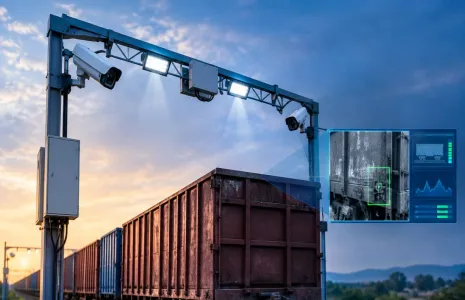
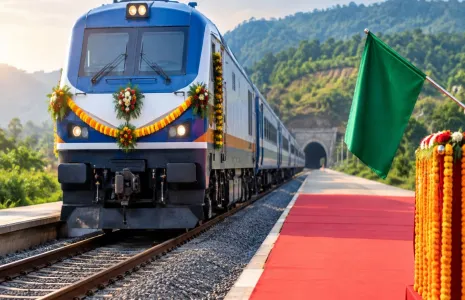
The Northeast Frontier Railway (NFR) has partnered with RailTel Corporation of India to deploy an Artificial Intelligence-based surveillance system in elephant corridors. This Intrusion Detection System (IDS) aims to prevent train-related accidents involving elephants and enhance disaster preparedness.

NFR's Chief Public Relations Officer, Sabyasachi De, emphasised their commitment to safeguarding wildlife, particularly elephants, near railway tracks. The IDS, initially piloted successfully in West Bengal and Assam, utilises existing optical fibres as sensors to detect the presence of wild animals, sending alerts to relevant authorities.

The system relies on AI and a fibre optic-based acoustic mechanism to monitor real-time elephant movement within a 60-kilometre stretch, providing a 30-40 minute advance warning. Apart from elephant protection, it can identify rail fractures, unauthorised trespassing, unauthorised digging near tracks, and landslides nearby.

This initiative addresses the growing human-elephant conflict in Assam and West Bengal, reducing elephant casualties from train accidents. The IDS will enhance rail transport in the NFR region by improving speeds on elephant corridors and expediting clearances for railway projects through wildlife sanctuaries.

This technological advancement underscores NFR's commitment to protecting wildlife and promoting coexistence with human populations.

The Northeast Frontier Railway (NFR) has partnered with RailTel Corporation of India to deploy an Artificial Intelligence-based surveillance system in elephant corridors. This Intrusion Detection System (IDS) aims to prevent train-related accidents involving elephants and enhance disaster preparedness.NFR's Chief Public Relations Officer, Sabyasachi De, emphasised their commitment to safeguarding wildlife, particularly elephants, near railway tracks. The IDS, initially piloted successfully in West Bengal and Assam, utilises existing optical fibres as sensors to detect the presence of wild animals, sending alerts to relevant authorities.The system relies on AI and a fibre optic-based acoustic mechanism to monitor real-time elephant movement within a 60-kilometre stretch, providing a 30-40 minute advance warning. Apart from elephant protection, it can identify rail fractures, unauthorised trespassing, unauthorised digging near tracks, and landslides nearby.This initiative addresses the growing human-elephant conflict in Assam and West Bengal, reducing elephant casualties from train accidents. The IDS will enhance rail transport in the NFR region by improving speeds on elephant corridors and expediting clearances for railway projects through wildlife sanctuaries.This technological advancement underscores NFR's commitment to protecting wildlife and promoting coexistence with human populations.

Next Story
Infrastructure Urban

Implementation Status of Jal Jeevan Mission

Since August 2019 the Government has implemented Jal Jeevan Mission to provide assured potable water through household tap connections in rural India. At the start of the mission only 32.3 million (mn) rural households, representing 16.7 per cent, were reported to have tap water connections. States and union territories have reported that 125.8 mn additional rural households have since been provided with tap connections. As a result, of about 193.6 mn rural households roughly 158.2 mn, or 81.71 per cent, are reported to have tap water supply at home.\n\nThe State, district and village level st..

Next Story
Infrastructure Urban

Jal Jeevan Mission Reaches Eighty One Per Cent Rural Coverage

The Government reported substantial progress under the Jal Jeevan Mission, launched in August 2019 to provide tap water to every rural household. At launch only 32.3 million (mn) rural households had tap connections and states and Union territories reported provision of 125.8 mn additional households by March 2026. Consequently, out of about 193.6 mn rural households around 158.2 mn, or 81.71 per cent, are reported to have tap water at home. The Finance Minister announced extension of the mission until 2028 in the 2025-26 budget speech. The Swachh Bharat Mission Grameen, launched in October 20..

Next Story
Infrastructure Urban

Empowering Local Governance for Sustainable Rural Water Supply

The Ministry of Jal Shakti has aligned the Jal Jeevan Mission (JJM) with the 73rd Amendment to strengthen village level planning and community ownership of water supply. Gram Panchayats, village water and sanitation committees and Pani Samitis are to plan, implement, manage and maintain piped water systems, with gram sabha processes formalising handover and oversight. Implementation support agencies including non government organisations, community based organisations and self help groups have been empanelled to train local committees and promote women participation. Under JJM, the department ..

Advertisement

Subscribe to Our Newsletter

Get daily newsletters around different themes from Construction world.

STAY CONNECTED

Advertisement

Advertisement

Advertisement