Alstom emerges as the only bidder for Delhi Metro signal upgradation
RAILWAYS & METRO RAIL

Alstom emerges as the only bidder for Delhi Metro signal upgradation

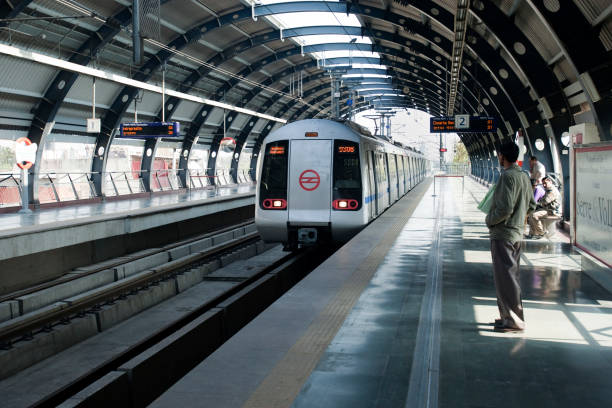
Alstom Transport India has emerged as the only bidder for the supply and commissioning of the train control and signalling system for Delhi Metro’s red line (line-1).

The system also contains virtual signal implementation for the red line, Line-1 of Delhi metro’s red line that extends to 34.4 km from Shaheed Sthal to Rithala with 29 stations.

The invitation of bids for the work was started in March 2021 by the Delhi Metro Rail Corporation (DMRC) with a total capital of Rs 90.27 crore and time for completion as 15 months.

The reveal of Alstom as the only bidder for the contract came when the technical bids were opened.

Currently, Delhi Metro's Red Line is decked with Urbalis 200 train control and signalling solution by Alstom.

The work includes design, manufacture, supply, installation, configuration/customisation, testing and commissioning of train control and signalling system for short looping train movement along with virtual signal implementation.

They also have trains conversion from six cars to eight-car trains along with head stopping at all platforms of the Line-1 and combining the train control and signalling system with a third-party ATS system.

The process of signalling upgradation was launched in 2019 by the Delhi Metro on its Red, Yellow and Blue Lines to identify glitches and make the required changes to aid the affected trains run at 33-37 km per hour.

This will render stable train services thereby preventing overcrowding.

The bid of Rs 86.21 crore by Siemens won the contract for upgradation of Blue Line in June 2020.

The contract for Yellow Line upgradation along with the contract for the bid raised in March by the only bidder Alstom is also still pending.

Image Source


Also read: DMRCL opens tender for construction of four stations, twin tunnels

Alstom Transport India has emerged as the only bidder for the supply and commissioning of the train control and signalling system for Delhi Metro’s red line (line-1). The system also contains virtual signal implementation for the red line, Line-1 of Delhi metro’s red line that extends to 34.4 km from Shaheed Sthal to Rithala with 29 stations. The invitation of bids for the work was started in March 2021 by the Delhi Metro Rail Corporation (DMRC) with a total capital of Rs 90.27 crore and time for completion as 15 months. The reveal of Alstom as the only bidder for the contract came when the technical bids were opened. Currently, Delhi Metro's Red Line is decked with Urbalis 200 train control and signalling solution by Alstom. The work includes design, manufacture, supply, installation, configuration/customisation, testing and commissioning of train control and signalling system for short looping train movement along with virtual signal implementation. They also have trains conversion from six cars to eight-car trains along with head stopping at all platforms of the Line-1 and combining the train control and signalling system with a third-party ATS system. The process of signalling upgradation was launched in 2019 by the Delhi Metro on its Red, Yellow and Blue Lines to identify glitches and make the required changes to aid the affected trains run at 33-37 km per hour. This will render stable train services thereby preventing overcrowding. The bid of Rs 86.21 crore by Siemens won the contract for upgradation of Blue Line in June 2020. The contract for Yellow Line upgradation along with the contract for the bid raised in March by the only bidder Alstom is also still pending. Image Source Also read: DMRCL opens tender for construction of four stations, twin tunnels

Next Story
Infrastructure Transport

MMRDA advances 250 m on Orange Gate–Marine Drive tunnel

The Mumbai Metropolitan Region Development Authority (MMRDA) has completed 250 m of underground tunnelling for the Orange Gate–Marine Drive Urban Road Tunnel using India’s largest slurry shield tunnel boring machine (TBM) deployed for an urban road project.The project involves twin tunnels extending over 7 km beneath critical transport corridors, including Central Railway, Western Railway and Metro Line 3. The work requires high-precision engineering to navigate densely developed urban infrastructure.Once completed, the tunnel is expected to reduce travel time between Orange Gate and Marin..

Next Story
Infrastructure Urban

Hindustan Zinc Pays Rs 188.46 Billion in FY26

Hindustan Zinc contributed Rs 188.46 billion to the public exchequer in FY 2025-26, according to its 9th Tax Transparency Report. The contribution, equivalent to 46 per cent of the company’s revenue, included direct and indirect taxes, government royalties, dividends to the Government of India, withholding taxes and other statutory levies.The company’s five-year cumulative contribution to the exchequer stood at Rs 915.72 billion. In FY26, Hindustan Zinc reported revenue of Rs 408.44 billion, EBITDA of Rs 221.62 billion and profit after tax of Rs 138.32 billion. It also achieved its highest..

Next Story
Infrastructure Urban

World of Concrete India 2026 Opens in Mumbai

Informa Markets in India will host the 12th edition of World of Concrete India 2026 from 3–5 June 2026 at the Bombay Exhibition Centre, Mumbai. The specialised B2B exhibition will bring together manufacturers, suppliers, contractors, developers, architects, consultants, infrastructure companies, project leaders and government stakeholders.The event is expected to feature over 350 brands and more than 18,000 trade professionals. It will cover concrete and cement, dry mortar, precast technologies, formwork, construction chemicals, industrial and commercial flooring, scaffolding, safety solutio..

Advertisement

Subscribe to Our Newsletter

Get daily newsletters around different themes from Construction world.

STAY CONNECTED

Advertisement

Advertisement

Advertisement

-->