
Bengaluru plans to build four new metro lines
RAILWAYS & METRO RAIL

Bengaluru plans to build four new metro lines

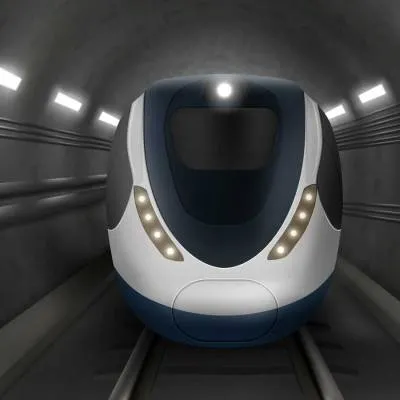
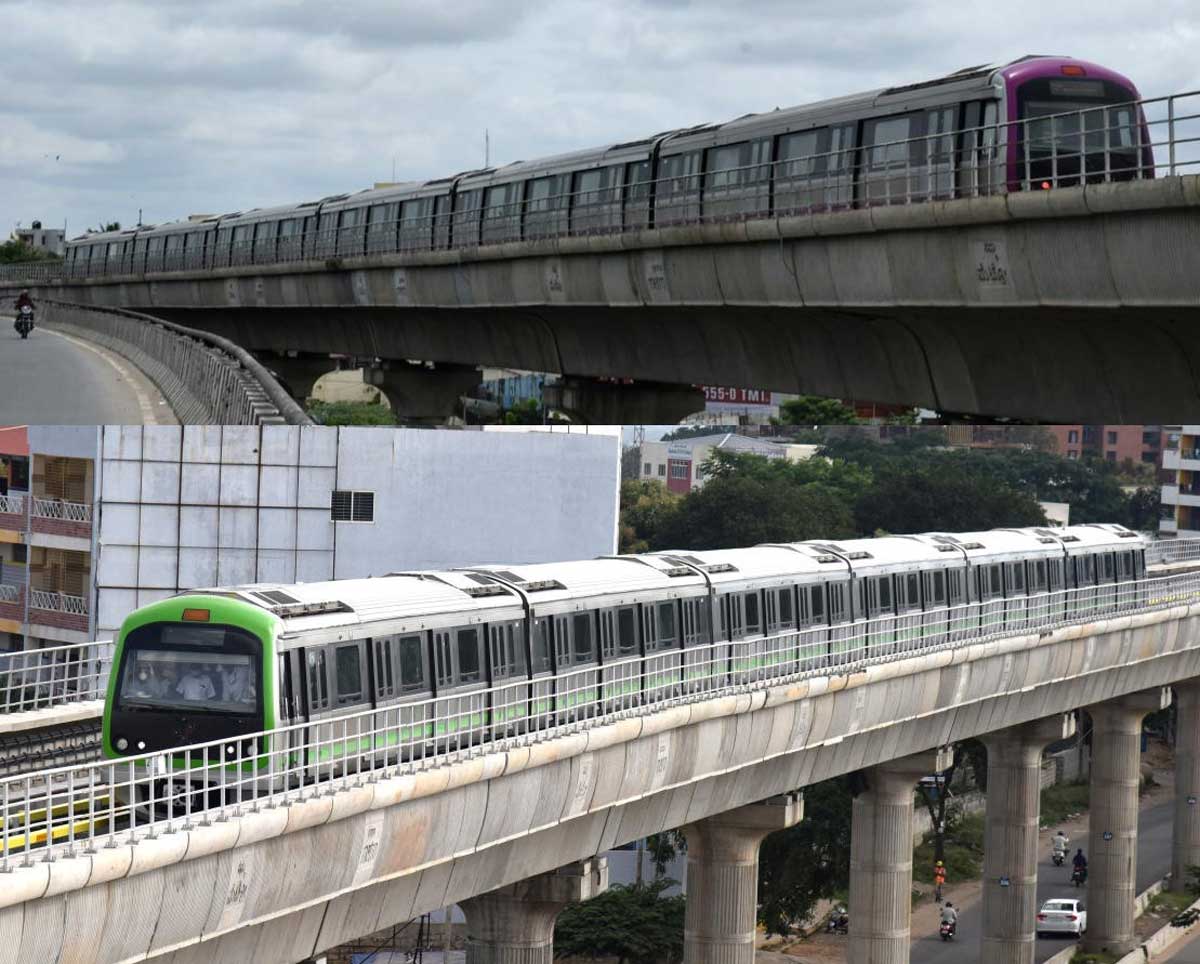
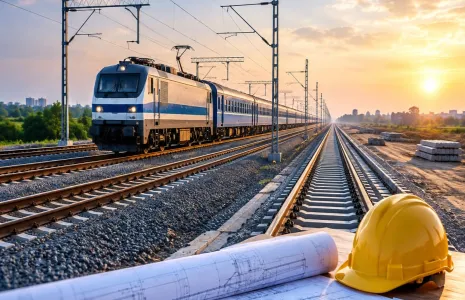
The state government of Karnataka in India has announced an action plan to establish four new metro lines in Bengaluru with a distance of 59 km to make the state a 1 trillion-dollar economy. The proposed metro lines are expected to cost INR 270,000 million and provide citizens access to amenities within 1-2 km from their workplace or residence by 2032, which is currently 4-5 km away. The new metro lines include an extension of the Whitefield line to Katamannalur or Hoskote, Banngerghatta to Jigani, a new line between M G Road to Hope Farm junction via Old Airport Road, Marathahalli and Whitefield, and another new line between the Kempegowda International Airport and Nagawara via Thanisandra.

The action plan also includes upgrading the existing fleet of BMTC buses and converting 100% of them to electric buses by 2028, adding 2,000 e-buses every year, and providing space for auto-rickshaw/public bike-sharing EV charging points along high-density corridors adjoining every metro station and bus stop for last-mile connectivity.

Moreover, the plan recommends adopting a "30 minutes proposal" concept where the city design is centred on ensuring all citizens have access to a range of services within half an hour. The proposal suggests 12 ‘good life’ clusters under the ‘Live Work Play’ concept, including Malleshwaram-Rajajinagar, Jayanagar/J P Nagar, Indiranagar/Koramangala, HSR-Sarjapur Road, Whitefield/Kadugodi, Banshankari-Kanakpura Rd, Electronic-City-Bomanhalli, Banaswadi-HRBR, Thanisandra-Nagavara, Hebbal-Yellahanka, Yeshwantpur-Peenya, and Marathahalli-Yemlur. The cost of the proposed metro lines and extensions is estimated to be around INR. 4000-6000 million per km.

The state government of Karnataka in India has announced an action plan to establish four new metro lines in Bengaluru with a distance of 59 km to make the state a 1 trillion-dollar economy. The proposed metro lines are expected to cost INR 270,000 million and provide citizens access to amenities within 1-2 km from their workplace or residence by 2032, which is currently 4-5 km away. The new metro lines include an extension of the Whitefield line to Katamannalur or Hoskote, Banngerghatta to Jigani, a new line between M G Road to Hope Farm junction via Old Airport Road, Marathahalli and Whitefield, and another new line between the Kempegowda International Airport and Nagawara via Thanisandra. The action plan also includes upgrading the existing fleet of BMTC buses and converting 100% of them to electric buses by 2028, adding 2,000 e-buses every year, and providing space for auto-rickshaw/public bike-sharing EV charging points along high-density corridors adjoining every metro station and bus stop for last-mile connectivity. Moreover, the plan recommends adopting a 30 minutes proposal concept where the city design is centred on ensuring all citizens have access to a range of services within half an hour. The proposal suggests 12 ‘good life’ clusters under the ‘Live Work Play’ concept, including Malleshwaram-Rajajinagar, Jayanagar/J P Nagar, Indiranagar/Koramangala, HSR-Sarjapur Road, Whitefield/Kadugodi, Banshankari-Kanakpura Rd, Electronic-City-Bomanhalli, Banaswadi-HRBR, Thanisandra-Nagavara, Hebbal-Yellahanka, Yeshwantpur-Peenya, and Marathahalli-Yemlur. The cost of the proposed metro lines and extensions is estimated to be around INR. 4000-6000 million per km.

Next Story
Infrastructure Transport

MMRDA advances 250 m on Orange Gate–Marine Drive tunnel

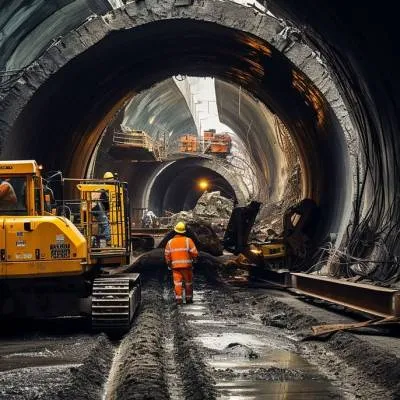
The Mumbai Metropolitan Region Development Authority (MMRDA) has completed 250 m of underground tunnelling for the Orange Gate–Marine Drive Urban Road Tunnel using India’s largest slurry shield tunnel boring machine (TBM) deployed for an urban road project.The project involves twin tunnels extending over 7 km beneath critical transport corridors, including Central Railway, Western Railway and Metro Line 3. The work requires high-precision engineering to navigate densely developed urban infrastructure.Once completed, the tunnel is expected to reduce travel time between Orange Gate and Marin..

Next Story
Infrastructure Urban

Hindustan Zinc Pays Rs 188.46 Billion in FY26

Hindustan Zinc contributed Rs 188.46 billion to the public exchequer in FY 2025-26, according to its 9th Tax Transparency Report. The contribution, equivalent to 46 per cent of the company’s revenue, included direct and indirect taxes, government royalties, dividends to the Government of India, withholding taxes and other statutory levies.The company’s five-year cumulative contribution to the exchequer stood at Rs 915.72 billion. In FY26, Hindustan Zinc reported revenue of Rs 408.44 billion, EBITDA of Rs 221.62 billion and profit after tax of Rs 138.32 billion. It also achieved its highest..

Next Story
Infrastructure Urban

World of Concrete India 2026 Opens in Mumbai

Informa Markets in India will host the 12th edition of World of Concrete India 2026 from 3–5 June 2026 at the Bombay Exhibition Centre, Mumbai. The specialised B2B exhibition will bring together manufacturers, suppliers, contractors, developers, architects, consultants, infrastructure companies, project leaders and government stakeholders.The event is expected to feature over 350 brands and more than 18,000 trade professionals. It will cover concrete and cement, dry mortar, precast technologies, formwork, construction chemicals, industrial and commercial flooring, scaffolding, safety solutio..

Advertisement

Subscribe to Our Newsletter

Get daily newsletters around different themes from Construction world.

STAY CONNECTED

Advertisement

Advertisement

Advertisement