+
Bengaluru's Yelahanka To Get India's Largest Railway Terminal
RAILWAYS & METRO RAIL

Bengaluru's Yelahanka To Get India's Largest Railway Terminal

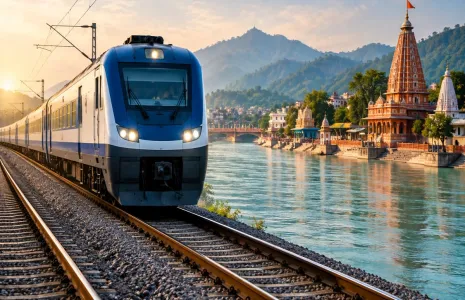
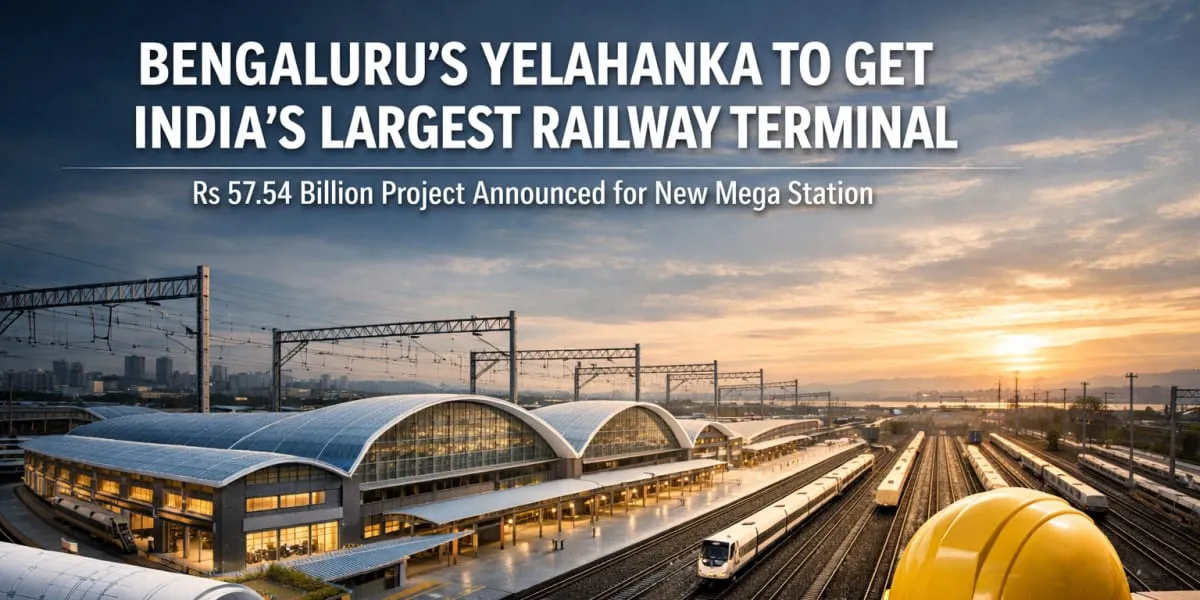
The Union minister of state for railways announced that Bengaluru's Yelahanka will receive what is expected to be the country's largest railway terminal, with a project cost of Rs 57.54 bn. The announcement identified the sum and signalled that the development will form a major part of the region's transport upgrade. Officials indicated that initial planning work will prioritise integration with existing rail corridors and will aim to minimise disruption to current services. The ministry said the project reflects a strategic push to modernise urban rail infrastructure.

The terminal is planned to relieve pressure on central stations by rerouting terminating services and by accommodating both long distance and suburban operations, thereby improving punctuality across the network. Planners anticipate multimodal connectivity with bus and metro feeders and improved last mile options to ensure seamless passenger movement. The design brief is expected to emphasise capacity, operational flexibility and resilience to handle future growth in ridership. Authorities noted that technology driven signalling and passenger information systems will be core features.

Proposals under consideration include accessible concourses, covered walkways, digital ticketing, expanded waiting areas and enhanced safety provisions to meet contemporary standards. The development is also intended to support freight logistics by providing dedicated handling zones that could ease pressure on city freight terminals and benefit regional commerce. Environmental safeguards and efficient land use are being factored into preliminary studies to comply with regulatory requirements and to limit ecological impact. Contractors will be required to adhere to stringent construction and waste management norms.

State and central agencies will coordinate on land acquisition, approvals and procurement to ensure timely execution while monitoring fiscal discipline and project milestones. Officials described the initiative as a catalyst for local economic activity and urban regeneration in the Yelahanka corridor without compromising existing passenger services. Further technical studies, stakeholder consultations and phased construction plans will guide implementation and help manage risk. The ministry indicated that public updates will follow as detailed plans and clearances are secured.

The Union minister of state for railways announced that Bengaluru's Yelahanka will receive what is expected to be the country's largest railway terminal, with a project cost of Rs 57.54 bn. The announcement identified the sum and signalled that the development will form a major part of the region's transport upgrade. Officials indicated that initial planning work will prioritise integration with existing rail corridors and will aim to minimise disruption to current services. The ministry said the project reflects a strategic push to modernise urban rail infrastructure. The terminal is planned to relieve pressure on central stations by rerouting terminating services and by accommodating both long distance and suburban operations, thereby improving punctuality across the network. Planners anticipate multimodal connectivity with bus and metro feeders and improved last mile options to ensure seamless passenger movement. The design brief is expected to emphasise capacity, operational flexibility and resilience to handle future growth in ridership. Authorities noted that technology driven signalling and passenger information systems will be core features. Proposals under consideration include accessible concourses, covered walkways, digital ticketing, expanded waiting areas and enhanced safety provisions to meet contemporary standards. The development is also intended to support freight logistics by providing dedicated handling zones that could ease pressure on city freight terminals and benefit regional commerce. Environmental safeguards and efficient land use are being factored into preliminary studies to comply with regulatory requirements and to limit ecological impact. Contractors will be required to adhere to stringent construction and waste management norms. State and central agencies will coordinate on land acquisition, approvals and procurement to ensure timely execution while monitoring fiscal discipline and project milestones. Officials described the initiative as a catalyst for local economic activity and urban regeneration in the Yelahanka corridor without compromising existing passenger services. Further technical studies, stakeholder consultations and phased construction plans will guide implementation and help manage risk. The ministry indicated that public updates will follow as detailed plans and clearances are secured.

Next Story
Equipment

Kabelschlepp India Installs Robotic VMC in Bengaluru

Kabelschlepp India, part of the Tsubaki Group, has installed a state-of-the-art Vertical Machining Center (VMC) integrated with robotic automation at its Bengaluru facility. The inauguration was held in the presence of Henning Preis, President & CEO, Kabelschlepp Group, Jörg Schulz, Vice President – Production, and Srinivas P. Kamisetty, Managing Director, Kabelschlepp India.The high-precision CNC VMC is designed for advanced milling, drilling, tapping and multi-axis machining. Equipped with a vertical spindle orientation, automatic tool changer and intelligent CNC control system, it en..

Next Story
Infrastructure Transport

Highway Delivery Reset!

Project delays and inefficiencies continue to bedevil the progress of India’s National Highways network. A multi-pronged reform agenda is needed to inject greater transparency and accountability at every stage – from planning and procurement to execution, maintenance and oversight. This article offers key recommendations and reform strategies that government stakeholders – from the Ministry of Road Transport & Highways (MoRTH) and the National Highways Authority of India (NHAI) to state agencies and oversight bodies – should pursue to put highway development on a better track.Decen..

Next Story
Infrastructure Transport

MSIDC Executes ₹37,000 Crore Road Programme

With Rs 37,000 crore worth of road projects under execution across Maharashtra, Maharashtra State Infrastructure Development Corporation (MSIDC) is driving one of the state’s largest infrastructure programmes. Dr Brijesh Dixit, Managing Director, discusses the institutional reforms, execution frameworks, financing strategies and technology adoption enabling timely, high-quality delivery, in conversation with PRATAP PADODE, Editor-in-Chief, CW.With over Rs 37,000 crore worth of road projects underway across districts – many under tight timelines – what institutional and executio..

Advertisement

Subscribe to Our Newsletter

Get daily newsletters around different themes from Construction world.

STAY CONNECTED

Advertisement

Advertisement

Advertisement

Open In App