Bhopal Metro's 4 km priority corridor set for trial run
RAILWAYS & METRO RAIL

Bhopal Metro's 4 km priority corridor set for trial run

In just one week's time, a pivotal milestone will be reached as the Bhopal metro rail's priority corridor undergoes a 4 km trial run. This marks a significant leap towards establishing seamless connectivity in the state capital.

Traditionally, metro rail projects have been reserved for cities with populations exceeding three million. However, Madhya Pradesh is boldly moving forward in recognition of its burgeoning population, which has begun to reach suffocating levels. The metro project represents a forward-thinking vision for both Indore and Bhopal. These two cities already boast a bus rapid transport system, and the forthcoming metro rail network is poised to become the primary public transport provider, with the BRT system serving as a complementary feeder network.

Back in 2017, the state cabinet green lit the detailed project reports (DPRs) for the Bhopal and Indore metro rail endeavours, with a combined budget of Rs 144.8 billion (EUR 2 billion). For Bhopal, two metro corridors covering 27.87 km were proposed, while Indore's metro was planned to span 31.55 km. Union government approval was secured in October 2018, aligning with the new metro policy and marking these projects as the pioneering developments following the revised guidelines.

The groundwork for Phase I commenced in January 2019. The Bhopal Metro's Priority Corridor is anticipated to be fully operational by March 2024, with Phase I, connecting Karond to AIIMS Bhopal, slated for completion in 2026, as per the Madhya Pradesh Metro Rail Corporation Limited (MPMRCL).

To fund the Bhopal project, a 400-million-euro loan from the European Investment Bank (EIB) was secured in 2019. The network comprises two routes: one stretching from the Karond intersection to AIIMS Bhopal and the other from Bhadbada Square to Ratnagiri. Presently, the Bhopal Metro Phase encompasses 27.872 km, encompassing both of these lines.

MPMRCL is at the forefront of establishing policies ensuring adherence to applicable laws concerning land acquisition, resettlement, rehabilitation, and the guidelines of international funding institutions such as the European Investment Bank (EIB) and other International Financial Institutions (IFIs).

In the wake of the pandemic, the Madhya Pradesh government set an ambitious target to complete the Bhopal metro project by December 2023. In January 2022, UAD Minister Bhupendra Singh announced the commencement of work on the Subhash Nagar Metro Depot. Currently, two metro corridors, namely AIIMS to Karond intersection and Bhadbhada intersection to Ratnagiri intersection, are in active development in Bhopal.

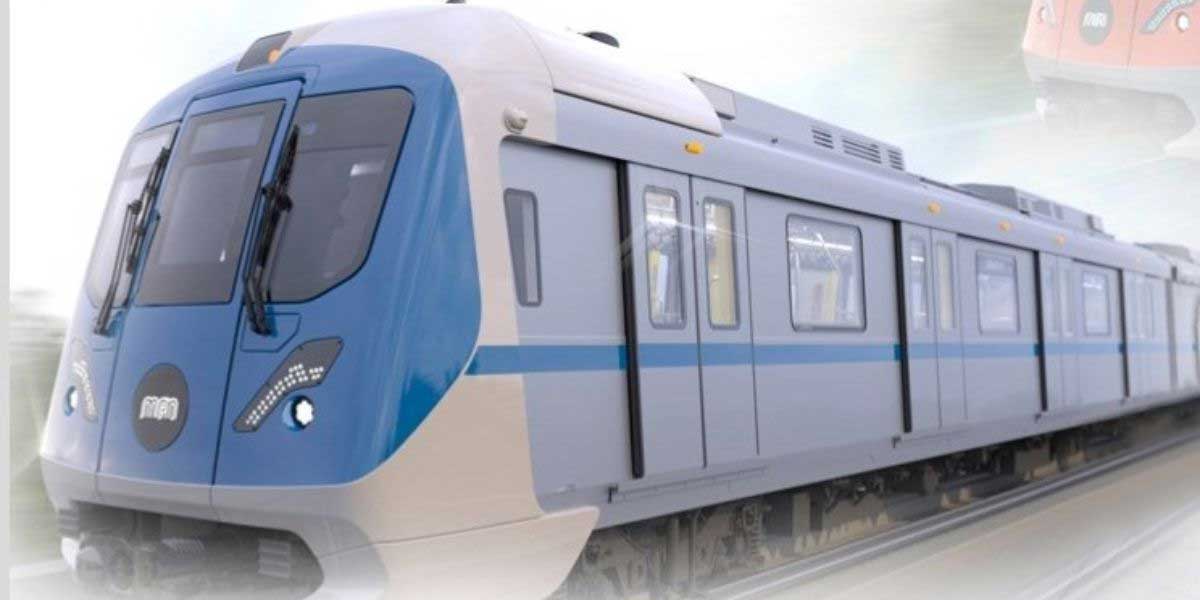
Excitingly, metro coaches have already arrived in Bhopal and Indore, and the eagerly awaited trial run is scheduled to take place by the end of September. The Habibganj metro station has been prepped for this momentous occasion, with two floors of the building readied for the event. Escalators are already in operation, and the final touches on the roof and elevators are expected to be completed in time for the trial run.

The Priority Corridor, which encompasses the Subhash Nagar depot, Kendriya Vidyalaya, MP Nagar, Board Office intersection, and Habibganj, spans approximately 4 km and features five stations. Construction of the AIIMS RoB is yet to commence.

In just one week's time, a pivotal milestone will be reached as the Bhopal metro rail's priority corridor undergoes a 4 km trial run. This marks a significant leap towards establishing seamless connectivity in the state capital. Traditionally, metro rail projects have been reserved for cities with populations exceeding three million. However, Madhya Pradesh is boldly moving forward in recognition of its burgeoning population, which has begun to reach suffocating levels. The metro project represents a forward-thinking vision for both Indore and Bhopal. These two cities already boast a bus rapid transport system, and the forthcoming metro rail network is poised to become the primary public transport provider, with the BRT system serving as a complementary feeder network. Back in 2017, the state cabinet green lit the detailed project reports (DPRs) for the Bhopal and Indore metro rail endeavours, with a combined budget of Rs 144.8 billion (EUR 2 billion). For Bhopal, two metro corridors covering 27.87 km were proposed, while Indore's metro was planned to span 31.55 km. Union government approval was secured in October 2018, aligning with the new metro policy and marking these projects as the pioneering developments following the revised guidelines. The groundwork for Phase I commenced in January 2019. The Bhopal Metro's Priority Corridor is anticipated to be fully operational by March 2024, with Phase I, connecting Karond to AIIMS Bhopal, slated for completion in 2026, as per the Madhya Pradesh Metro Rail Corporation Limited (MPMRCL). To fund the Bhopal project, a 400-million-euro loan from the European Investment Bank (EIB) was secured in 2019. The network comprises two routes: one stretching from the Karond intersection to AIIMS Bhopal and the other from Bhadbada Square to Ratnagiri. Presently, the Bhopal Metro Phase encompasses 27.872 km, encompassing both of these lines. MPMRCL is at the forefront of establishing policies ensuring adherence to applicable laws concerning land acquisition, resettlement, rehabilitation, and the guidelines of international funding institutions such as the European Investment Bank (EIB) and other International Financial Institutions (IFIs). In the wake of the pandemic, the Madhya Pradesh government set an ambitious target to complete the Bhopal metro project by December 2023. In January 2022, UAD Minister Bhupendra Singh announced the commencement of work on the Subhash Nagar Metro Depot. Currently, two metro corridors, namely AIIMS to Karond intersection and Bhadbhada intersection to Ratnagiri intersection, are in active development in Bhopal. Excitingly, metro coaches have already arrived in Bhopal and Indore, and the eagerly awaited trial run is scheduled to take place by the end of September. The Habibganj metro station has been prepped for this momentous occasion, with two floors of the building readied for the event. Escalators are already in operation, and the final touches on the roof and elevators are expected to be completed in time for the trial run. The Priority Corridor, which encompasses the Subhash Nagar depot, Kendriya Vidyalaya, MP Nagar, Board Office intersection, and Habibganj, spans approximately 4 km and features five stations. Construction of the AIIMS RoB is yet to commence.

Next Story
Real Estate

Indian real estate attracts USD 1.4 bn institutional investments in Q1 2026: Vestian

Institutional investments in India’s real estate sector touched USD 1.4 billion in Q1 2026, marking the highest first-quarter inflow since 2022, according to Vestian. While investments fell 62 per cent quarter-on-quarter due to an exceptionally high base in the previous quarter, they rose 74 per cent compared to the same period last year, reflecting sustained investor confidence despite rising geopolitical and macroeconomic challenges.Commercial real estate remained the key driver of investment activity during the quarter, accounting for 80 per cent of total inflows, sharply higher than 38 p..

Next Story
Infrastructure Transport

VECV crosses 1 lakh annual vehicle sales milestone in FY26

VE Commercial Vehicles (VECV), a joint venture between Volvo Group and Eicher Motors, has surpassed the 1 lakh annual sales mark in FY 2025–26, recording its highest-ever commercial vehicle sales performance. The company said it sold more than 100,000 vehicles during the year, marking a major milestone aligned with the original vision of the Volvo–Eicher joint venture.The strong performance was supported by demand across categories. Light and Medium Duty (LMD) trucks contributed 47,789 units, accounting for 46.1 per cent of total sales. Heavy Duty (HD) trucks recorded 26,867 units (25.9 pe..

Next Story
Technology

Rodic Digital & Advisory partners SatSure to deploy EO intelligence in public sector

Rodic Digital & Advisory (RDA), the strategic advisory and digital transformation arm of Rodic Consultants, has signed a strategic cooperation Memorandum of Understanding (MoU) with SatSure to jointly pursue opportunities in India’s public sector. The collaboration aims to integrate high-resolution Earth Observation (EO) data and geospatial AI into government workflows to strengthen monitoring, compliance, and operational decision-making across key sectors.The partnership combines SatSure’s Earth intelligence capabilities with RDA’s expertise in government digital transformation and ..

Advertisement

Subscribe to Our Newsletter

Get daily newsletters around different themes from Construction world.

STAY CONNECTED

Advertisement

Advertisement

Advertisement