+
Cabinet Clears Three Multitracking Railway Projects
RAILWAYS & METRO RAIL

Cabinet Clears Three Multitracking Railway Projects

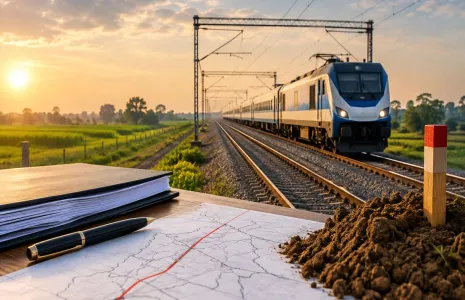
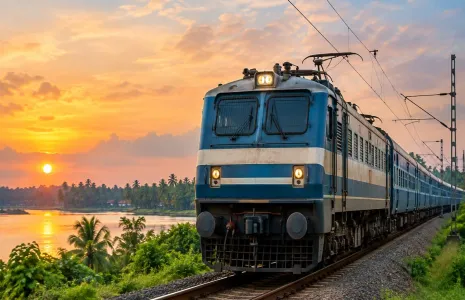
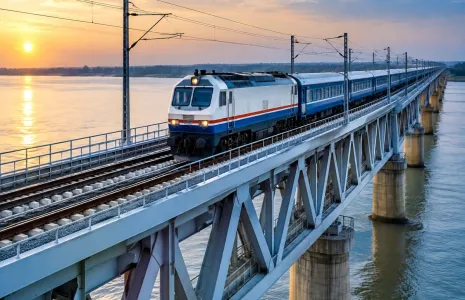
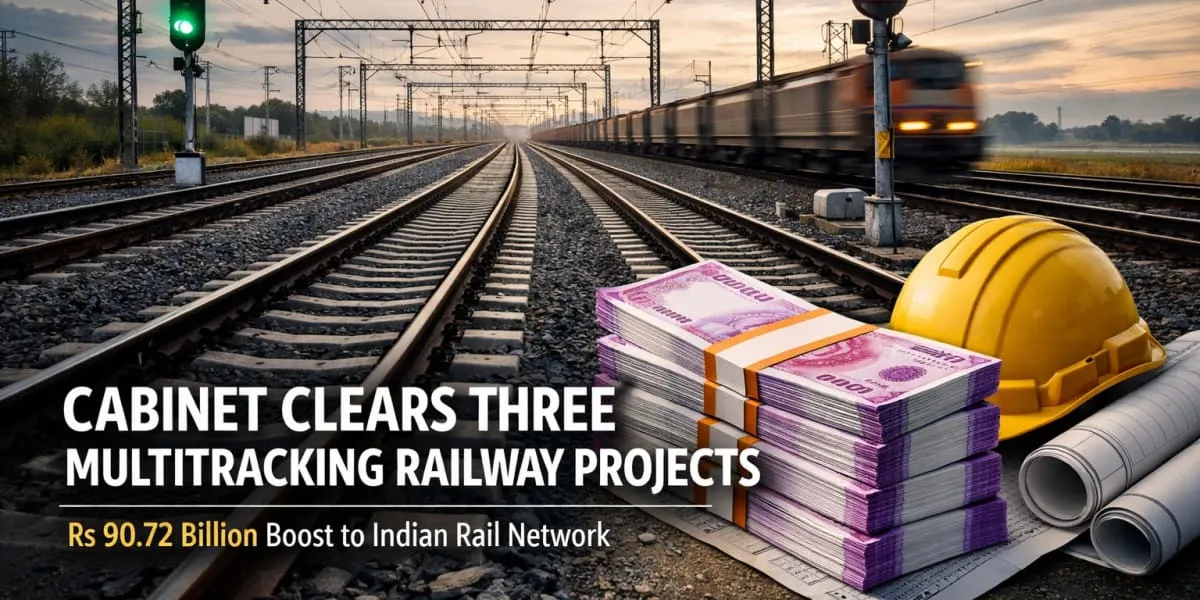
The Cabinet Committee on Economic Affairs has approved three multitracking projects of the Ministry of Railways covering eight districts in Maharashtra, Madhya Pradesh, Bihar and Jharkhand and adding about 307 km to the existing Indian Railways network. The projects were approved at an estimated total cost of Rs 90.72 billion (Rs 90.72 bn) and are expected to be completed by 2030-31. The schemes comprise the Gondia-Jabalpur doubling, the Punarakh-Kiul third and fourth lines, and the Gamharia-Chandil third and fourth lines.

The multitracking works will improve capacity and operational efficiency and are projected to enhance mobility and service reliability across the routes. The proposals are planned under the PM-Gati Shakti National Master Plan with a focus on integrated multi-modal connectivity and logistics efficiency through stakeholder consultations. The upgrades are intended to provide seamless movement of people, goods and services and to support connections to prominent tourist destinations in the region.

The projects are expected to benefit approximately 5,407 villages with a combined population of about nine point eight million (9.8 mn). Capacity augmentation is likely to streamline transport of commodities such as coal, steel, iron ore, cement, ballast and stone chips, fly ash, fertilisers, limestone, manganese, dolomite and foodgrains and to support local economic activity. The works are positioned to create employment and self-employment opportunities that will contribute to regional development.

The enhanced line capacity is projected to generate additional freight of 52 million tonnes per annum (52 mn t per annum), to reduce oil imports by 60 million litres and to lower carbon dioxide emissions by 300 million kilograms (300 mn kg), which is equivalent to planting 10 million trees. The railway mode being energy efficient is expected to help in achieving climate goals and in lowering national logistics costs. The projects are scheduled for completion by 2030-31 and are intended to deliver improved rail connectivity and economic benefits for the affected districts.

The Cabinet Committee on Economic Affairs has approved three multitracking projects of the Ministry of Railways covering eight districts in Maharashtra, Madhya Pradesh, Bihar and Jharkhand and adding about 307 km to the existing Indian Railways network. The projects were approved at an estimated total cost of Rs 90.72 billion (Rs 90.72 bn) and are expected to be completed by 2030-31. The schemes comprise the Gondia-Jabalpur doubling, the Punarakh-Kiul third and fourth lines, and the Gamharia-Chandil third and fourth lines. The multitracking works will improve capacity and operational efficiency and are projected to enhance mobility and service reliability across the routes. The proposals are planned under the PM-Gati Shakti National Master Plan with a focus on integrated multi-modal connectivity and logistics efficiency through stakeholder consultations. The upgrades are intended to provide seamless movement of people, goods and services and to support connections to prominent tourist destinations in the region. The projects are expected to benefit approximately 5,407 villages with a combined population of about nine point eight million (9.8 mn). Capacity augmentation is likely to streamline transport of commodities such as coal, steel, iron ore, cement, ballast and stone chips, fly ash, fertilisers, limestone, manganese, dolomite and foodgrains and to support local economic activity. The works are positioned to create employment and self-employment opportunities that will contribute to regional development. The enhanced line capacity is projected to generate additional freight of 52 million tonnes per annum (52 mn t per annum), to reduce oil imports by 60 million litres and to lower carbon dioxide emissions by 300 million kilograms (300 mn kg), which is equivalent to planting 10 million trees. The railway mode being energy efficient is expected to help in achieving climate goals and in lowering national logistics costs. The projects are scheduled for completion by 2030-31 and are intended to deliver improved rail connectivity and economic benefits for the affected districts.

Next Story
Infrastructure Urban

Implementation Status of Jal Jeevan Mission

Since August 2019 the Government has implemented Jal Jeevan Mission to provide assured potable water through household tap connections in rural India. At the start of the mission only 32.3 million (mn) rural households, representing 16.7 per cent, were reported to have tap water connections. States and union territories have reported that 125.8 mn additional rural households have since been provided with tap connections. As a result, of about 193.6 mn rural households roughly 158.2 mn, or 81.71 per cent, are reported to have tap water supply at home.\n\nThe State, district and village level st..

Next Story
Infrastructure Urban

Jal Jeevan Mission Reaches Eighty One Per Cent Rural Coverage

The Government reported substantial progress under the Jal Jeevan Mission, launched in August 2019 to provide tap water to every rural household. At launch only 32.3 million (mn) rural households had tap connections and states and Union territories reported provision of 125.8 mn additional households by March 2026. Consequently, out of about 193.6 mn rural households around 158.2 mn, or 81.71 per cent, are reported to have tap water at home. The Finance Minister announced extension of the mission until 2028 in the 2025-26 budget speech. The Swachh Bharat Mission Grameen, launched in October 20..

Next Story
Infrastructure Urban

Empowering Local Governance for Sustainable Rural Water Supply

The Ministry of Jal Shakti has aligned the Jal Jeevan Mission (JJM) with the 73rd Amendment to strengthen village level planning and community ownership of water supply. Gram Panchayats, village water and sanitation committees and Pani Samitis are to plan, implement, manage and maintain piped water systems, with gram sabha processes formalising handover and oversight. Implementation support agencies including non government organisations, community based organisations and self help groups have been empanelled to train local committees and promote women participation. Under JJM, the department ..

Advertisement

Subscribe to Our Newsletter

Get daily newsletters around different themes from Construction world.

STAY CONNECTED

Advertisement

Advertisement

Advertisement