China to rollout infra projects to combat economic slowdown
RAILWAYS & METRO RAIL

China to rollout infra projects to combat economic slowdown

The government of China has planned to expedite major infrastructure projects to combat the country's economic slowdown and identifies 102 mega projects including High Speed Rail (HSR) expansion by 12,000 km.

The top economic planning agency of China announced that it will moderately front-load infrastructure investment to drive 102 mega projects earmarked for the 14th Five-Year Plan period.

Domestic demand and sluggish consumption have emerged as the two major weaknesses of the Chinese economy, and infrastructure investment is a critical requirement.

With only about 0.4% annual growth rate, Chinese infrastructure investment in 2021 was down compared to the previous year. The infrastructure investment is expected to increase 5% in 2022.

Other factors include the Covid-19 pandemic, supply chain bottlenecks and real estate issues. The Chinese economy grew by 4% in the fourth quarter (Q4) of 2021 from 4.9% in the third quarter (Q3).

China's Gross Domestic Product (GDP) grew by 8.1% in 2021, while its GDP is projected to moderate at 5.5% in 2022.

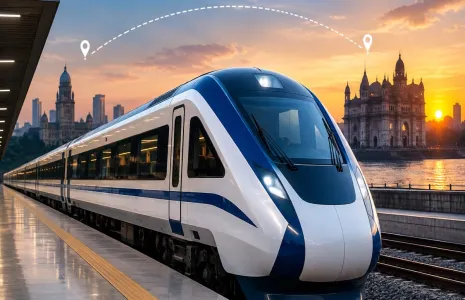
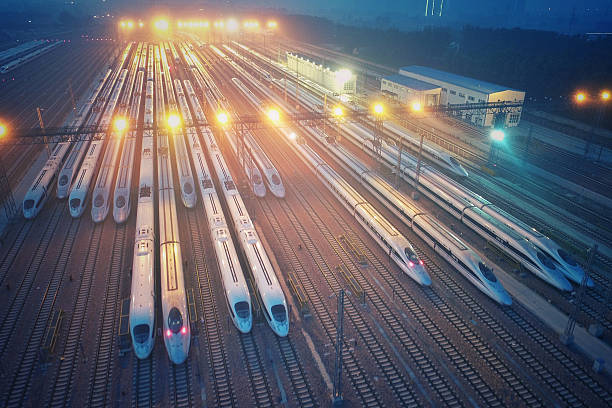
Its mega projects include infrastructure projects such as roads, railways, public transit systems, airports, nuclear power plants, power transmission lines and pipelines. The country will also expand its high-speed rail (HSR) network to curb economic decline. China has the world's largest HSR network and plans to expand it to 50,000 km by 2025. It aims to double its HSR network to 100,000 km by 2031.

China will also focus on widening the BeiDou Navigation Satellite System (BDS) in China and abroad. The BDS provides all-weather, high-accuracy positioning, navigation and timing services to its users worldwide.

BDS is a rival US Global Positioning System (GPS), which provides transportation, emergency medical rescue and city planning and management. The Shanghai government plans to accelerate projects, including shipping and public transit to water conservation and sewage systems.

Image Source

Also read: Sri Lanka urges more Indian investments to strengthen economy

Also read: Commerce ministry wants anti-dumping duty on Chinese tiles

"Join industry leaders at RAHSTA Expo, India's premier platform for roads, highways and traffic infrastructure. Register now to explore innovations, network with experts and shape the future of mobility."

The government of China has planned to expedite major infrastructure projects to combat the country's economic slowdown and identifies 102 mega projects including High Speed Rail (HSR) expansion by 12,000 km. The top economic planning agency of China announced that it will moderately front-load infrastructure investment to drive 102 mega projects earmarked for the 14th Five-Year Plan period. Domestic demand and sluggish consumption have emerged as the two major weaknesses of the Chinese economy, and infrastructure investment is a critical requirement. With only about 0.4% annual growth rate, Chinese infrastructure investment in 2021 was down compared to the previous year. The infrastructure investment is expected to increase 5% in 2022. Other factors include the Covid-19 pandemic, supply chain bottlenecks and real estate issues. The Chinese economy grew by 4% in the fourth quarter (Q4) of 2021 from 4.9% in the third quarter (Q3). China's Gross Domestic Product (GDP) grew by 8.1% in 2021, while its GDP is projected to moderate at 5.5% in 2022. Its mega projects include infrastructure projects such as roads, railways, public transit systems, airports, nuclear power plants, power transmission lines and pipelines. The country will also expand its high-speed rail (HSR) network to curb economic decline. China has the world's largest HSR network and plans to expand it to 50,000 km by 2025. It aims to double its HSR network to 100,000 km by 2031. China will also focus on widening the BeiDou Navigation Satellite System (BDS) in China and abroad. The BDS provides all-weather, high-accuracy positioning, navigation and timing services to its users worldwide. BDS is a rival US Global Positioning System (GPS), which provides transportation, emergency medical rescue and city planning and management. The Shanghai government plans to accelerate projects, including shipping and public transit to water conservation and sewage systems. Image Source Also read: Sri Lanka urges more Indian investments to strengthen economy Also read: Commerce ministry wants anti-dumping duty on Chinese tiles

Next Story
Real Estate

Pecan Realty Completes Rs 1.5 Billion Transactions

Pecan Realty has recently completed four institutional transactions worth over Rs 1.5 billion over the past two years, strengthening its position as an execution-led real estate platform. The deals include resolution-led acquisitions, structured finance transactions and capital partnerships across its development portfolio.The transactions covered acquisitions through the National Company Law Tribunal process and helped provide repayment or exits to both private and public sector lenders. The company said the deals demonstrate its ability to resolve complex project situations, work with instit..

Next Story
Real Estate

SNN Estates Expands North Bengaluru Housing Project

SNN Estates has announced an expansion of its SNN Estates Felicity residential project in North Bengaluru following strong buyer demand, with 75 per cent of the first-phase inventory sold within three days of launch.The developer will add 76 apartments in the new phase, taking the project's estimated revenue potential to around Rs 1,000 crore upon completion of Phase 2.Spread across 6.5 acres in Rachenahalli, near Manyata Tech Park, the project comprises 604 apartments in 1.5, 2, 2.5, 3 and 4 BHK configurations. The development includes a 50,000-sq-ft clubhouse with amenities such as sports co..

Next Story
Infrastructure Urban

SCG Drives ASEAN Industrial Transformation Strategy

SCG is strengthening its focus on ASEAN as a key growth region by advancing industrial transformation, enhancing competitiveness and building resilient regional value chains. Thammasak Sethaudom, President and Chief Executive Officer, SCG, highlighted the need for industries to continuously develop capabilities, strengthen resilience and deepen regional cooperation to achieve sustainable long-term growth.SCG views ASEAN as an important growth engine alongside China, supported by favourable demographics, trade connectivity and investment flows. With ASEAN’s GDP projected to grow by around 4.7..

Advertisement

Subscribe to Our Newsletter

Get daily newsletters around different themes from Construction world.

STAY CONNECTED

Advertisement

Advertisement

Advertisement