Delhi-Alwar RRTS to Connect National Capital with NCR Areas
RAILWAYS & METRO RAIL

Delhi-Alwar RRTS to Connect National Capital with NCR Areas

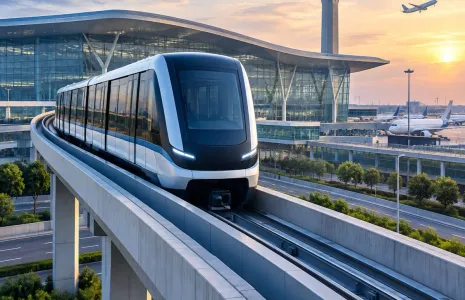
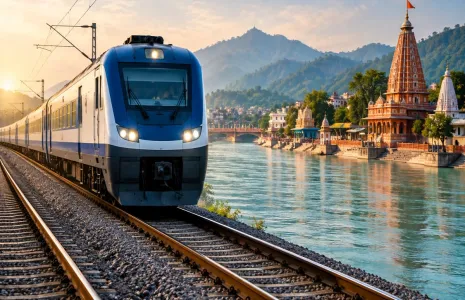
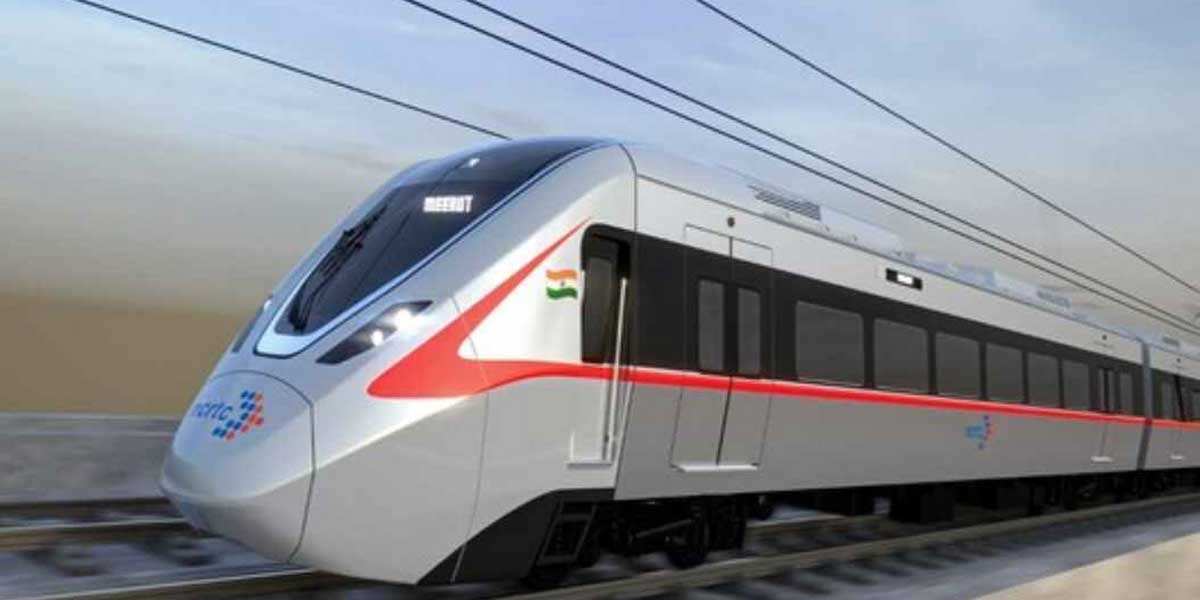
A sizable semi-high-speed rail system is being built by the National Capital Transport Corporation all around the Delhi, North Carolina, region. One of the three major corridors being built in the first phase is the Delhi-Alwar Regional Rapid Transit System (RRTS).

In addition to connecting places like Gurugram and Rewari, the train would also connect the national capital with surrounding regions like Rajasthan and Haryana. India's Delhi-Gurugram- Pre-construction work has begun on the RRTS corridor for the SNB Urban Complex. The 107 kilometres of the Delhi-Alwar RRTS are anticipated to receive centre approval soon.

The semi-high-speed rails will move at an average speed of 105 km/h and a top speed of 160 km/h. With this, the trip from Delhi to Alwar will only take about 104 minutes.

In Gurugram, an important business centre, the project is currently in its first phase.

There will be a total of 16 stations built during the first phase. Eleven of these will be elevated, and five will be buried. Additionally, there will be 4 stations in Gurugram.

The train will leave from Sarai Kale Khan and travel underground past INA, Munirka, and Aerocity in the nation's capital. As a result, Udyog Vihar, Gurgaon Sector 17, Rajiv Chowk, and Kherki Daula would be the stops in Gurugram.

Phase 1 will also include the construction of the Manesar, Panchgaon, Bilaspur Chowk, Dharuhera, MBIR, Rewari, Bawal, and SNB stations.

By December 2024, Phase 1 is anticipated to be completed, and by April 2025, the stretch should be operational. In June 2018, the Haryana government authorised the Delhi-Alwar RRTS's final Detailed Project Report (DPR).

The length between Delhi, Gurgaon, Shahjahanpur, Neemrana, and Behror was approved by the NCRTC in December 2018. (Phase 1). Preconstruction work in Gurgaon began in May 2022.

A sizable semi-high-speed rail system is being built by the National Capital Transport Corporation all around the Delhi, North Carolina, region. One of the three major corridors being built in the first phase is the Delhi-Alwar Regional Rapid Transit System (RRTS). In addition to connecting places like Gurugram and Rewari, the train would also connect the national capital with surrounding regions like Rajasthan and Haryana. India's Delhi-Gurugram- Pre-construction work has begun on the RRTS corridor for the SNB Urban Complex. The 107 kilometres of the Delhi-Alwar RRTS are anticipated to receive centre approval soon. The semi-high-speed rails will move at an average speed of 105 km/h and a top speed of 160 km/h. With this, the trip from Delhi to Alwar will only take about 104 minutes. In Gurugram, an important business centre, the project is currently in its first phase. There will be a total of 16 stations built during the first phase. Eleven of these will be elevated, and five will be buried. Additionally, there will be 4 stations in Gurugram. The train will leave from Sarai Kale Khan and travel underground past INA, Munirka, and Aerocity in the nation's capital. As a result, Udyog Vihar, Gurgaon Sector 17, Rajiv Chowk, and Kherki Daula would be the stops in Gurugram. Phase 1 will also include the construction of the Manesar, Panchgaon, Bilaspur Chowk, Dharuhera, MBIR, Rewari, Bawal, and SNB stations. By December 2024, Phase 1 is anticipated to be completed, and by April 2025, the stretch should be operational. In June 2018, the Haryana government authorised the Delhi-Alwar RRTS's final Detailed Project Report (DPR). The length between Delhi, Gurgaon, Shahjahanpur, Neemrana, and Behror was approved by the NCRTC in December 2018. (Phase 1). Preconstruction work in Gurgaon began in May 2022.

Next Story
Infrastructure Transport

MMRDA advances 250 m on Orange Gate–Marine Drive tunnel

The Mumbai Metropolitan Region Development Authority (MMRDA) has completed 250 m of underground tunnelling for the Orange Gate–Marine Drive Urban Road Tunnel using India’s largest slurry shield tunnel boring machine (TBM) deployed for an urban road project.The project involves twin tunnels extending over 7 km beneath critical transport corridors, including Central Railway, Western Railway and Metro Line 3. The work requires high-precision engineering to navigate densely developed urban infrastructure.Once completed, the tunnel is expected to reduce travel time between Orange Gate and Marin..

Next Story
Infrastructure Urban

Hindustan Zinc Pays Rs 188.46 Billion in FY26

Hindustan Zinc contributed Rs 188.46 billion to the public exchequer in FY 2025-26, according to its 9th Tax Transparency Report. The contribution, equivalent to 46 per cent of the company’s revenue, included direct and indirect taxes, government royalties, dividends to the Government of India, withholding taxes and other statutory levies.The company’s five-year cumulative contribution to the exchequer stood at Rs 915.72 billion. In FY26, Hindustan Zinc reported revenue of Rs 408.44 billion, EBITDA of Rs 221.62 billion and profit after tax of Rs 138.32 billion. It also achieved its highest..

Next Story
Infrastructure Urban

World of Concrete India 2026 Opens in Mumbai

Informa Markets in India will host the 12th edition of World of Concrete India 2026 from 3–5 June 2026 at the Bombay Exhibition Centre, Mumbai. The specialised B2B exhibition will bring together manufacturers, suppliers, contractors, developers, architects, consultants, infrastructure companies, project leaders and government stakeholders.The event is expected to feature over 350 brands and more than 18,000 trade professionals. It will cover concrete and cement, dry mortar, precast technologies, formwork, construction chemicals, industrial and commercial flooring, scaffolding, safety solutio..

Advertisement

Subscribe to Our Newsletter

Get daily newsletters around different themes from Construction world.

STAY CONNECTED

Advertisement

Advertisement

Advertisement