
+
Delhi Cabinet Approves 16 km Metro Extension
RAILWAYS & METRO RAIL

Delhi Cabinet Approves 16 km Metro Extension

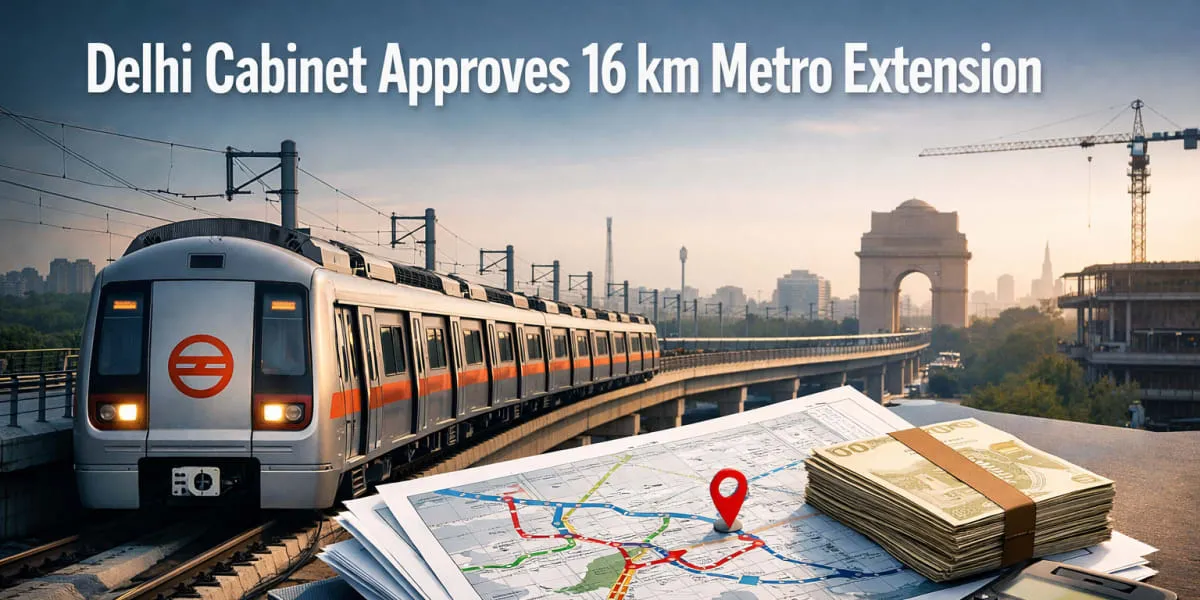
The Delhi government has approved Phase V(A) of the Delhi Metro project, authorising three new corridors totalling 16 kilometres with 13 metro stations after a cabinet meeting chaired by Chief Minister Rekha Gupta. The scheme is estimated to cost Rs 120,149.1 million (mn), with the Delhi government to contribute Rs 29,404.6 mn, and it is targeted for completion by 2028. The expansion is part of the administration’s 7?C Vision for transport. Officials said the decision represents a long?term investment in the capital’s public transport.

Gupta said strengthening public transport is essential for environmental protection and achieving net?zero emission goals, and the administration indicated the expansion will make the city cleaner and more efficient. The project is intended to reduce traffic congestion and curb pollution while improving access to employment and services. The corridors are expected to facilitate seamless interchanges with the existing metro network.

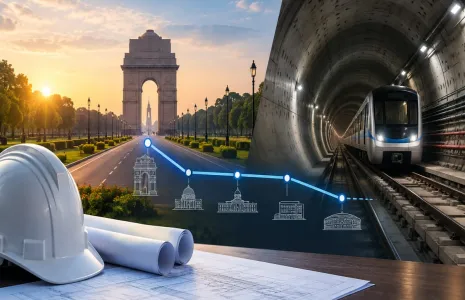
The longest corridor will run from RK Ashram Marg to Indraprastha, passing through Central Vista and linking key administrative and historic zones in just under ten kilometres with nine proposed stations. It will connect major government offices and the Kartavya Bhavan complexes and is expected to benefit an estimated 60,000 employees and about 0.2 mn daily commuters. Its cost is put at Rs 95,704.0 mn, with the Delhi government contributing Rs 23,372.4 mn. Of the 13 stations across the expansion, ten will be underground and three will be elevated.

The Aerocity to Indira Gandhi Domestic Terminal?1 corridor will extend 2.26 kilometres with one station at an estimated cost of Rs 14,196.4 mn, of which Rs 3,518.6 mn will be borne by the Delhi government. The Tughlakabad to Kalindi Kunj corridor will span 3.9 kilometres with three stations and is estimated to cost Rs 10,248.7 mn with a government contribution of Rs 2,513.6 mn. Authorities said the expansion aims to improve connectivity between the airport, commercial centres and residential areas and to reduce dependence on private vehicles.

The Delhi government has approved Phase V(A) of the Delhi Metro project, authorising three new corridors totalling 16 kilometres with 13 metro stations after a cabinet meeting chaired by Chief Minister Rekha Gupta. The scheme is estimated to cost Rs 120,149.1 million (mn), with the Delhi government to contribute Rs 29,404.6 mn, and it is targeted for completion by 2028. The expansion is part of the administration’s 7?C Vision for transport. Officials said the decision represents a long?term investment in the capital’s public transport. Gupta said strengthening public transport is essential for environmental protection and achieving net?zero emission goals, and the administration indicated the expansion will make the city cleaner and more efficient. The project is intended to reduce traffic congestion and curb pollution while improving access to employment and services. The corridors are expected to facilitate seamless interchanges with the existing metro network. The longest corridor will run from RK Ashram Marg to Indraprastha, passing through Central Vista and linking key administrative and historic zones in just under ten kilometres with nine proposed stations. It will connect major government offices and the Kartavya Bhavan complexes and is expected to benefit an estimated 60,000 employees and about 0.2 mn daily commuters. Its cost is put at Rs 95,704.0 mn, with the Delhi government contributing Rs 23,372.4 mn. Of the 13 stations across the expansion, ten will be underground and three will be elevated. The Aerocity to Indira Gandhi Domestic Terminal?1 corridor will extend 2.26 kilometres with one station at an estimated cost of Rs 14,196.4 mn, of which Rs 3,518.6 mn will be borne by the Delhi government. The Tughlakabad to Kalindi Kunj corridor will span 3.9 kilometres with three stations and is estimated to cost Rs 10,248.7 mn with a government contribution of Rs 2,513.6 mn. Authorities said the expansion aims to improve connectivity between the airport, commercial centres and residential areas and to reduce dependence on private vehicles.

Next Story
Real Estate

Casagrand Launches Keystone In Tiruppur

Casagrand has launched Casagrand Keystone, a gated residential development at Rakkiyapalayam, off Avinashi Road, in Tiruppur. Spread across 2.2 acres, the B+G+5 structure comprises 142 units of 2 and 3 BHK homes, supported by 48 indoor and outdoor amenities. The project is introduced at a starting price of Rs 5,199 per sq. ft. The development allocates 1.3 acres to open space, including a central park of about 24,500 sq. ft. A 6,800 sq. ft. clubhouse includes a multipurpose hall, mini theatre and indoor recreation facilities. Other amenities include a 5,100 sq. ft. swimming pool, poolside par..

Next Story
Real Estate

Premium homes account for half of India’s housing sales in 2025

Knight Frank India, in its latest report on India’s office and residential property market, has highlighted a significant shift in housing demand, with homes priced above Rs 10 million accounting for 50 per cent of total residential sales across the top eight cities in 2025. The findings underscore the growing dominance of premium housing in the country’s real estate landscape.Out of 348,247 residential units sold during the year, approximately 175,091 units were in the Rs 10 million-plus category, marking a 14 per cent year-on-year increase. The data reflects changing buyer preferences, w..

Next Story
Infrastructure Energy

Xbattery launches XB-5K energy storage system for homes, offices

Xbattery, a Hyderabad-based deep-tech company specialising in next-generation energy storage and battery management technologies, has introduced its flagship XB-5K, a scalable 5kWh energy storage system designed for homes and offices in India.The XB-5K is built on the company’s indigenously developed BharatBMS platform, described as India’s first universal high-voltage battery management system architecture aimed at reducing import dependence and improving after-sales service capabilities. The launch comes as India seeks to strengthen domestic manufacturing and address reliance on imported..

Advertisement

Subscribe to Our Newsletter

Get daily newsletters around different themes from Construction world.

STAY CONNECTED

Advertisement

Advertisement

Advertisement

Open In App