Delhi Metro Becomes World's Longest At 420 km
RAILWAYS & METRO RAIL

Delhi Metro Becomes World's Longest At 420 km

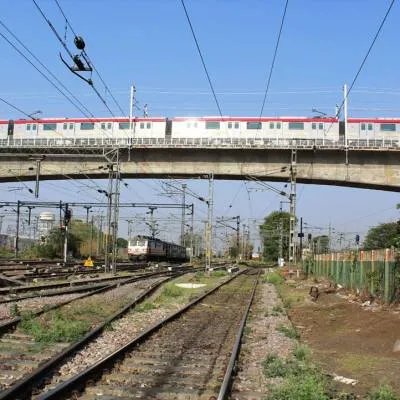
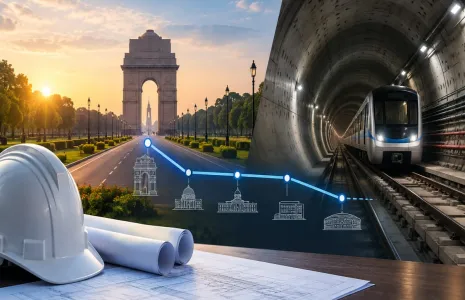
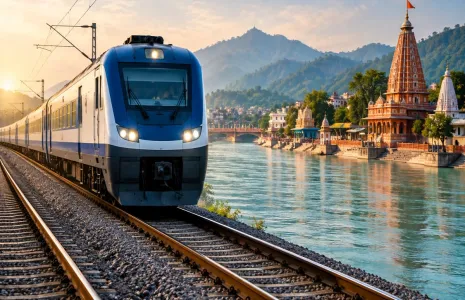
Delhi Metro has become the world's longest rapid transit network at 420 kilometre (km), surpassing the New York City subway, the report said on 27 February 2026. The expansion that led to the milestone is the result of successive phases of construction and network extensions implemented over two decades. The achievement was reported by TNM with inputs from ANI and reflects the capital's continued investment in urban mass transit infrastructure. The milestone marks a notable point in the city's efforts to modernise its transit network.

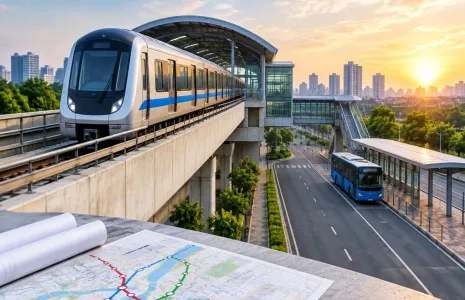
The enlarged network is said to improve connectivity across the national capital region, linking new suburbs and existing urban centres and providing more direct journeys for commuters. Planners expect the expanded lines to ease road congestion and contribute to lower emissions by encouraging modal shift from private vehicles to public transport. The system's design integrates interchange stations to facilitate transfers and reduce overall travel times. Commuters are expected to benefit from shorter journey times and more reliable services.

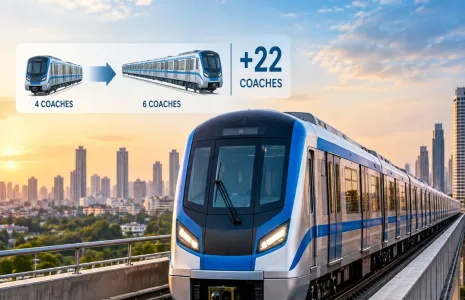
Officials noted that the network expansion has required coordination across municipal, state and central agencies and significant capital investment. Construction included extensions of existing corridors and the opening of new stretches, bringing the total operational route length to 420 kilometre. The development has been accompanied by upgrades to signalling, rolling stock and station amenities to support higher passenger volumes and improve service reliability.

Planners are reported to continue work on further capacity enhancements and network densification to meet future demand. Authorities are likely to prioritise safety, punctuality and accessibility while exploring ways to integrate feeder services and first and last mile solutions. The milestone positions the Delhi Metro among the largest urban rail systems globally and underscores a broader push to strengthen public transport in the country.

Delhi Metro has become the world's longest rapid transit network at 420 kilometre (km), surpassing the New York City subway, the report said on 27 February 2026. The expansion that led to the milestone is the result of successive phases of construction and network extensions implemented over two decades. The achievement was reported by TNM with inputs from ANI and reflects the capital's continued investment in urban mass transit infrastructure. The milestone marks a notable point in the city's efforts to modernise its transit network. The enlarged network is said to improve connectivity across the national capital region, linking new suburbs and existing urban centres and providing more direct journeys for commuters. Planners expect the expanded lines to ease road congestion and contribute to lower emissions by encouraging modal shift from private vehicles to public transport. The system's design integrates interchange stations to facilitate transfers and reduce overall travel times. Commuters are expected to benefit from shorter journey times and more reliable services. Officials noted that the network expansion has required coordination across municipal, state and central agencies and significant capital investment. Construction included extensions of existing corridors and the opening of new stretches, bringing the total operational route length to 420 kilometre. The development has been accompanied by upgrades to signalling, rolling stock and station amenities to support higher passenger volumes and improve service reliability. Planners are reported to continue work on further capacity enhancements and network densification to meet future demand. Authorities are likely to prioritise safety, punctuality and accessibility while exploring ways to integrate feeder services and first and last mile solutions. The milestone positions the Delhi Metro among the largest urban rail systems globally and underscores a broader push to strengthen public transport in the country.

Next Story
Infrastructure Transport

Sector 51-52 Metro skywalk in Noida remains shut despite being ready for over a year

Thousands of commuters travelling between Delhi Metro Rail Corporation’s (DMRC) Sector 52 station and Noida Metro Rail Corporation’s (NMRC) Sector 51 station continue to face daily inconvenience as the 300-metre air-conditioned skywalk connecting the two stations remains closed, despite being completed over a year ago, according to a report.The Noida Metro Rail Corporation built the foot overbridge to enable a seamless interchange between the Delhi Metro and Noida Metro networks. However, pending finishing work and a structural obstruction have delayed its opening.Krishna Karunesh, Chief E..

Next Story
Infrastructure Transport

Maharashtra clears Metro Line 5A, expansion of Mumbai Metro Line 5

The Maharashtra government has approved the expansion of Mumbai Metro Line 5 along with a new integrated corridor, Metro Line 5A, forming a combined 34.2-km metro network across the Thane-Bhiwandi-Kalyan-Ulhasnagar belt. The integrated project has been cleared at an estimated cost of ₹18,130.55 crore, according to a government resolution (GR).Metro Line 5 was originally approved in October 2017 as a 24.9-km fully elevated corridor with 17 stations connecting Thane, Bhiwandi and Kalyan, with an initial project cost of ₹8,416.51 crore. The corridor is being developed in two phases.The first ..

Next Story
Infrastructure Transport

Bengaluru Metro expansion seen driving office demand

Bengaluru’s expanding metro network is expected to emerge as a major catalyst for real estate growth, with the Yellow and Pink Lines likely to boost both office demand and residential prices across key micro-markets, according to a report by Colliers India.The report estimates that over the next two years, Bengaluru could witness an additional 5–7 million sq ft of Grade A office space demand across the Central Business District (CBD), Secondary Business District (SBD) and Electronic City. Improved metro connectivity and reduced commute times are expected to drive higher occupier interest a..

Advertisement

Subscribe to Our Newsletter

Get daily newsletters around different themes from Construction world.

STAY CONNECTED

Advertisement

Advertisement

Advertisement