+
Direct Metro Link To Pune Airport Cleared; Khadakwasla-Hinjewadi DPR
RAILWAYS & METRO RAIL

Direct Metro Link To Pune Airport Cleared; Khadakwasla-Hinjewadi DPR

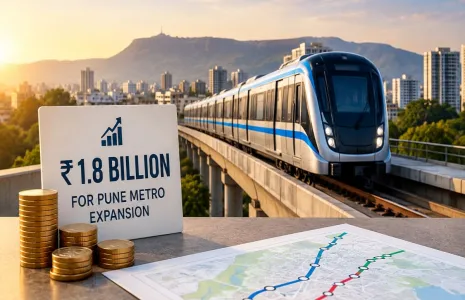
Pune's long-awaited plan to connect Lohegaon International Airport to the city metro network gained fresh momentum after a feasible alignment was finalised following the evaluation of six possible routes. Union minister of state and Pune Member of Parliament Murlidhar Mohol confirmed the development after a detailed review of key city projects. The decision is intended to provide a direct rapid transit option to reduce dependence on road access to the airport and improve overall connectivity.

At present Pune International Airport relies solely on road access, a situation that frequently causes congestion along Nagar Road and adjacent stretches. Although an existing metro corridor runs along Nagar Road, Ramwadi remains the closest operational station to the airport. Mohol directed officials to prepare a detailed project report (DPR) for a proposed Khadakwasla-Hinjewadi metro corridor, a choice that replaced earlier discussions centred on a Chandani Chowk-Hinjewadi link.

Commuter groups have long advocated a Katraj-Hinjewadi route on the grounds that it would more effectively decongest the busy Mumbai-Bengaluru National Highway NH-48, particularly between Katraj, Wakad and Hinjewadi. The Hinjewadi-Shivajinagar metro line, being implemented by the Pune Metropolitan Region Development Authority (PMRDA), is nearing completion with 94 per cent of work done and 13 of 23 stations expected to be ready by the April end. Additional corridors, including Vanaz-Chandani Chowk and Ramwadi-Wagholi, are also set to commence shortly.

Beyond metro expansion Mohol reviewed 16 major infrastructure projects encompassing airport approach road upgrades, river rejuvenation initiatives and water supply improvements, while directing swift action to tackle pollution and clear encroachments. Authorities were urged to prioritise execution and coordination across agencies to ensure the timely delivery of the works and to mitigate the impact on commuters and residents. The move is expected to complement ongoing urban mobility efforts and support broader plans for sustainable city growth.

Pune's long-awaited plan to connect Lohegaon International Airport to the city metro network gained fresh momentum after a feasible alignment was finalised following the evaluation of six possible routes. Union minister of state and Pune Member of Parliament Murlidhar Mohol confirmed the development after a detailed review of key city projects. The decision is intended to provide a direct rapid transit option to reduce dependence on road access to the airport and improve overall connectivity. At present Pune International Airport relies solely on road access, a situation that frequently causes congestion along Nagar Road and adjacent stretches. Although an existing metro corridor runs along Nagar Road, Ramwadi remains the closest operational station to the airport. Mohol directed officials to prepare a detailed project report (DPR) for a proposed Khadakwasla-Hinjewadi metro corridor, a choice that replaced earlier discussions centred on a Chandani Chowk-Hinjewadi link. Commuter groups have long advocated a Katraj-Hinjewadi route on the grounds that it would more effectively decongest the busy Mumbai-Bengaluru National Highway NH-48, particularly between Katraj, Wakad and Hinjewadi. The Hinjewadi-Shivajinagar metro line, being implemented by the Pune Metropolitan Region Development Authority (PMRDA), is nearing completion with 94 per cent of work done and 13 of 23 stations expected to be ready by the April end. Additional corridors, including Vanaz-Chandani Chowk and Ramwadi-Wagholi, are also set to commence shortly. Beyond metro expansion Mohol reviewed 16 major infrastructure projects encompassing airport approach road upgrades, river rejuvenation initiatives and water supply improvements, while directing swift action to tackle pollution and clear encroachments. Authorities were urged to prioritise execution and coordination across agencies to ensure the timely delivery of the works and to mitigate the impact on commuters and residents. The move is expected to complement ongoing urban mobility efforts and support broader plans for sustainable city growth.

Next Story
Infrastructure Urban

India Expands Semiconductor Training To 500 Institutions

Under the Chips to Startups programme of the India Semiconductor Mission, the Union minister responsible for Railways, Information and Broadcasting, and Electronics and IT reported notable progress in talent development. He indicated that over the past four years substantial steps have been taken towards a 10-year target of training 85,000 engineers in semiconductor design. World-class EDA tools have been deployed in 315 academic institutions across the country to provide students with practical exposure to chip design. These EDA tools are supported by leading global firms and are accessible t..

Next Story
Infrastructure Urban

Delhi Institutions Support India Semiconductor Mission

The Government of India has prioritised talent development through training, upskilling and workforce development under the Chips to Startups initiative of the India Semiconductor Mission, with officials noting progress in four years towards a 10-year target of training 85,000 engineers in semiconductor design. Electronic design automation tools provided by Synopsys, Cadence, Siemens, Renesas, Ansys and AMD have been deployed in 315 academic institutions, enabling students to gain practical chip design experience. Chips have been fabricated and tested at the Semiconductor Laboratory, Mohali, a..

Next Story
Infrastructure Urban

NHA Announces Winners Of NHCX Hackathon At IIT Hyderabad

The National Health Authority (NHA) has concluded the NHCX Hackathon under the Ayushman Bharat Digital Mission (ABDM) to stimulate innovation around the National Health Claims Exchange (NHCX). The winning teams presented their solutions at the NHCX Innovation Meet held at IIT Hyderabad during a two-day event in March 2026 that also served as the hackathon grand finale. The hackathon itself ran from 22 to 28 February 2026 and aimed to accelerate paperless, transparent claims processing across India. The event was organised with a range of ecosystem partners, including the Insurance Regulatory a..

Advertisement

Subscribe to Our Newsletter

Get daily newsletters around different themes from Construction world.

STAY CONNECTED

Advertisement

Advertisement

Advertisement