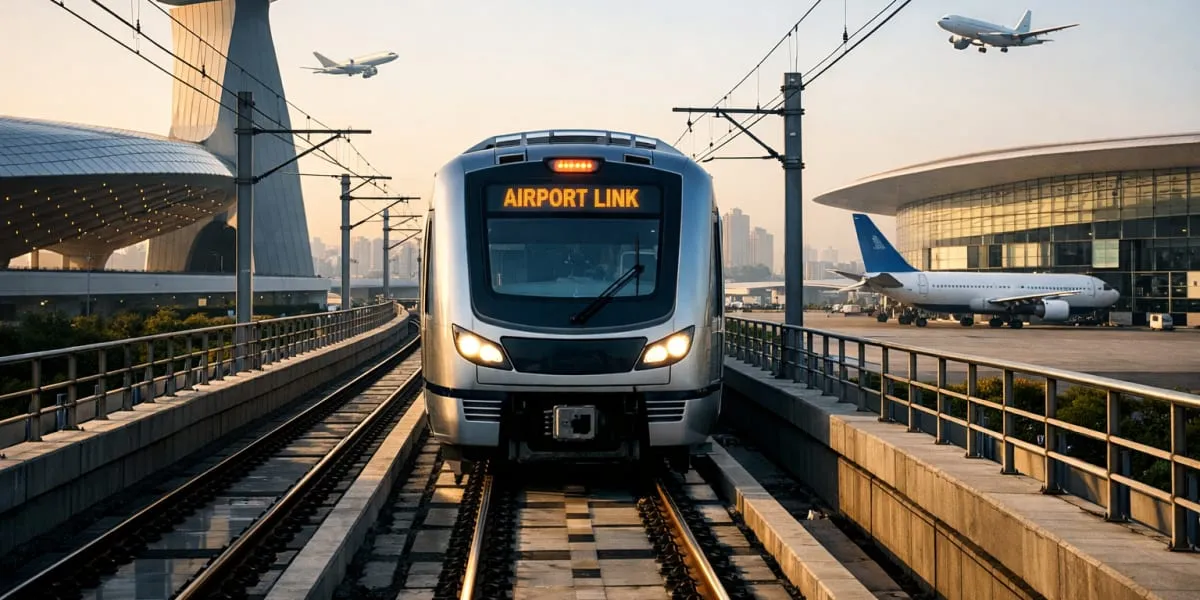
Government Approves Metro Rail Linking Two International Airports
RAILWAYS & METRO RAIL

Government Approves Metro Rail Linking Two International Airports

The central government has approved a new metro rail project linking two international airports in Mumbai and will provide 40 per cent of the funding. The decision follows long-standing calls to improve connectivity between air hubs and to reduce congestion on roads and at terminals. Officials expect the link to integrate with existing urban transport and support seamless transfers for passengers and staff. City leaders said the approval marks a significant step for metropolitan mobility.

The remainder funding will be mobilised by the state administration, municipal corporations and potential private partners through debt and equity arrangements. The central grant is intended to reduce the initial fiscal burden on local authorities and to attract long-term investors by improving project bankability. Analysts said the move could accelerate approvals and land acquisition processes while aligning with urban development plans. Financial close will involve lenders and structured financing to spread costs over the asset life.

The project design will focus on high-capacity trains, frequent services and interchange nodes with suburban rail and existing metro corridors to shorten end-to-end travel times. Construction phases will likely prioritise sections with highest passenger demand and connections to major terminals to maximise early benefits. Planners will be required to incorporate accessibility features and provisions for luggage handling to suit air travellers. Design teams will be expected to coordinate with airport authorities to align schedules and security requirements.

Officials noted that enhancing connectivity between airports is expected to spur economic activity in adjacent neighbourhoods and to support tourism and business travel while easing pressure on road networks. Environmental assessments and stakeholder consultations will form part of the approval process to mitigate impacts and to ensure compliance with regulatory norms. The scheme is set to be monitored through periodic reviews to track progress and fiscal prudence. Progress reports and fiscal audits will be published to maintain transparency for stakeholders.

The central government has approved a new metro rail project linking two international airports in Mumbai and will provide 40 per cent of the funding. The decision follows long-standing calls to improve connectivity between air hubs and to reduce congestion on roads and at terminals. Officials expect the link to integrate with existing urban transport and support seamless transfers for passengers and staff. City leaders said the approval marks a significant step for metropolitan mobility. The remainder funding will be mobilised by the state administration, municipal corporations and potential private partners through debt and equity arrangements. The central grant is intended to reduce the initial fiscal burden on local authorities and to attract long-term investors by improving project bankability. Analysts said the move could accelerate approvals and land acquisition processes while aligning with urban development plans. Financial close will involve lenders and structured financing to spread costs over the asset life. The project design will focus on high-capacity trains, frequent services and interchange nodes with suburban rail and existing metro corridors to shorten end-to-end travel times. Construction phases will likely prioritise sections with highest passenger demand and connections to major terminals to maximise early benefits. Planners will be required to incorporate accessibility features and provisions for luggage handling to suit air travellers. Design teams will be expected to coordinate with airport authorities to align schedules and security requirements. Officials noted that enhancing connectivity between airports is expected to spur economic activity in adjacent neighbourhoods and to support tourism and business travel while easing pressure on road networks. Environmental assessments and stakeholder consultations will form part of the approval process to mitigate impacts and to ensure compliance with regulatory norms. The scheme is set to be monitored through periodic reviews to track progress and fiscal prudence. Progress reports and fiscal audits will be published to maintain transparency for stakeholders.

Next Story
Infrastructure Urban

Güntner Showcases Cooling Tech at China Expo

Güntner showcased its latest refrigeration and air conditioning innovations at China Refrigeration 2026, highlighting digital intelligence and carbon-neutral solutions.The company presented its aicore™ Controls and IoT platform, designed to optimise energy consumption, enable remote monitoring and enhance lifecycle management of cooling systems. The solution integrates advanced controllers and cloud-based capabilities to improve operational efficiency and reduce energy use.Güntner also demonstrated advancements in heat pump technologies, including its role in projects such as the Ordos Zer..

Next Story
Real Estate

Superb Realty Ties Up with Praan for AI Air Tech

Superb Realty has partnered with Praan to deploy AI-powered autonomous air infrastructure across over one million sq ft of real estate in Mumbai, marking a significant move towards intelligent indoor environments.The rollout will begin at Superb Altura and expand across upcoming residential and mixed-use developments. The initiative aims to integrate real-time sensing, adaptive purification and AI-led optimisation to improve indoor air quality and occupant experience.Praan’s technology is designed to remove ultrafine particles significantly smaller than conventional systems and eliminate har..

Next Story
Technology

DAAKit Raises $138,000 in Pre-Seed Round

DAAKit has raised $138,000 in a pre-seed funding round led by Inflection Point Ventures to expand its hyperlocal fulfilment network and strengthen technology capabilities.The company plans to use the funds to launch 25 new dark stores across Tier I and Tier II cities, enhance its technology infrastructure, and expand its leadership and operations teams. Currently operational in Delhi, Gurugram, Mumbai, Bengaluru and Kolkata, DAAKit is also piloting expansion into Tier II markets through Lucknow.Built on an asset-light, technology-driven model, the platform enables brands to position inventory ..

Advertisement

Subscribe to Our Newsletter

Get daily newsletters around different themes from Construction world.

STAY CONNECTED

Advertisement

Advertisement

Advertisement