Gurugram Drops Double-Decker Plan; Metro and Flyover Built Separately
RAILWAYS & METRO RAIL

Gurugram Drops Double-Decker Plan; Metro and Flyover Built Separately

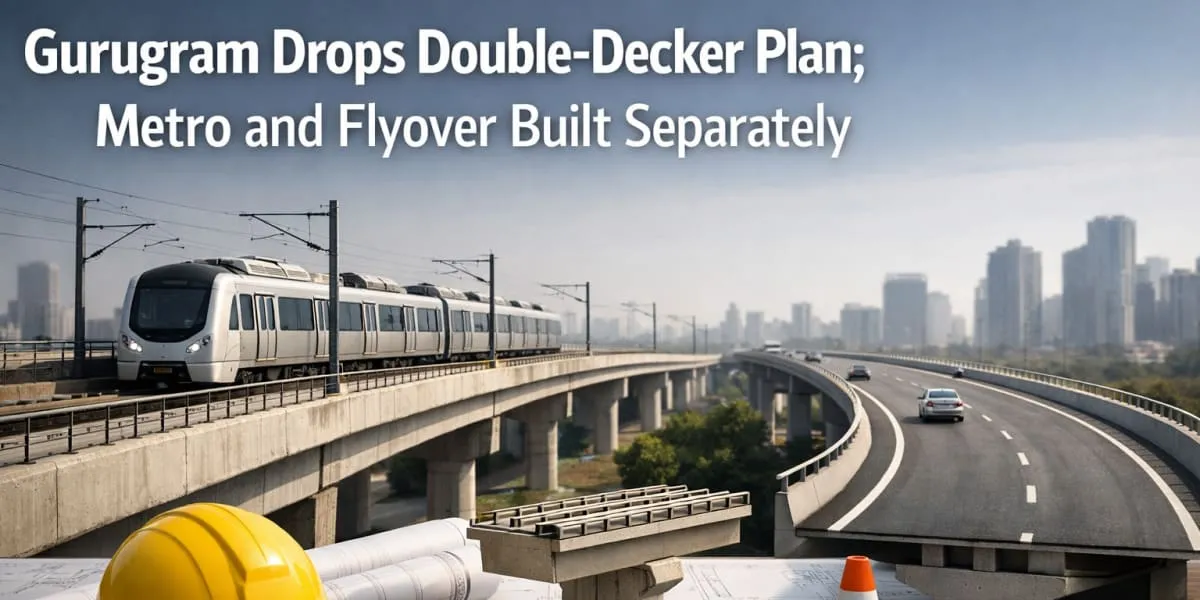
City authorities in Gurugram have decided to drop plans for a double-decker corridor that would have combined an elevated metro and a flyover, and have resolved to build the metro and flyover as separate structures. The decision follows technical reviews that highlighted integration challenges, and was taken to streamline project delivery and to reduce engineering complexity. Officials indicated that separating the two systems would allow each to follow its own design and safety standards.

The move is intended to address concerns about constructability, maintenance and long term operational safety that emerged during feasibility assessments. Separate construction will allow specialised contractors to focus on the distinct structural and transit requirements of the road and rail systems, and is expected to simplify oversight by different agencies. Authorities also cited the potential to lessen traffic disruption during construction by staging works independently.

Under the revised approach, planning and procurement for the metro will proceed on its own timeline while the flyover will follow a parallel but independent schedule, and coordination will be maintained where routes intersect. Project managers have been asked to revise designs to reflect separate loadings, clearances and interface points between the two corridors. The adjustment is likely to prompt amendments to contracts and to tender specifications to ensure clarity of scope.

Commuters may benefit from clearer timelines and reduced construction overlap, though overall completion dates could change as agencies update their programmes. City authorities have said they will engage with stakeholders to minimise disruption and to align traffic management during the revised construction phases. The decision marks a shift in urban transport planning in the city as officials balance engineering practicability with the aims of rapid transit expansion.

City authorities in Gurugram have decided to drop plans for a double-decker corridor that would have combined an elevated metro and a flyover, and have resolved to build the metro and flyover as separate structures. The decision follows technical reviews that highlighted integration challenges, and was taken to streamline project delivery and to reduce engineering complexity. Officials indicated that separating the two systems would allow each to follow its own design and safety standards. The move is intended to address concerns about constructability, maintenance and long term operational safety that emerged during feasibility assessments. Separate construction will allow specialised contractors to focus on the distinct structural and transit requirements of the road and rail systems, and is expected to simplify oversight by different agencies. Authorities also cited the potential to lessen traffic disruption during construction by staging works independently. Under the revised approach, planning and procurement for the metro will proceed on its own timeline while the flyover will follow a parallel but independent schedule, and coordination will be maintained where routes intersect. Project managers have been asked to revise designs to reflect separate loadings, clearances and interface points between the two corridors. The adjustment is likely to prompt amendments to contracts and to tender specifications to ensure clarity of scope. Commuters may benefit from clearer timelines and reduced construction overlap, though overall completion dates could change as agencies update their programmes. City authorities have said they will engage with stakeholders to minimise disruption and to align traffic management during the revised construction phases. The decision marks a shift in urban transport planning in the city as officials balance engineering practicability with the aims of rapid transit expansion.

Next Story
Infrastructure Transport

MMRDA advances 250 m on Orange Gate–Marine Drive tunnel

The Mumbai Metropolitan Region Development Authority (MMRDA) has completed 250 m of underground tunnelling for the Orange Gate–Marine Drive Urban Road Tunnel using India’s largest slurry shield tunnel boring machine (TBM) deployed for an urban road project.The project involves twin tunnels extending over 7 km beneath critical transport corridors, including Central Railway, Western Railway and Metro Line 3. The work requires high-precision engineering to navigate densely developed urban infrastructure.Once completed, the tunnel is expected to reduce travel time between Orange Gate and Marin..

Next Story
Infrastructure Urban

Hindustan Zinc Pays Rs 188.46 Billion in FY26

Hindustan Zinc contributed Rs 188.46 billion to the public exchequer in FY 2025-26, according to its 9th Tax Transparency Report. The contribution, equivalent to 46 per cent of the company’s revenue, included direct and indirect taxes, government royalties, dividends to the Government of India, withholding taxes and other statutory levies.The company’s five-year cumulative contribution to the exchequer stood at Rs 915.72 billion. In FY26, Hindustan Zinc reported revenue of Rs 408.44 billion, EBITDA of Rs 221.62 billion and profit after tax of Rs 138.32 billion. It also achieved its highest..

Next Story
Infrastructure Urban

World of Concrete India 2026 Opens in Mumbai

Informa Markets in India will host the 12th edition of World of Concrete India 2026 from 3–5 June 2026 at the Bombay Exhibition Centre, Mumbai. The specialised B2B exhibition will bring together manufacturers, suppliers, contractors, developers, architects, consultants, infrastructure companies, project leaders and government stakeholders.The event is expected to feature over 350 brands and more than 18,000 trade professionals. It will cover concrete and cement, dry mortar, precast technologies, formwork, construction chemicals, industrial and commercial flooring, scaffolding, safety solutio..

Advertisement

Subscribe to Our Newsletter

Get daily newsletters around different themes from Construction world.

STAY CONNECTED

Advertisement

Advertisement

Advertisement