
India-Bangladesh Railway Enhances Ties
RAILWAYS & METRO RAIL

India-Bangladesh Railway Enhances Ties

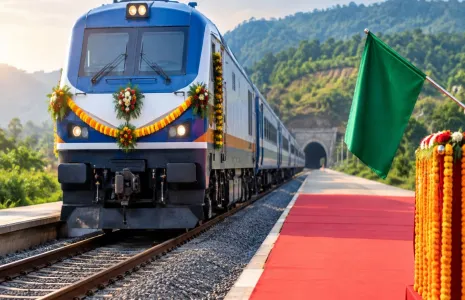
In a significant step towards strengthening bilateral ties, India and Bangladesh are poised to enhance tourism, trade, and cultural bonds with the inauguration of the Agartala-Akhaura Railway Project. This historic railway project connects the Indian city of Agartala in Tripura with Akhaura in Bangladesh, paving the way for improved connectivity and economic growth between the two neighboring countries.

The Agartala-Akhaura Railway Project holds great potential for boosting tourism in the region. Travelers from both India and Bangladesh can now conveniently explore the cultural and historical landmarks of each country, further enhancing people-to-people exchanges. Tourists will have easier access to attractions such as the Ujjayanta Palace in Agartala or the famous Lalbagh Fort in Dhaka, opening up new opportunities for cross-border tourism.

In addition to promoting tourism, the railway project strengthens trade between India and Bangladesh. The improved connectivity allows for the seamless movement of goods, reducing logistics costs and boosting trade facilitation. This open trade route facilitates the exchange of goods and products, promoting economic growth in the region. With smoother transportation of goods, businesses on both sides of the border can now explore new markets and expand their reach, benefiting the economies of both countries.

Furthermore, the Agartala-Akhaura Railway Project fosters cultural ties between India and Bangladesh. The shared heritage and cultural similarities of the two nations can be celebrated and preserved through increased interaction and collaboration. With the ease of travel between the two countries, more cultural exchange programs, festivals, and exhibitions can be organized, deepening the understanding and appreciation of each other's traditions and customs.

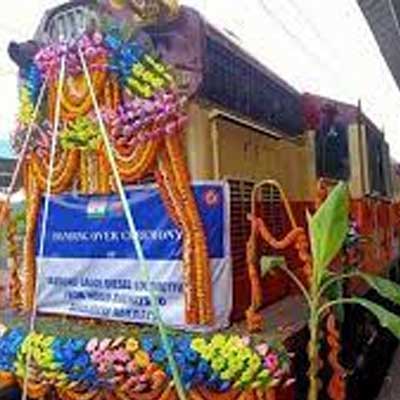
The inauguration of the railway project also signifies a milestone in the ongoing efforts to strengthen the bilateral relationship between India and Bangladesh. It showcases the commitment of the two nations to promote regional cooperation and integration. By investing in infrastructure projects such as this, both countries demonstrate their resolve to enhance connectivity, boost business ties, and foster greater understanding and friendship between their people.

In conclusion, the Agartala-Akhaura Railway Project marks a significant step in strengthening the trade, tourism, and cultural bonds between India and Bangladesh. This historic railway not only facilitates easier travel but also opens up new horizons for economic growth, cultural exchanges, and enhanced bilateral relations. The project holds immense potential to drive tourism, improve trade facilitation, and foster deeper cultural ties between the two neighboring nations.

In a significant step towards strengthening bilateral ties, India and Bangladesh are poised to enhance tourism, trade, and cultural bonds with the inauguration of the Agartala-Akhaura Railway Project. This historic railway project connects the Indian city of Agartala in Tripura with Akhaura in Bangladesh, paving the way for improved connectivity and economic growth between the two neighboring countries. The Agartala-Akhaura Railway Project holds great potential for boosting tourism in the region. Travelers from both India and Bangladesh can now conveniently explore the cultural and historical landmarks of each country, further enhancing people-to-people exchanges. Tourists will have easier access to attractions such as the Ujjayanta Palace in Agartala or the famous Lalbagh Fort in Dhaka, opening up new opportunities for cross-border tourism. In addition to promoting tourism, the railway project strengthens trade between India and Bangladesh. The improved connectivity allows for the seamless movement of goods, reducing logistics costs and boosting trade facilitation. This open trade route facilitates the exchange of goods and products, promoting economic growth in the region. With smoother transportation of goods, businesses on both sides of the border can now explore new markets and expand their reach, benefiting the economies of both countries. Furthermore, the Agartala-Akhaura Railway Project fosters cultural ties between India and Bangladesh. The shared heritage and cultural similarities of the two nations can be celebrated and preserved through increased interaction and collaboration. With the ease of travel between the two countries, more cultural exchange programs, festivals, and exhibitions can be organized, deepening the understanding and appreciation of each other's traditions and customs. The inauguration of the railway project also signifies a milestone in the ongoing efforts to strengthen the bilateral relationship between India and Bangladesh. It showcases the commitment of the two nations to promote regional cooperation and integration. By investing in infrastructure projects such as this, both countries demonstrate their resolve to enhance connectivity, boost business ties, and foster greater understanding and friendship between their people. In conclusion, the Agartala-Akhaura Railway Project marks a significant step in strengthening the trade, tourism, and cultural bonds between India and Bangladesh. This historic railway not only facilitates easier travel but also opens up new horizons for economic growth, cultural exchanges, and enhanced bilateral relations. The project holds immense potential to drive tourism, improve trade facilitation, and foster deeper cultural ties between the two neighboring nations.

Next Story
Infrastructure Transport

MMRDA advances 250 m on Orange Gate–Marine Drive tunnel

The Mumbai Metropolitan Region Development Authority (MMRDA) has completed 250 m of underground tunnelling for the Orange Gate–Marine Drive Urban Road Tunnel using India’s largest slurry shield tunnel boring machine (TBM) deployed for an urban road project.The project involves twin tunnels extending over 7 km beneath critical transport corridors, including Central Railway, Western Railway and Metro Line 3. The work requires high-precision engineering to navigate densely developed urban infrastructure.Once completed, the tunnel is expected to reduce travel time between Orange Gate and Marin..

Next Story
Infrastructure Urban

Hindustan Zinc Pays Rs 188.46 Billion in FY26

Hindustan Zinc contributed Rs 188.46 billion to the public exchequer in FY 2025-26, according to its 9th Tax Transparency Report. The contribution, equivalent to 46 per cent of the company’s revenue, included direct and indirect taxes, government royalties, dividends to the Government of India, withholding taxes and other statutory levies.The company’s five-year cumulative contribution to the exchequer stood at Rs 915.72 billion. In FY26, Hindustan Zinc reported revenue of Rs 408.44 billion, EBITDA of Rs 221.62 billion and profit after tax of Rs 138.32 billion. It also achieved its highest..

Next Story
Infrastructure Urban

World of Concrete India 2026 Opens in Mumbai

Informa Markets in India will host the 12th edition of World of Concrete India 2026 from 3–5 June 2026 at the Bombay Exhibition Centre, Mumbai. The specialised B2B exhibition will bring together manufacturers, suppliers, contractors, developers, architects, consultants, infrastructure companies, project leaders and government stakeholders.The event is expected to feature over 350 brands and more than 18,000 trade professionals. It will cover concrete and cement, dry mortar, precast technologies, formwork, construction chemicals, industrial and commercial flooring, scaffolding, safety solutio..

Advertisement

Subscribe to Our Newsletter

Get daily newsletters around different themes from Construction world.

STAY CONNECTED

Advertisement

Advertisement

Advertisement

-->