Indian Railways Approves Kiul-Jhajha Third Line Project
RAILWAYS & METRO RAIL

Indian Railways Approves Kiul-Jhajha Third Line Project

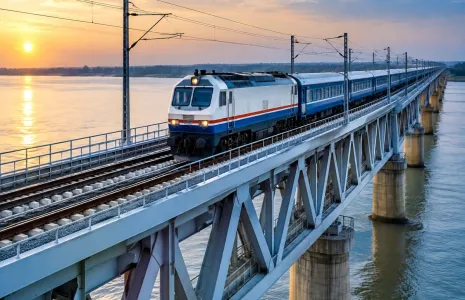
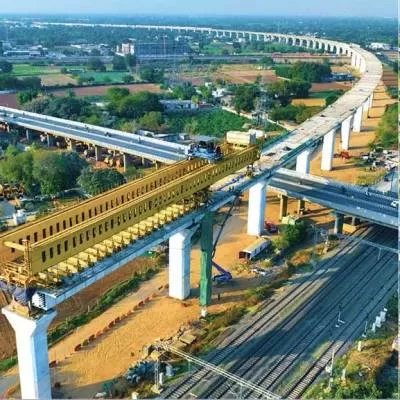
Indian Railways has approved the Kiul-Jhajha third line project covering 54 km at a cost of Rs 9.62 billion (bn), marking a major capacity augmentation on the Howrah–Delhi high density corridor. The project forms part of the High Traffic Density Network and is intended to ease persistent congestion and enhance operational efficiency for both passenger and freight services. The approval follows planning assessments that identified the section as requiring additional infrastructure to accommodate rising demand.

The Union Minister for Railways, Ashwini Vaishnaw, said the additional line will significantly increase carrying capacity and improve punctuality and flexibility of train operations on the heavily utilised corridor. He indicated that the extra infrastructure will facilitate smoother movement of passenger trains and freight rakes while supporting regional industrial growth and trade connectivity. The scheme is therefore expected to yield benefits for mobility and logistics across eastern and northern India.

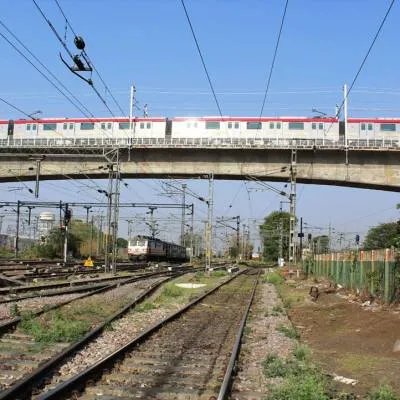
Presently the double line between Kiul and Jhajha is operating beyond optimal capacity utilisation and faces recurring congestion during peak periods, prompting the need for the third line. The 54 km addition aims to reduce bottlenecks, shorten recovery times for delayed services and enable more efficient scheduling across the route. Enhanced capacity will also support freight flows to major industrial and logistics hubs and improve links between Patna and Kolkata. The corridor has been identified under Indian Railways' High Traffic Density Network owing to its strategic importance.

The route provides critical connectivity between Kolkata and Haldia ports and Raxaul on the India–Nepal border and carries substantial freight linked to installations such as Barh STPP, Jawahar STPP and Birganj ICD. Completion of the project is expected to deliver long term infrastructure support, lower congestion and bolster the reliability of rail transport between key economic centres. The investment underscores Indian Railways' focus on strengthening freight corridors and passenger mobility on major arterial routes.

Indian Railways has approved the Kiul-Jhajha third line project covering 54 km at a cost of Rs 9.62 billion (bn), marking a major capacity augmentation on the Howrah–Delhi high density corridor. The project forms part of the High Traffic Density Network and is intended to ease persistent congestion and enhance operational efficiency for both passenger and freight services. The approval follows planning assessments that identified the section as requiring additional infrastructure to accommodate rising demand. The Union Minister for Railways, Ashwini Vaishnaw, said the additional line will significantly increase carrying capacity and improve punctuality and flexibility of train operations on the heavily utilised corridor. He indicated that the extra infrastructure will facilitate smoother movement of passenger trains and freight rakes while supporting regional industrial growth and trade connectivity. The scheme is therefore expected to yield benefits for mobility and logistics across eastern and northern India. Presently the double line between Kiul and Jhajha is operating beyond optimal capacity utilisation and faces recurring congestion during peak periods, prompting the need for the third line. The 54 km addition aims to reduce bottlenecks, shorten recovery times for delayed services and enable more efficient scheduling across the route. Enhanced capacity will also support freight flows to major industrial and logistics hubs and improve links between Patna and Kolkata. The corridor has been identified under Indian Railways' High Traffic Density Network owing to its strategic importance. The route provides critical connectivity between Kolkata and Haldia ports and Raxaul on the India–Nepal border and carries substantial freight linked to installations such as Barh STPP, Jawahar STPP and Birganj ICD. Completion of the project is expected to deliver long term infrastructure support, lower congestion and bolster the reliability of rail transport between key economic centres. The investment underscores Indian Railways' focus on strengthening freight corridors and passenger mobility on major arterial routes.

Next Story
Infrastructure Energy

Marsons Receives PGCIL Approval For Supply Of Power Transformers

Marsons has received vendor approval from Power Grid Corporation of India Limited for the supply of power transformers, making it the only PGCIL-approved Extra High Voltage transformer manufacturer in Eastern India and in ten neighbouring states, including West Bengal, Odisha, Jharkhand, Bihar, Assam, Meghalaya, Tripura, Manipur, Nagaland and Mizoram. The approval marks a milestone for the company and for the region's power infrastructure. PGCIL acts as the central transmission utility and is the country’s single largest procurer of high?voltage equipment, and vendor approval involves a rigo..

Next Story
Infrastructure Urban

BDL Lays Foundation For Naval Systems Facility In Andhra Pradesh

Hon’ble Raksha Mantri Shri Rajnath Singh laid the foundation stone for Bharat Dynamics' new Naval Systems Manufacturing Facility at T. Sirasapalli village in Anakapalli district of Andhra Pradesh, marking a step in expanding indigenous defence production. The project advances the vision of Aatmanirbhar Bharat and aims to strengthen national manufacturing capabilities for naval systems. Bharat Dynamics Limited, established in 1970 under the Ministry of Defence, has become a principal defence manufacturer and a production partner of the Defence Research and Development Organisation. The compan..

Next Story
Infrastructure Urban

Kaka Industries Reports Strong H2 And Fiscal Year FY26 Results

Kaka Industries reported consolidated net sales for the second half of FY26 of Rs 1,383.4 million (mn), an increase of 35.2 per cent year-on-year from Rs 1,023.3 million and a sequential rise of 10.8 per cent over the preceding half. Total expenditure for the half was Rs 1,196.6 mn, reflecting scale alongside revenue growth and disciplined cost management. The company attributed the half-year performance to a stronger product mix and operational leverage across manufacturing and distribution. EBITDA for H2 FY26 expanded to Rs 186.5 mn from Rs 133.4 mn a year earlier, a year-on-year gain of 39...

Advertisement

Subscribe to Our Newsletter

Get daily newsletters around different themes from Construction world.

STAY CONNECTED

Advertisement

Advertisement

Advertisement

-->