+
Indian Railways Approves Major Capacity And Safety Projects
RAILWAYS & METRO RAIL

Indian Railways Approves Major Capacity And Safety Projects

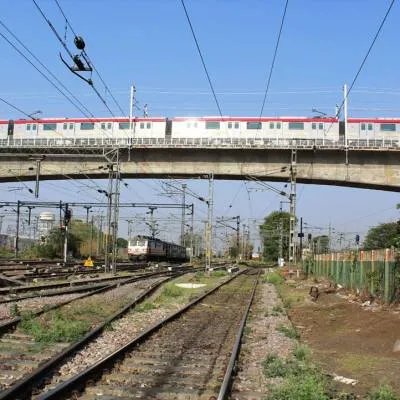
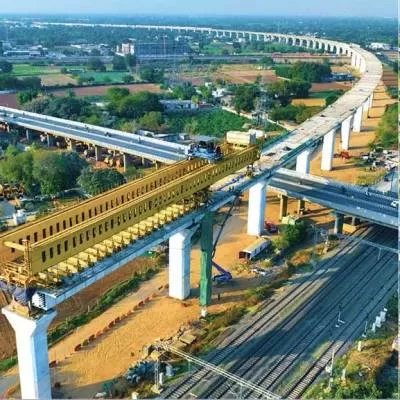
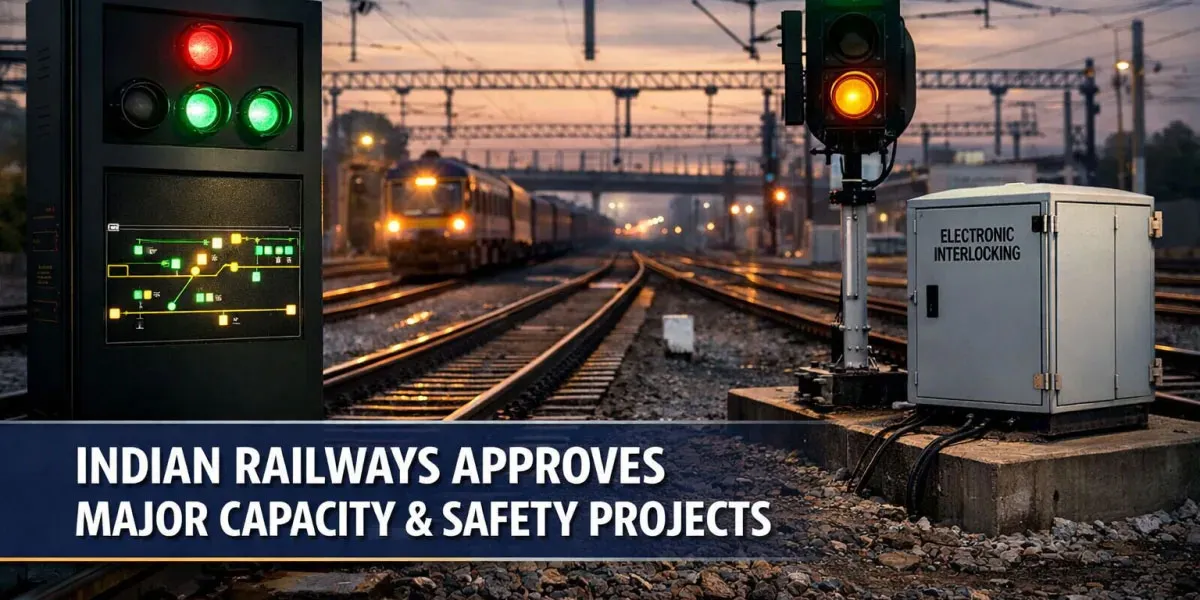
Indian Railways has approved a set of projects to reduce congestion, expand line capacity, strengthen safety and speed passenger and freight services across Southern, Northern and South Eastern zones. The approvals comprise line doubling, third and fourth lines, bypass corridors and the rollout of Electronic Interlocking (EI) at selected stations where modern protection systems are introduced. The measures are designed to improve operations, support industrial corridors and integrate with the Dedicated Freight Corridor (DFC).

Barbenda–Damrughutu doubling and Damrughutu–Bokaro Steel City third and fourth lines in Jharkhand target a corridor that is operating at 108 per cent utilisation and faces train detention of 90–150 minutes. The project cost is Rs 8.1532 bn and it handles 78 trains daily with a freight throughput of 35.22 mn t per annum. The works aim to prevent utilisation rising towards 132 per cent by 2028–29 and to ease logistics for coal, cement, petroleum and steel hubs.

Electronic Interlocking has been approved for 34 stations on Northern Railway at a cost of Rs 4.2141 bn, with Rs 2.9224 bn for 21 stations in the Delhi Division and Rs 1.2917 bn for 13 stations in the Ambala Division. The signalling upgrades will improve route setting, support higher frequencies on high density routes and complement Kavach and other safety technologies. The Rajpura bypass linking the New Shambhu DFC station to Kauli was cleared at Rs 4.1196 bn to allow freight to bypass the Rajpura yard and streamline Ambala–Jalandhar corridor movements.

In Kerala the Alappuzha–Ambalapuzha doubling at Rs 3.2416 bn will remove the final single-line constraint, permit nine additional passenger trains and add two point eight eight mn t per annum of freight capacity with annual earnings of Rs 32.3 mn. The Palakkad bypass at Rs 1.6357 bn will cut passenger detention by around 40–44 minutes and cut freight detention by 120 minutes per train. The Irugur–Podanur doubling at Rs 2.7742 bn will allow 15 additional passenger trains, add three point one two mn t per annum of freight capacity and increase annual net earnings by Rs 117.7 mn.

Indian Railways has approved a set of projects to reduce congestion, expand line capacity, strengthen safety and speed passenger and freight services across Southern, Northern and South Eastern zones. The approvals comprise line doubling, third and fourth lines, bypass corridors and the rollout of Electronic Interlocking (EI) at selected stations where modern protection systems are introduced. The measures are designed to improve operations, support industrial corridors and integrate with the Dedicated Freight Corridor (DFC). Barbenda–Damrughutu doubling and Damrughutu–Bokaro Steel City third and fourth lines in Jharkhand target a corridor that is operating at 108 per cent utilisation and faces train detention of 90–150 minutes. The project cost is Rs 8.1532 bn and it handles 78 trains daily with a freight throughput of 35.22 mn t per annum. The works aim to prevent utilisation rising towards 132 per cent by 2028–29 and to ease logistics for coal, cement, petroleum and steel hubs. Electronic Interlocking has been approved for 34 stations on Northern Railway at a cost of Rs 4.2141 bn, with Rs 2.9224 bn for 21 stations in the Delhi Division and Rs 1.2917 bn for 13 stations in the Ambala Division. The signalling upgrades will improve route setting, support higher frequencies on high density routes and complement Kavach and other safety technologies. The Rajpura bypass linking the New Shambhu DFC station to Kauli was cleared at Rs 4.1196 bn to allow freight to bypass the Rajpura yard and streamline Ambala–Jalandhar corridor movements. In Kerala the Alappuzha–Ambalapuzha doubling at Rs 3.2416 bn will remove the final single-line constraint, permit nine additional passenger trains and add two point eight eight mn t per annum of freight capacity with annual earnings of Rs 32.3 mn. The Palakkad bypass at Rs 1.6357 bn will cut passenger detention by around 40–44 minutes and cut freight detention by 120 minutes per train. The Irugur–Podanur doubling at Rs 2.7742 bn will allow 15 additional passenger trains, add three point one two mn t per annum of freight capacity and increase annual net earnings by Rs 117.7 mn.

Next Story
Infrastructure Urban

Implementation Status of Jal Jeevan Mission

Since August 2019 the Government has implemented Jal Jeevan Mission to provide assured potable water through household tap connections in rural India. At the start of the mission only 32.3 million (mn) rural households, representing 16.7 per cent, were reported to have tap water connections. States and union territories have reported that 125.8 mn additional rural households have since been provided with tap connections. As a result, of about 193.6 mn rural households roughly 158.2 mn, or 81.71 per cent, are reported to have tap water supply at home.\n\nThe State, district and village level st..

Next Story
Infrastructure Urban

Jal Jeevan Mission Reaches Eighty One Per Cent Rural Coverage

The Government reported substantial progress under the Jal Jeevan Mission, launched in August 2019 to provide tap water to every rural household. At launch only 32.3 million (mn) rural households had tap connections and states and Union territories reported provision of 125.8 mn additional households by March 2026. Consequently, out of about 193.6 mn rural households around 158.2 mn, or 81.71 per cent, are reported to have tap water at home. The Finance Minister announced extension of the mission until 2028 in the 2025-26 budget speech. The Swachh Bharat Mission Grameen, launched in October 20..

Next Story
Infrastructure Urban

Empowering Local Governance for Sustainable Rural Water Supply

The Ministry of Jal Shakti has aligned the Jal Jeevan Mission (JJM) with the 73rd Amendment to strengthen village level planning and community ownership of water supply. Gram Panchayats, village water and sanitation committees and Pani Samitis are to plan, implement, manage and maintain piped water systems, with gram sabha processes formalising handover and oversight. Implementation support agencies including non government organisations, community based organisations and self help groups have been empanelled to train local committees and promote women participation. Under JJM, the department ..

Advertisement

Subscribe to Our Newsletter

Get daily newsletters around different themes from Construction world.

STAY CONNECTED

Advertisement

Advertisement

Advertisement