Indian Railways Approves Rs. 2.23 bn for Kavach 4.0
RAILWAYS & METRO RAIL

Indian Railways Approves Rs. 2.23 bn for Kavach 4.0

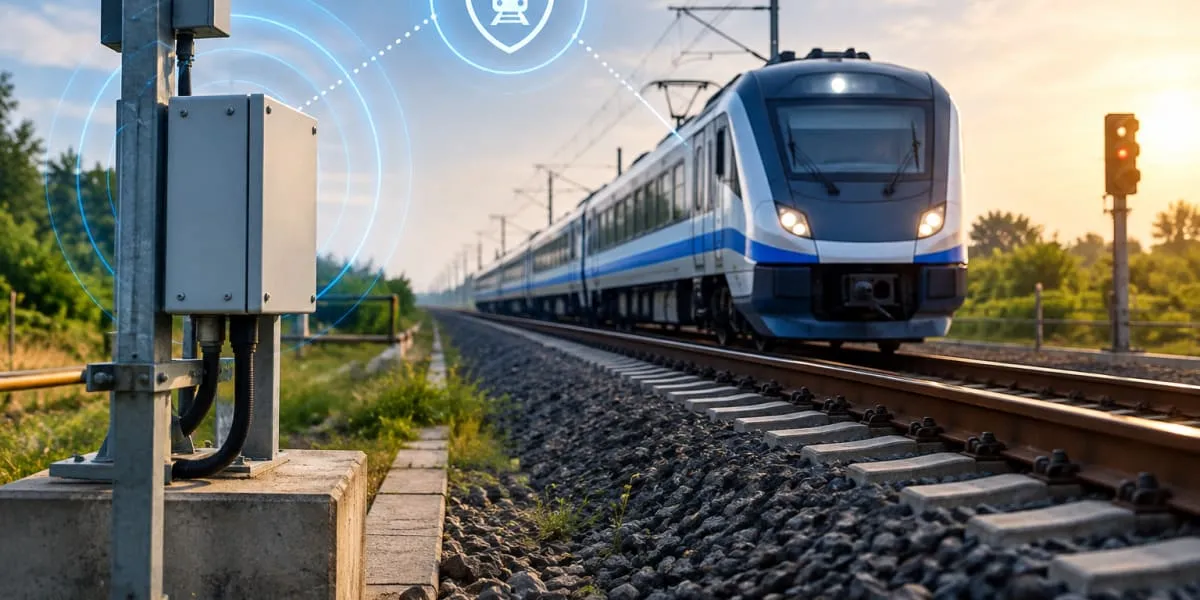
Indian Railways has approved the deployment of Kavach Version 4.0 across 614.75 route km in Varanasi Division of North Eastern Railway at a total cost of Rs. 2.23 bn. The project will extend coverage to the identified balance sections of the division and strengthen train protection infrastructure.

Kavach is an indigenously developed Automatic Train Protection (ATP) system designed to improve operational safety. It helps prevent Signal Passing at Danger (SPAD), automatically applies brakes when required and monitors train operations to support safer movement. The expansion is part of Indian Railways’ continuing effort to deploy the indigenous technology across its network.

The railway has also approved the 6 km Barbil-Bolanikhadan doubling project of South Eastern Railway at a completion cost of Rs. 1.22 bn. The work is expected to facilitate additional freight traffic of 8.9 MTPA on the section after commissioning and help reduce delays affecting freight trains.

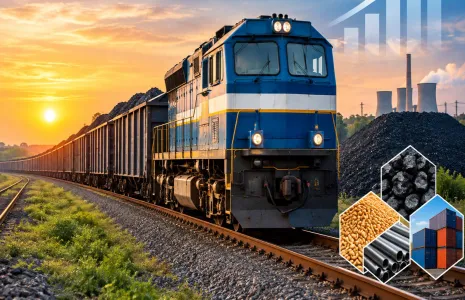
Barbil-Bolanikhadan is part of Indian Railways’ Energy, Mineral and Cement Corridor. The existing route is a single-line section carrying about 9 MTPA, including approximately six loaded rakes a day of originating iron ore traffic. The traffic consists of high-grade ore and pellets transported from SAIL’s Bolani mines and private sidings operated by Rungta and Khatau Narbheram to steel plants and ports.

The doubling of the stretch is planned ahead of the full realisation of capacity additions linked to SAIL’s mine expansion and developments at associated ports and plants. The project is intended to prevent capacity constraints in the mineral corridor as freight volumes increase, while the Kavach installation will provide additional protection for train operations in Varanasi Division.

Indian Railways has approved the deployment of Kavach Version 4.0 across 614.75 route km in Varanasi Division of North Eastern Railway at a total cost of Rs. 2.23 bn. The project will extend coverage to the identified balance sections of the division and strengthen train protection infrastructure. Kavach is an indigenously developed Automatic Train Protection (ATP) system designed to improve operational safety. It helps prevent Signal Passing at Danger (SPAD), automatically applies brakes when required and monitors train operations to support safer movement. The expansion is part of Indian Railways’ continuing effort to deploy the indigenous technology across its network. The railway has also approved the 6 km Barbil-Bolanikhadan doubling project of South Eastern Railway at a completion cost of Rs. 1.22 bn. The work is expected to facilitate additional freight traffic of 8.9 MTPA on the section after commissioning and help reduce delays affecting freight trains. Barbil-Bolanikhadan is part of Indian Railways’ Energy, Mineral and Cement Corridor. The existing route is a single-line section carrying about 9 MTPA, including approximately six loaded rakes a day of originating iron ore traffic. The traffic consists of high-grade ore and pellets transported from SAIL’s Bolani mines and private sidings operated by Rungta and Khatau Narbheram to steel plants and ports. The doubling of the stretch is planned ahead of the full realisation of capacity additions linked to SAIL’s mine expansion and developments at associated ports and plants. The project is intended to prevent capacity constraints in the mineral corridor as freight volumes increase, while the Kavach installation will provide additional protection for train operations in Varanasi Division.

Related Stories

Gold Stories

Next Story
Real Estate

Japanese companies expand GCC operations in India

More than 100 Japanese companies have established or are expanding Global Capability Centres (GCCs) in India, with a growing focus on artificial intelligence (AI), engineering, digital innovation, product development, cybersecurity and advanced analytics. The shift marks an expansion beyond traditional back-office and operational support functions towards higher-value technology and innovation activities.Japanese companies are increasingly using their Indian GCCs to support digital transformation, address talent shortages and contribute to global business strategies. These centres are taking o..

Next Story
Real Estate

India’s flexible office stock projected to reach 160 million sq ft by 2030

India retained its position as the world's most mature flexible office market, scoring 100 per cent on Cushman & Wakefield's Flexible Office Market Maturity Index, according to the firm's Global Trends in Flexible Office 2026 report.India's flexible office inventory reached 88.7 million sq ft (MSF) in H1 2026, accounting for 10.5 per cent of the country's total office stock. The report projects this to exceed 100 MSF in 2026 and reach approximately 160 MSF by 2030.Flexible office operators leased 8.5 MSF across India's top eight cities in H1 2026, their strongest first-half performance to ..
Next Story
Infrastructure Urban

K2 Infragen appoints Abhishek Sharma as DGM, supply chain

K2 Infragen has appointed Abhishek Sharma as Deputy General Manager, Supply Chain Management. He will oversee procurement planning, vendor partnerships and coordination with project teams.Sharma brings nearly two decades of experience in infrastructure procurement across railways, highways, expressways and hydropower. His experience includes procurement responsibilities associated with the Delhi–Meerut Expressway and the Delhi–Vadodara greenfield corridor. ..

Advertisement

Subscribe to Our Newsletter

Get daily newsletters around different themes from Construction world.

STAY CONNECTED

Advertisement

SPECIAL OFFER
QR Code