Indian Railways Plans High Tech Overhaul of Train Control
RAILWAYS & METRO RAIL

Indian Railways Plans High Tech Overhaul of Train Control

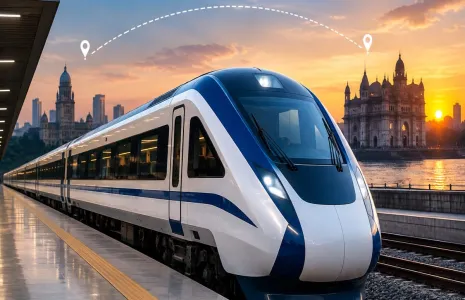
Indian Railways is set to modernise its century old control systems in a bid to curb accidents and ease congestion across the world’s fourth largest rail network. Senior officials confirmed that the Railway Board is drafting a blueprint centred on advanced decision support technology to streamline traffic control and raise operational efficiency.
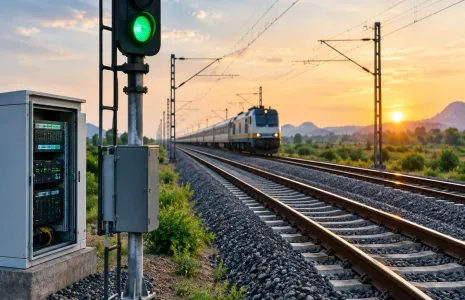
The overhaul will replace fragmented, manually managed processes with an integrated, technology driven framework. At its heart will be a central command centre uniting every department involved in train operations. Equipped with real time monitoring, predictive algorithms and AI assisted planning tools, the hub will optimise train paths, manage emergencies swiftly and reduce human error.
Planners are studying control models from Japan, Russia, Germany, Switzerland, France and Spain, yet stress that any system must be customised for India’s uniquely complex network of mixed passenger and freight traffic. “Ready made systems cannot be imported,” a senior official noted. “Long haul freight trains, semi high speed sets and varied rolling stock have multiplied operational challenges.”
Calls for reform intensified after several serious accidents exposed weaknesses in existing controls. A dedicated committee has been tasked with recommending changes, and it is expected to prioritise real time surveillance tools, congestion prediction software and better staff training.
Retired chief controller Chandan Chaturvedee welcomed the initiative, describing current traffic control as “the nervous system of Indian Railways” yet historically under resourced. He believes the new plan will revitalise a critical but neglected workforce by providing modern tools and clearer career incentives.
The committee’s final proposals are due later this year, with phased implementation likely over the next decade, subject to funding and technical approvals.

Indian Railways is set to modernise its century old control systems in a bid to curb accidents and ease congestion across the world’s fourth largest rail network. Senior officials confirmed that the Railway Board is drafting a blueprint centred on advanced decision support technology to streamline traffic control and raise operational efficiency.The overhaul will replace fragmented, manually managed processes with an integrated, technology driven framework. At its heart will be a central command centre uniting every department involved in train operations. Equipped with real time monitoring, predictive algorithms and AI assisted planning tools, the hub will optimise train paths, manage emergencies swiftly and reduce human error.Planners are studying control models from Japan, Russia, Germany, Switzerland, France and Spain, yet stress that any system must be customised for India’s uniquely complex network of mixed passenger and freight traffic. “Ready made systems cannot be imported,” a senior official noted. “Long haul freight trains, semi high speed sets and varied rolling stock have multiplied operational challenges.”Calls for reform intensified after several serious accidents exposed weaknesses in existing controls. A dedicated committee has been tasked with recommending changes, and it is expected to prioritise real time surveillance tools, congestion prediction software and better staff training.Retired chief controller Chandan Chaturvedee welcomed the initiative, describing current traffic control as “the nervous system of Indian Railways” yet historically under resourced. He believes the new plan will revitalise a critical but neglected workforce by providing modern tools and clearer career incentives.The committee’s final proposals are due later this year, with phased implementation likely over the next decade, subject to funding and technical approvals.

Related Stories

Gold Stories

Next Story
Resources

Schindler named among Forbes’ World’s Best Employers 2026

Schindler has been named among Forbes’ World’s Best Employers 2026, a global ranking recognising companies for their workplace environments.Compiled by Forbes in partnership with Statista, the ranking is based on independent employee feedback, including whether employees would recommend their organisation to friends and family.The company said the recognition reflected its focus on creating a workplace where employees can develop their expertise and build careers. ..

Next Story
Infrastructure Urban

India needs an export-execution mindset: Vishesh Jain

Interview with Vishesh Jain, Founder & CEO, EximpleWhat gaps in India’s global trade ecosystem led you to build Eximple, and what problem did you see businesses struggling with most?Eximple came out of a problem that all three founders had seen from different choke points in the trade ecosystem. India has millions of MSMEs and manufacturers, and many of them can make products that are genuinely competitive on quality. Yet only a small fraction is able to build meaningful international businesses. In our experience, the gap is usually not manufacturing capability; it is the ability to exe..

Next Story
Building Material

Nuvoco reports 13.5% revenue growth in Q2 FY27

Nuvoco Vistas Corp. Ltd. reported consolidated revenue of Rs 27.9 billion for Q2 FY27, up 13.5% year on year. Cement sales volume rose 9% to 4.7 million tonnes (MMT), while EBITDA increased 11% to Rs 4.11 billion.The company said it began its cement operations in 2014 with a 2.3 MMT per annum (MMTPA) operation at Nimbol. It now aims to reach 35 MMTPA of cement capacity by FY28, nearly 15 times its initial capacity. Its portfolio spans cement, ready-mix concrete and modern building materials.On sustainability and cost efficiency, Nuvoco partnered with CleanMax for a 46.4 MW wind-solar hybrid re..

Advertisement

Subscribe to Our Newsletter

Get daily newsletters around different themes from Construction world.

STAY CONNECTED

Advertisement

SPECIAL OFFER
QR Code