India's First Hydrogen Train Set to Hit the Tracks Soon
RAILWAYS & METRO RAIL

India's First Hydrogen Train Set to Hit the Tracks Soon

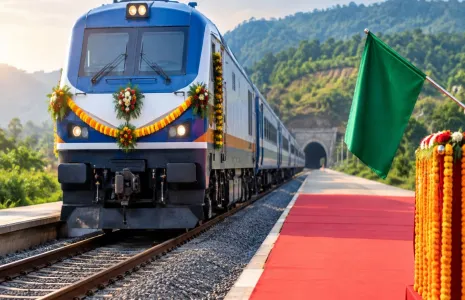
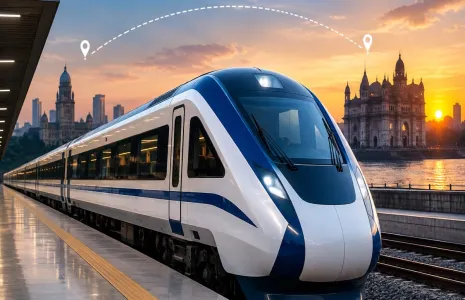
India is on the verge of launching its first hydrogen train, with Indian Railways enlisting Germany's TUV-SUD to carry out a third-party safety audit for the train. Officials familiar with the project expect that trial runs will begin in December 2024.

Once this initiative is realized, India will become the fifth country globally to operate hydrogen-powered trains, joining the ranks of Germany, France, Sweden, and China.

In addition, five Hydrogen Fuel Cell-Based Tower Cars (maintenance vehicles) are under development, with each unit estimated to cost around Rs 100 million.

Indian Railways plans to operate 35 trains under the Hydrogen for Heritage initiative, with an estimated cost of Rs 800 million per train, along with an additional Rs 700 million investment in ground infrastructure per route for various heritage or hilly routes.

The official further stated that the System Integration Unit battery and two fuel unit synchronization tests have been successfully completed. A pilot project is also in progress to retrofit a Hydrogen Fuel Cell onto an existing Diesel Electric Multiple Unit (DEMU) rake, alongside the required ground infrastructure.

This train is expected to operate on the Jind-Sonipat section of Northern Railway. The official noted that the integration of the prototype train is planned at the Integral Coach Factory in Chennai.

The hydrogen for the train in Haryana will be supplied by a 1-megawatt (MW) Polymer Electrolyte Membrane (PEM) electrolyser, which is being installed in Jind. GreenH Electrolysis announced that this electrolyser will operate continuously, producing approximately 430 kg of hydrogen per day.

India is on the verge of launching its first hydrogen train, with Indian Railways enlisting Germany's TUV-SUD to carry out a third-party safety audit for the train. Officials familiar with the project expect that trial runs will begin in December 2024. Once this initiative is realized, India will become the fifth country globally to operate hydrogen-powered trains, joining the ranks of Germany, France, Sweden, and China. In addition, five Hydrogen Fuel Cell-Based Tower Cars (maintenance vehicles) are under development, with each unit estimated to cost around Rs 100 million. Indian Railways plans to operate 35 trains under the Hydrogen for Heritage initiative, with an estimated cost of Rs 800 million per train, along with an additional Rs 700 million investment in ground infrastructure per route for various heritage or hilly routes. The official further stated that the System Integration Unit battery and two fuel unit synchronization tests have been successfully completed. A pilot project is also in progress to retrofit a Hydrogen Fuel Cell onto an existing Diesel Electric Multiple Unit (DEMU) rake, alongside the required ground infrastructure. This train is expected to operate on the Jind-Sonipat section of Northern Railway. The official noted that the integration of the prototype train is planned at the Integral Coach Factory in Chennai. The hydrogen for the train in Haryana will be supplied by a 1-megawatt (MW) Polymer Electrolyte Membrane (PEM) electrolyser, which is being installed in Jind. GreenH Electrolysis announced that this electrolyser will operate continuously, producing approximately 430 kg of hydrogen per day.

Next Story
Technology

Alligator Automations Cuts Design Effort by 50%

Alligator Automations India has reduced electrical design engineering effort by around 50 per cent after implementing WSCAD’s E-CAD solution. The company’s electrical engineering team now uses the platform for schematics, control cabinet design, and project documentation.Earlier, processes such as wire numbering, device grouping, and bill-of-materials generation were handled manually, leading to delays and higher error risks. With automation of these tasks, efficiency and accuracy have improved significantly. Wire numbering alone now takes nearly half the time, enabling engineers to focus ..

Next Story
Technology

Alligator Automations Cuts Design Effort by 50%

Alligator Automations India has reduced electrical design engineering effort by around 50 per cent after implementing WSCAD’s E-CAD solution. The company’s electrical engineering team now uses the platform for schematics, control cabinet design, and project documentation.Earlier, processes such as wire numbering, device grouping, and bill-of-materials generation were handled manually, leading to delays and higher error risks. With automation of these tasks, efficiency and accuracy have improved significantly. Wire numbering alone now takes nearly half the time, enabling engineers to focus ..

Next Story
Real Estate

Lulu Group Unit Fair Exports Buys Sunder Nagar Bungalow

Fair Exports, a subsidiary of Lulu Group, has purchased a bungalow in Sunder Nagar, New Delhi, for Rs 89.5 crore, equivalent to Rs 895 million (mn). The transaction was completed through a private sale and was reported by local media, and the reported sum converts the original figure into an easier comparator for investors. The acquisition highlights continued corporate interest in premium residential properties within central Delhi. The buyer is positioned to hold the asset as part of its portfolio. Sunder Nagar is a well established neighbourhood characterised by high end residences and prox..

Advertisement

Subscribe to Our Newsletter

Get daily newsletters around different themes from Construction world.

STAY CONNECTED

Advertisement

Advertisement

Advertisement