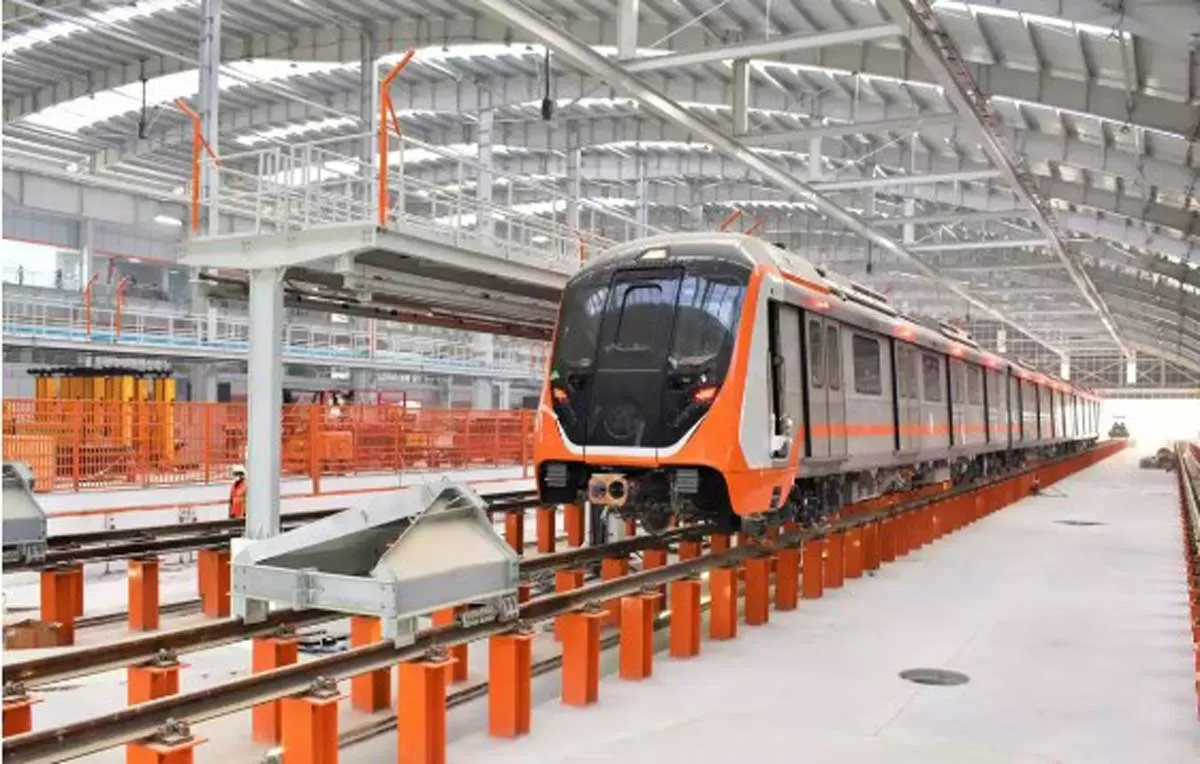
Kanpur, Meerut Metro corridor to transform urban transportation by 2025
RAILWAYS & METRO RAIL

Kanpur, Meerut Metro corridor to transform urban transportation by 2025

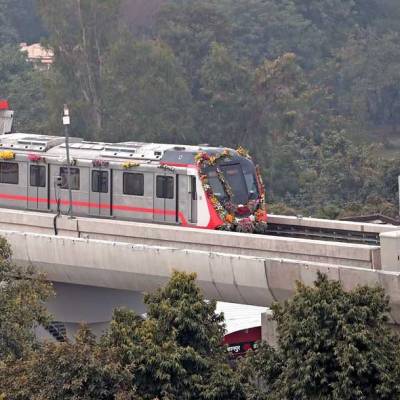
Both the UP Metro Rail Corporation (UPMRC) and the National Capital Region Transport Corporation (NCRTC) are gearing up to launch fully operational Metro corridors in Kanpur and Meerut by 2024-25.

The North-South corridor, spanning 23.8 km and connecting 21 stations from IIT Kanpur to Naubasta, is anticipated to serve approximately 1.5 lakh commuters daily. Simultaneously, the 23 km North-South corridor from Modipuram to Meerut South in Meerut district is expected to witness footfall ranging from 70,000 to one lakh. The Meerut Metro, operating along RapidX on the same track, is slated for completion by June 2025, with NCRTC aiming to finish the project by March 2025.

The Meerut Metro will encompass 13 stations, including Meerut South, Partapur, Rithani, Shatabdi Nagar, Brahmpuri, Meerut Central, Bhainsali, Begumpul, MES Colony, Daurli, Meerut North, Modipuram, and Modipuram Depot. While Meerut Central, Bhainsali, and Begumpul stations will be underground, the remaining stations will be elevated. Stations such as Meerut South, Shatabdi Nagar, Begumpul, and Modipuram will feature RapidX services, accommodating the Namo Bharat train. For the 13 Metro service stations, NCRTC will introduce separate Metro trains, ensuring synchronisation with Namo Bharat train halts after every two Metro trains, as explained by Punnet Vats, CPRO of NCRTC.

State Finance Minister Suresh Kumar Khanna announced that the Uttar Pradesh government has allocated Rs 9.14 billion for the Delhi-Ghaziabad-Meerut corridor Regional Rapid Transit System (RRTS). Additionally, Rs 3.95 billion has been earmarked for the Kanpur Metro. The UPMRC PRO shared with TOI that the first corridor of the Kanpur Metro is expected to be commissioned by November 2024, featuring 14 elevated stations and seven underground stations. Once fully operational, the Kanpur Metro is poised to revolutionise urban transportation in the city, offering commuters a modern, efficient, and comfortable mode of travel, according to the UPMRC official.

Both the UP Metro Rail Corporation (UPMRC) and the National Capital Region Transport Corporation (NCRTC) are gearing up to launch fully operational Metro corridors in Kanpur and Meerut by 2024-25. The North-South corridor, spanning 23.8 km and connecting 21 stations from IIT Kanpur to Naubasta, is anticipated to serve approximately 1.5 lakh commuters daily. Simultaneously, the 23 km North-South corridor from Modipuram to Meerut South in Meerut district is expected to witness footfall ranging from 70,000 to one lakh. The Meerut Metro, operating along RapidX on the same track, is slated for completion by June 2025, with NCRTC aiming to finish the project by March 2025. The Meerut Metro will encompass 13 stations, including Meerut South, Partapur, Rithani, Shatabdi Nagar, Brahmpuri, Meerut Central, Bhainsali, Begumpul, MES Colony, Daurli, Meerut North, Modipuram, and Modipuram Depot. While Meerut Central, Bhainsali, and Begumpul stations will be underground, the remaining stations will be elevated. Stations such as Meerut South, Shatabdi Nagar, Begumpul, and Modipuram will feature RapidX services, accommodating the Namo Bharat train. For the 13 Metro service stations, NCRTC will introduce separate Metro trains, ensuring synchronisation with Namo Bharat train halts after every two Metro trains, as explained by Punnet Vats, CPRO of NCRTC. State Finance Minister Suresh Kumar Khanna announced that the Uttar Pradesh government has allocated Rs 9.14 billion for the Delhi-Ghaziabad-Meerut corridor Regional Rapid Transit System (RRTS). Additionally, Rs 3.95 billion has been earmarked for the Kanpur Metro. The UPMRC PRO shared with TOI that the first corridor of the Kanpur Metro is expected to be commissioned by November 2024, featuring 14 elevated stations and seven underground stations. Once fully operational, the Kanpur Metro is poised to revolutionise urban transportation in the city, offering commuters a modern, efficient, and comfortable mode of travel, according to the UPMRC official.

Next Story
Infrastructure Transport

Kavach 4.0 Commissioned on Delhi–Mumbai and Delhi–Howrah

"Kavach version four has been commissioned on 1,452 route km, covering the high density Delhi–Mumbai and Delhi–Howrah corridors. The rollout included laying 8,570 km of optical fibre, installation of 1,100 telecom towers, deployment of trackside equipment over 6,776 RKm and establishment of 767 station data centres. Trackside implementation has been taken up on 24,427 RKm covering Golden Quadrilateral, Golden Diagonal and High Density Network sections. The programme aims to strengthen signalling and train protection on key routes.Kavach is an indigenously developed automatic train protecti..

Next Story
Infrastructure Transport

Railways Advance Kalyan–Murbad Line And Mumbai Capacity Expansion

"Indian Railways is advancing multiple rail infrastructure projects in Maharashtra, including the sanctioned Kalyan–Murbad new line and sizable investments under the Mumbai Urban Transport Project and the Mumbai–Ahmedabad High Speed Rail project. The Kalyan–Murbad 28 km new line has been sanctioned at Rs 8.36 billion (bn) on a 50:50 cost-sharing basis with the Government of Maharashtra and has been declared a Special Railway Project for land acquisition; proposals covering 214 hectares are at various stages of acquisition. Budgetary outlay for projects falling fully or partly in Maharash..

Next Story
Infrastructure Urban

Parliamentary Panel Flags Funding Gaps in Heavy Industries

"The Department-Related Parliamentary Standing Committee on Industry (Rajya Sabha) presented its 332nd report on the Demands for Grants 2026-27 of the Ministry of Heavy Industries (MHI). Figures converted from crore and lakh are expressed in million (mn). The Budget Estimates 2026-27 for the Ministry stand at Rs 79,399 mn against a projected requirement of Rs 94,843.2 mn, a shortfall of about 16 per cent, with revenue at Rs 79,370.8 mn and capital compressed to Rs 28.2 mn from Rs 5,020 mn.The committee flagged recurring BE-to-RE compression and declining revised estimate utilisation, and calle..

Advertisement

Subscribe to Our Newsletter

Get daily newsletters around different themes from Construction world.

STAY CONNECTED

Advertisement

Advertisement

Advertisement