Kazipet Begins South India's First Rail-Under-Rail Tunnel
RAILWAYS & METRO RAIL

Kazipet Begins South India's First Rail-Under-Rail Tunnel

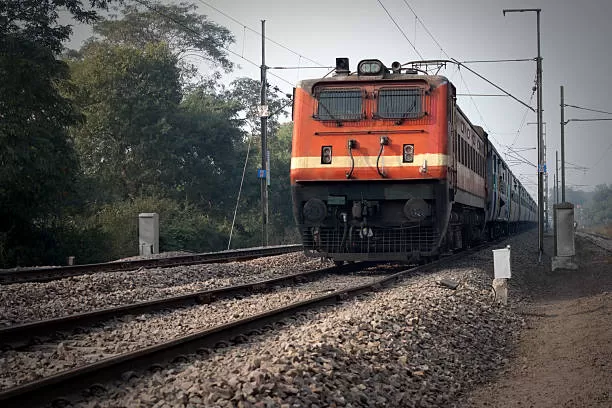
In a historic move for South Indian railways, construction has begun on a pioneering rail-under-rail (RUR) tunnel in Kazipet. This 340-meter-long tunnel will facilitate the simultaneous passage of two trains, with one running on the surface and the other underneath.

The RUR tunnel, a first in the South Central Railway (SCR) zone, aims to streamline passenger travel towards New Delhi through the Vijayawada-Balharshah section. This section is a vital part of the Chennai-New Delhi golden quadrilateral route, one of the busiest corridors in Indian Railways that has now reached its capacity.

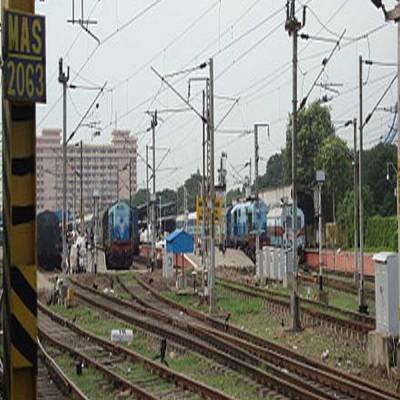
Kazipet serves as a major hub, managing train routes to several key cities across India such as New Delhi, Chennai, Bengaluru, Chandigarh, Raipur, Jabalpur, Lucknow, Gorakhpur, Trivandrum, Danapur, Bilaspur, Jodhpur, Jaipur, and Patna. The high volume of train traffic has led to significant congestion, slowing down movement on this crucial route. The RUR project aims to ease this bottleneck by introducing a bypass lane, significantly improving train operations.

Officials describe the RUR as an engineering marvel due to the complex challenges of constructing on such an active route. Detailed planning and precise execution were essential to navigate the difficult terrain, requiring excavation to depths of 40 to 50 feet due to unsuitable land for traditional tracks.

?The construction of the RUR is on track to be completed in the next three months. This project is key to reducing traffic congestion along this route. Much of the tunnel work is already done, and the next phase involves laying double lines,? explained a senior railway official.

The RUR project is part of a larger bypass line extending over 21.47 route kilometers, with a budget of ?125 crores. This initiative is set to revolutionize train operations in the region, offering a critical solution to current congestion issues and enhancing the efficiency of the railway network. The successful completion of this project will mark a significant milestone in the advancement of rail infrastructure in South India.

In a historic move for South Indian railways, construction has begun on a pioneering rail-under-rail (RUR) tunnel in Kazipet. This 340-meter-long tunnel will facilitate the simultaneous passage of two trains, with one running on the surface and the other underneath. The RUR tunnel, a first in the South Central Railway (SCR) zone, aims to streamline passenger travel towards New Delhi through the Vijayawada-Balharshah section. This section is a vital part of the Chennai-New Delhi golden quadrilateral route, one of the busiest corridors in Indian Railways that has now reached its capacity. Kazipet serves as a major hub, managing train routes to several key cities across India such as New Delhi, Chennai, Bengaluru, Chandigarh, Raipur, Jabalpur, Lucknow, Gorakhpur, Trivandrum, Danapur, Bilaspur, Jodhpur, Jaipur, and Patna. The high volume of train traffic has led to significant congestion, slowing down movement on this crucial route. The RUR project aims to ease this bottleneck by introducing a bypass lane, significantly improving train operations. Officials describe the RUR as an engineering marvel due to the complex challenges of constructing on such an active route. Detailed planning and precise execution were essential to navigate the difficult terrain, requiring excavation to depths of 40 to 50 feet due to unsuitable land for traditional tracks. ?The construction of the RUR is on track to be completed in the next three months. This project is key to reducing traffic congestion along this route. Much of the tunnel work is already done, and the next phase involves laying double lines,? explained a senior railway official. The RUR project is part of a larger bypass line extending over 21.47 route kilometers, with a budget of ?125 crores. This initiative is set to revolutionize train operations in the region, offering a critical solution to current congestion issues and enhancing the efficiency of the railway network. The successful completion of this project will mark a significant milestone in the advancement of rail infrastructure in South India.

Next Story
Technology

AI-Enabled Workflows Lift Profitability and Productivity

Organisations modernising frontline workflows with artificial intelligence, automation and real-time data are reporting stronger financial performance, higher productivity and improved employee engagement, according to a global study by Zebra Technologies and Oxford Economics.The research covered 1,000 senior leaders across retail, manufacturing, transportation and logistics in the US, Mexico, the UK, Germany, India, Japan, Australia and New Zealand.In transportation and logistics, 54 per cent of companies that improved picking and packing operations reported faster operational performance, wh..

Next Story
Real Estate

India Leads Global AI Readiness but Implementation Lags

Indian companies lead global averages across all eight artificial intelligence readiness indicators tracked by JLL, but only 19 per cent have started making changes to their workplaces, according to the JLL 2026 Future of Work Survey.The study found that 77 per cent of Indian business leaders expect AI to change their office requirements, creating a 58-percentage-point gap between awareness and implementation. The survey covered more than 2,200 CEOs, CFOs and real estate leaders across 21 countries during the first quarter of 2026.Despite concerns over automation, 58 per cent of Indian leaders..

Next Story
Equipment

Three WOLFF Cranes Build Riyadh Cable-Stayed Bridges

Three WOLFF 180 B luffing jib cranes are supporting the construction of two cable-stayed bridges alongside the existing Wadi Laban Bridge in Riyadh, Saudi Arabia. The project is being developed for the Royal Commission for Riyadh City and executed by the ICRC joint venture comprising IC Ictas and Al Rashid Trading & Contracting Company.The cranes are handling lifting operations including formwork, reinforcement, concrete placement, work platforms, surveying equipment and other construction materials. Each crane is fitted with a 40 m jib, reaches a hook height of 157 m and offers a maximum ..

Advertisement

Subscribe to Our Newsletter

Get daily newsletters around different themes from Construction world.

STAY CONNECTED

Advertisement

Advertisement

Advertisement