Maharashtra Approves Rs 6.83 Bn for Bibvewadi, Balajinagar Metro Stations
RAILWAYS & METRO RAIL

Maharashtra Approves Rs 6.83 Bn for Bibvewadi, Balajinagar Metro Stations

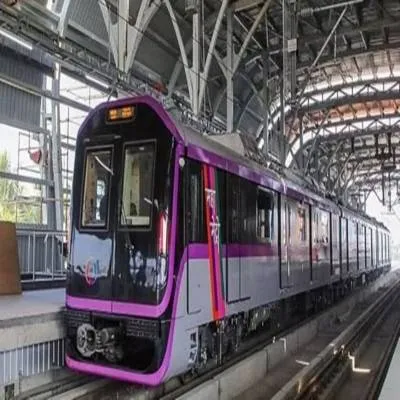
The state government has approved two new underground metro stations at Bibvewadi and Balajinagar on the proposed Swargate–Katraj corridor. The project cost for both stations has been estimated at Rs 6.83 billion.

Of the sanctioned amount, the Pune Municipal Corporation (PMC) will contribute Rs 2.27 billion, the state government will provide Rs 1.16 billion, and Rs 3.41 billion will be raised through loans.

Deputy Chief Minister and Pune district guardian minister Ajit Pawar said the stations will improve metro accessibility for residents of Dhankawadi and Bibvewadi, two of Pune’s most densely populated areas.

Originally, only four stations were planned along the corridor, leaving out several high-density zones such as Dhankawadi, Balajinagar, Bibvewadi, and Bharti Vidyapeeth. Following demands from local leaders, PMC submitted a revised proposal, which has now been approved.

The state government has also sanctioned shifting the Katraj metro station 471 metres from its earlier proposed location. Further, in-principle approval has been given for raising loans for the Vanaz–Chandni Chowk and Ramwadi–Wagholi corridors, while agreeing to bear the loan costs for the Khadakwasla–Swargate–Hadapsar–Kharadi line.

Officials said the approvals mark an important step in strengthening last-mile connectivity and easing congestion in Pune’s southern belt.

News source: Hindustan times

The state government has approved two new underground metro stations at Bibvewadi and Balajinagar on the proposed Swargate–Katraj corridor. The project cost for both stations has been estimated at Rs 6.83 billion.Of the sanctioned amount, the Pune Municipal Corporation (PMC) will contribute Rs 2.27 billion, the state government will provide Rs 1.16 billion, and Rs 3.41 billion will be raised through loans.Deputy Chief Minister and Pune district guardian minister Ajit Pawar said the stations will improve metro accessibility for residents of Dhankawadi and Bibvewadi, two of Pune’s most densely populated areas.Originally, only four stations were planned along the corridor, leaving out several high-density zones such as Dhankawadi, Balajinagar, Bibvewadi, and Bharti Vidyapeeth. Following demands from local leaders, PMC submitted a revised proposal, which has now been approved.The state government has also sanctioned shifting the Katraj metro station 471 metres from its earlier proposed location. Further, in-principle approval has been given for raising loans for the Vanaz–Chandni Chowk and Ramwadi–Wagholi corridors, while agreeing to bear the loan costs for the Khadakwasla–Swargate–Hadapsar–Kharadi line.Officials said the approvals mark an important step in strengthening last-mile connectivity and easing congestion in Pune’s southern belt.News source: Hindustan times

Related Stories

Gold Stories

Next Story
Infrastructure Urban

KONE Opens India's First Digital Experience Centre in Pune

KONE, a global elevator and escalator manufacturer, has inaugurated its first Digital Experience Centre (DEC) in India, located in Pune. The facility aims to showcase how artificial intelligence (AI), connectivity and data-driven technologies can enhance customer experiences and improve building operations.The centre was inaugurated by Jussi Herlin, Executive Vice Chair, KONE Corporation; Philippe Delorme, President and CEO, KONE; and Nandan Nilekani, Co-founder and Chairman of the Board, Infosys.Designed as an interactive customer environment, the facility demonstrates digital solutions cover..

Next Story
Infrastructure Urban

CII GreenCo Launches Circularity Guidelines for Indian Industry

The Confederation of Indian Industry (CII) GreenCo Council has launched the CII GreenCo Circularity Guidelines – Pilot Version at the 17th CII GreenCo Waste & Resource Management Summit 2026 in Chennai. The initiative aims to strengthen resource efficiency, waste reduction and circular economy practices across Indian manufacturing and process industries.The guidelines introduce a structured framework with circularity indices covering raw materials, consumables, packaging and other resource inputs. These indicators will help industries assess existing practices, identify opportunities to ..

Next Story
Infrastructure Energy

Global Electronics Association Launches IPC-1783-CO2E Standard

The Global Electronics Association has introduced IPC-1783-CO2E, a new international standard aimed at improving consistency, transparency and comparability in product carbon footprint reporting across the electronics manufacturing industry.The standard, titled International Standard for Data Collection and Reporting of CO2 Equivalent (CO2e) Emissions for the Electronics Manufacturing Supply Chain, provides industry-specific guidance for collecting, estimating and reporting carbon emissions data.With increasing regulatory requirements and customer expectations, electronics manufacturers face c..

Advertisement

Subscribe to Our Newsletter

Get daily newsletters around different themes from Construction world.

STAY CONNECTED

Advertisement

SPECIAL OFFER
QR Code