Mumbai-Ahmedabad Bullet Train Adds 8th Steel Bridge in Gujarat
RAILWAYS & METRO RAIL

Mumbai-Ahmedabad Bullet Train Adds 8th Steel Bridge in Gujarat

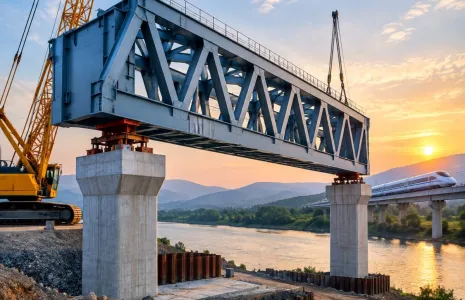
The Mumbai-Ahmedabad Bullet Train project has reached another major construction milestone in Gujarat with the successful launch of its eighth steel bridge. This marks nearly 50 per cent progress on the 17 steel structures planned for the state as part of the high-speed rail corridor.

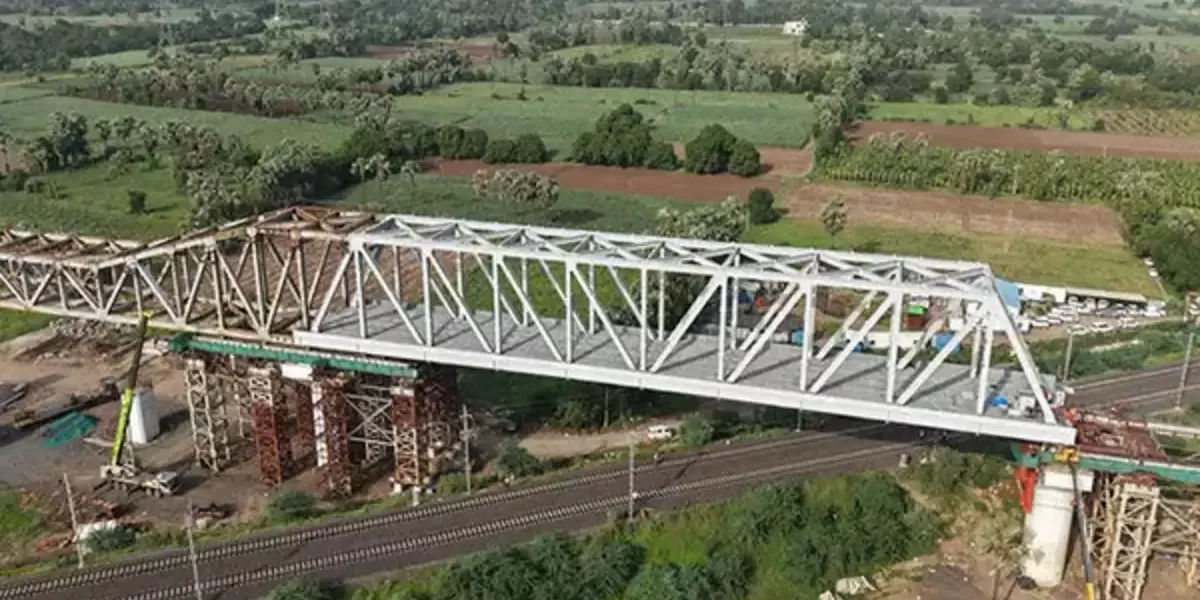
The latest installation is a 100-metre-long steel span positioned over the Dedicated Freight Corridor (DFC) tracks near Bharuch. It is one of 28 steel bridges planned along the entire corridor, of which 17 are located in Gujarat.

Weighing approximately 1,400 metric tons, the bridge stands 14.6 metres tall and spans 14.3 metres in width. It was fabricated at a facility in Trichy and transported to the site using specialised trailers. A launching nose, measuring 84 metres and weighing 600 metric tons, was used to position the bridge into place.

The structure was assembled 18 metres above ground level on temporary trestles using 55,300 high-strength Tor-Shear bolts. It also includes elastomeric bearings and C5-grade protective paint, ensuring a projected lifespan of 100 years. The bridge was launched using two semi-automatic jacks with a capacity of 250 tons each, operated through mac-alloy bars.

To avoid disruption to freight operations on the DFC tracks, the launch was carefully coordinated through phased traffic blocks.

With this latest development, eight steel bridges have now been completed across Gujarat at locations including Surat, Vadodara, Nadiad, Silvassa, and Bharuch. Among the most notable is a 230-metre-long span over the Delhi-Mumbai Expressway near Vadodara, the heaviest structure to date, weighing 4,397 metric tons.

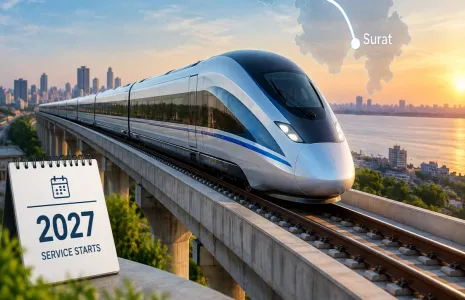
The project is being executed by the National High Speed Rail Corporation Limited (NHSRCL) and forms part of India's first high-speed rail corridor, designed to significantly reduce travel time between Mumbai and Ahmedabad.

The Mumbai-Ahmedabad Bullet Train project has reached another major construction milestone in Gujarat with the successful launch of its eighth steel bridge. This marks nearly 50 per cent progress on the 17 steel structures planned for the state as part of the high-speed rail corridor.The latest installation is a 100-metre-long steel span positioned over the Dedicated Freight Corridor (DFC) tracks near Bharuch. It is one of 28 steel bridges planned along the entire corridor, of which 17 are located in Gujarat.Weighing approximately 1,400 metric tons, the bridge stands 14.6 metres tall and spans 14.3 metres in width. It was fabricated at a facility in Trichy and transported to the site using specialised trailers. A launching nose, measuring 84 metres and weighing 600 metric tons, was used to position the bridge into place.The structure was assembled 18 metres above ground level on temporary trestles using 55,300 high-strength Tor-Shear bolts. It also includes elastomeric bearings and C5-grade protective paint, ensuring a projected lifespan of 100 years. The bridge was launched using two semi-automatic jacks with a capacity of 250 tons each, operated through mac-alloy bars.To avoid disruption to freight operations on the DFC tracks, the launch was carefully coordinated through phased traffic blocks.With this latest development, eight steel bridges have now been completed across Gujarat at locations including Surat, Vadodara, Nadiad, Silvassa, and Bharuch. Among the most notable is a 230-metre-long span over the Delhi-Mumbai Expressway near Vadodara, the heaviest structure to date, weighing 4,397 metric tons.The project is being executed by the National High Speed Rail Corporation Limited (NHSRCL) and forms part of India's first high-speed rail corridor, designed to significantly reduce travel time between Mumbai and Ahmedabad.

Next Story
Infrastructure Transport

MMRDA advances 250 m on Orange Gate–Marine Drive tunnel

The Mumbai Metropolitan Region Development Authority (MMRDA) has completed 250 m of underground tunnelling for the Orange Gate–Marine Drive Urban Road Tunnel using India’s largest slurry shield tunnel boring machine (TBM) deployed for an urban road project.The project involves twin tunnels extending over 7 km beneath critical transport corridors, including Central Railway, Western Railway and Metro Line 3. The work requires high-precision engineering to navigate densely developed urban infrastructure.Once completed, the tunnel is expected to reduce travel time between Orange Gate and Marin..

Next Story
Infrastructure Urban

Hindustan Zinc Pays Rs 188.46 Billion in FY26

Hindustan Zinc contributed Rs 188.46 billion to the public exchequer in FY 2025-26, according to its 9th Tax Transparency Report. The contribution, equivalent to 46 per cent of the company’s revenue, included direct and indirect taxes, government royalties, dividends to the Government of India, withholding taxes and other statutory levies.The company’s five-year cumulative contribution to the exchequer stood at Rs 915.72 billion. In FY26, Hindustan Zinc reported revenue of Rs 408.44 billion, EBITDA of Rs 221.62 billion and profit after tax of Rs 138.32 billion. It also achieved its highest..

Next Story
Infrastructure Urban

World of Concrete India 2026 Opens in Mumbai

Informa Markets in India will host the 12th edition of World of Concrete India 2026 from 3–5 June 2026 at the Bombay Exhibition Centre, Mumbai. The specialised B2B exhibition will bring together manufacturers, suppliers, contractors, developers, architects, consultants, infrastructure companies, project leaders and government stakeholders.The event is expected to feature over 350 brands and more than 18,000 trade professionals. It will cover concrete and cement, dry mortar, precast technologies, formwork, construction chemicals, industrial and commercial flooring, scaffolding, safety solutio..

Advertisement

Subscribe to Our Newsletter

Get daily newsletters around different themes from Construction world.

STAY CONNECTED

Advertisement

Advertisement

Advertisement