Mumbai first travelator to connect Mahalaxmi railway station to Monorail
RAILWAYS & METRO RAIL

Mumbai first travelator to connect Mahalaxmi railway station to Monorail

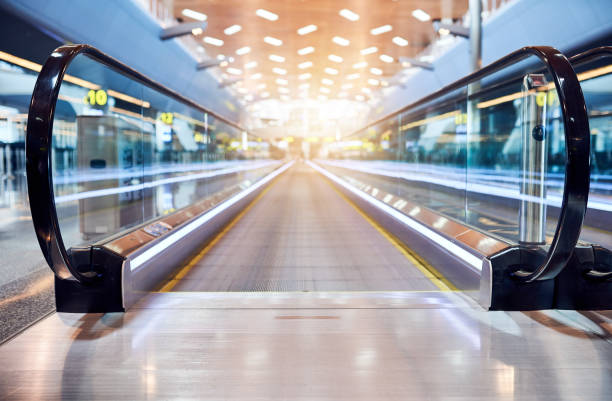
Mumbai will get its first travelator that will connect Mahalaxmi railway station on Western Railway with Sant Gadge Maharaja Chowk Monorail station, which is the terminal station of the fully-elevated corridor that runs on a 20km stretch up to Chembur.

At the moment, travelators are only seen within airports, where they are useful for passengers carrying luggage.

SVR Srinivas, Metropolitan Commissioner, told the media that they considered extending the monorail up to Mahalaxmi station and the planned Metro 3 subterranean station. They are now moving forward with their plans to use a travelator to bridge this gap.

This travelator will be installed at a higher elevation by MMRDA. A senior official revealed that if they wish to extend the monorail in the future, this travellator will be removed, and a guideway beam will be erected on which the train may run.

The official said that the travelator will be around 500 m long and contain two 3 m wide tracks for bi-directional passenger transit. The cost of installing the travellator will be Rs 6 crore compared to Rs 150 crore-Rs 200 crore needed to expand the monorail.

Before the Covid-19 pandemic, the monorail had a passenger capacity of 18,000. Authorities claimed that now, it can accommodate two lakh people every day.

The Mumbai Metro Rail Corporation (MMRC) Ltd is building an underground Metro station that will connect to the Mahalaxmi station, resulting in a boost in Monorail ridership.

The distance between Sant Ghadge Maharaj Chowk Monorail station and Mahalaxmi Metro station is 700 m, and few people will travel this distance after exiting the subway system to board the Monorail.

Image Source

Also read: PM Modi will inaugurate railway projects worth over Rs 16k cr

Mumbai will get its first travelator that will connect Mahalaxmi railway station on Western Railway with Sant Gadge Maharaja Chowk Monorail station, which is the terminal station of the fully-elevated corridor that runs on a 20km stretch up to Chembur. At the moment, travelators are only seen within airports, where they are useful for passengers carrying luggage. SVR Srinivas, Metropolitan Commissioner, told the media that they considered extending the monorail up to Mahalaxmi station and the planned Metro 3 subterranean station. They are now moving forward with their plans to use a travelator to bridge this gap. This travelator will be installed at a higher elevation by MMRDA. A senior official revealed that if they wish to extend the monorail in the future, this travellator will be removed, and a guideway beam will be erected on which the train may run. The official said that the travelator will be around 500 m long and contain two 3 m wide tracks for bi-directional passenger transit. The cost of installing the travellator will be Rs 6 crore compared to Rs 150 crore-Rs 200 crore needed to expand the monorail. Before the Covid-19 pandemic, the monorail had a passenger capacity of 18,000. Authorities claimed that now, it can accommodate two lakh people every day. The Mumbai Metro Rail Corporation (MMRC) Ltd is building an underground Metro station that will connect to the Mahalaxmi station, resulting in a boost in Monorail ridership. The distance between Sant Ghadge Maharaj Chowk Monorail station and Mahalaxmi Metro station is 700 m, and few people will travel this distance after exiting the subway system to board the Monorail. Image Source Also read: PM Modi will inaugurate railway projects worth over Rs 16k cr

Next Story
Infrastructure Transport

MMRDA advances 250 m on Orange Gate–Marine Drive tunnel

The Mumbai Metropolitan Region Development Authority (MMRDA) has completed 250 m of underground tunnelling for the Orange Gate–Marine Drive Urban Road Tunnel using India’s largest slurry shield tunnel boring machine (TBM) deployed for an urban road project.The project involves twin tunnels extending over 7 km beneath critical transport corridors, including Central Railway, Western Railway and Metro Line 3. The work requires high-precision engineering to navigate densely developed urban infrastructure.Once completed, the tunnel is expected to reduce travel time between Orange Gate and Marin..

Next Story
Infrastructure Urban

Hindustan Zinc Pays Rs 188.46 Billion in FY26

Hindustan Zinc contributed Rs 188.46 billion to the public exchequer in FY 2025-26, according to its 9th Tax Transparency Report. The contribution, equivalent to 46 per cent of the company’s revenue, included direct and indirect taxes, government royalties, dividends to the Government of India, withholding taxes and other statutory levies.The company’s five-year cumulative contribution to the exchequer stood at Rs 915.72 billion. In FY26, Hindustan Zinc reported revenue of Rs 408.44 billion, EBITDA of Rs 221.62 billion and profit after tax of Rs 138.32 billion. It also achieved its highest..

Next Story
Infrastructure Urban

World of Concrete India 2026 Opens in Mumbai

Informa Markets in India will host the 12th edition of World of Concrete India 2026 from 3–5 June 2026 at the Bombay Exhibition Centre, Mumbai. The specialised B2B exhibition will bring together manufacturers, suppliers, contractors, developers, architects, consultants, infrastructure companies, project leaders and government stakeholders.The event is expected to feature over 350 brands and more than 18,000 trade professionals. It will cover concrete and cement, dry mortar, precast technologies, formwork, construction chemicals, industrial and commercial flooring, scaffolding, safety solutio..

Advertisement

Subscribe to Our Newsletter

Get daily newsletters around different themes from Construction world.

STAY CONNECTED

Advertisement

Advertisement

Advertisement