Puri Railway Station set for major revamp under Amrit Bharat Scheme
RAILWAYS & METRO RAIL

Puri Railway Station set for major revamp under Amrit Bharat Scheme

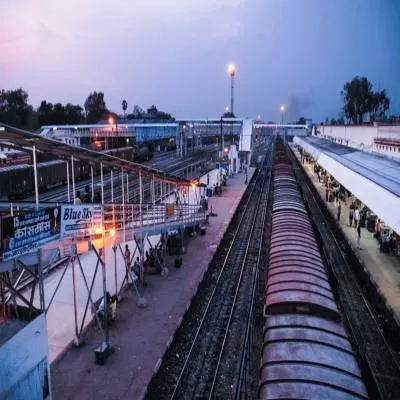
Puri railway station in Odisha stands as a pivotal junction in the eastern state, connecting devotees to the revered Lord Jagannath temple and serving as a crucial link to the entire nation. It witnesses a constant influx of worshippers throughout the year, underscoring its significance in terms of passenger connectivity.

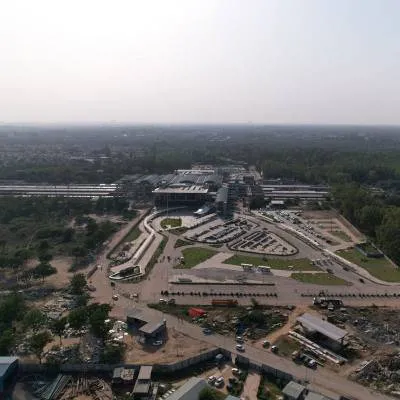
Under the ambitious Amrit Bharat Station Scheme, Puri railway station is currently undergoing a significant transformation. The comprehensive redevelopment plan aims to revamp the station's infrastructure and facilities, boosting its train handling capacity by 2025. A substantial budget of Rs 1.6151 billion has been allocated for the station's redevelopment.

Deputy CE/Con-I/Bhubaneswar, Prabhat Singh, informed ANI that the redevelopment work is progressing swiftly, with an expected completion date in July 2025. The upgraded station will not only accommodate more trains but also provide enhanced passenger amenities. The plan includes transforming the entire station into a world-class facility, featuring a G plus Three structure, an air-conditioned building, and improved platform areas.

Additionally, the redevelopment plan encompasses the creation of an extensive parking space with a dedicated area for electric vehicle charging. The station will be equipped with six escalators, a rest room for the Travelling Ticket Examiner (TTE), a retiring room with 150 beds, and dormitory facilities.

Currently serving approximately 16,000 passengers daily, Puri railway station's capacity is set to increase significantly after the renovation, accommodating up to 60,000 passengers, according to Singh.

Architect Prateek Rath, involved in the station's redevelopment, highlighted the adoption of Kalinga temple architecture in the design, reflecting the historical context of Odisha. The station, being situated in Puri or Lord Jagannath Dham, incorporates temple-style architecture in its facade.

The redevelopment aligns with the Ministry of Railways' Amrit Bharat Station Scheme, aiming to modernise and upgrade 1,309 railway stations across the country. Despite facing challenges such as statutory clearances for fire, heritage, tree cutting, and airport, Puri railway station's transformation is deemed essential to meet the increasing demands of the region. In Odisha alone, 57 railway stations, including the notable Puri Railway Station, are slated for transformation under this comprehensive scheme.

Puri railway station in Odisha stands as a pivotal junction in the eastern state, connecting devotees to the revered Lord Jagannath temple and serving as a crucial link to the entire nation. It witnesses a constant influx of worshippers throughout the year, underscoring its significance in terms of passenger connectivity. Under the ambitious Amrit Bharat Station Scheme, Puri railway station is currently undergoing a significant transformation. The comprehensive redevelopment plan aims to revamp the station's infrastructure and facilities, boosting its train handling capacity by 2025. A substantial budget of Rs 1.6151 billion has been allocated for the station's redevelopment. Deputy CE/Con-I/Bhubaneswar, Prabhat Singh, informed ANI that the redevelopment work is progressing swiftly, with an expected completion date in July 2025. The upgraded station will not only accommodate more trains but also provide enhanced passenger amenities. The plan includes transforming the entire station into a world-class facility, featuring a G plus Three structure, an air-conditioned building, and improved platform areas. Additionally, the redevelopment plan encompasses the creation of an extensive parking space with a dedicated area for electric vehicle charging. The station will be equipped with six escalators, a rest room for the Travelling Ticket Examiner (TTE), a retiring room with 150 beds, and dormitory facilities. Currently serving approximately 16,000 passengers daily, Puri railway station's capacity is set to increase significantly after the renovation, accommodating up to 60,000 passengers, according to Singh. Architect Prateek Rath, involved in the station's redevelopment, highlighted the adoption of Kalinga temple architecture in the design, reflecting the historical context of Odisha. The station, being situated in Puri or Lord Jagannath Dham, incorporates temple-style architecture in its facade. The redevelopment aligns with the Ministry of Railways' Amrit Bharat Station Scheme, aiming to modernise and upgrade 1,309 railway stations across the country. Despite facing challenges such as statutory clearances for fire, heritage, tree cutting, and airport, Puri railway station's transformation is deemed essential to meet the increasing demands of the region. In Odisha alone, 57 railway stations, including the notable Puri Railway Station, are slated for transformation under this comprehensive scheme.

Related Stories

Gold Stories

Next Story
Infrastructure Urban

KONE Opens India's First Digital Experience Centre in Pune

KONE, a global elevator and escalator manufacturer, has inaugurated its first Digital Experience Centre (DEC) in India, located in Pune. The facility aims to showcase how artificial intelligence (AI), connectivity and data-driven technologies can enhance customer experiences and improve building operations.The centre was inaugurated by Jussi Herlin, Executive Vice Chair, KONE Corporation; Philippe Delorme, President and CEO, KONE; and Nandan Nilekani, Co-founder and Chairman of the Board, Infosys.Designed as an interactive customer environment, the facility demonstrates digital solutions cover..

Next Story
Infrastructure Urban

CII GreenCo Launches Circularity Guidelines for Indian Industry

The Confederation of Indian Industry (CII) GreenCo Council has launched the CII GreenCo Circularity Guidelines – Pilot Version at the 17th CII GreenCo Waste & Resource Management Summit 2026 in Chennai. The initiative aims to strengthen resource efficiency, waste reduction and circular economy practices across Indian manufacturing and process industries.The guidelines introduce a structured framework with circularity indices covering raw materials, consumables, packaging and other resource inputs. These indicators will help industries assess existing practices, identify opportunities to ..

Next Story
Infrastructure Energy

Global Electronics Association Launches IPC-1783-CO2E Standard

The Global Electronics Association has introduced IPC-1783-CO2E, a new international standard aimed at improving consistency, transparency and comparability in product carbon footprint reporting across the electronics manufacturing industry.The standard, titled International Standard for Data Collection and Reporting of CO2 Equivalent (CO2e) Emissions for the Electronics Manufacturing Supply Chain, provides industry-specific guidance for collecting, estimating and reporting carbon emissions data.With increasing regulatory requirements and customer expectations, electronics manufacturers face c..

Advertisement

Subscribe to Our Newsletter

Get daily newsletters around different themes from Construction world.

STAY CONNECTED

Advertisement

SPECIAL OFFER
QR Code