Railway Minister Announces Integrated Track Monitoring System
RAILWAYS & METRO RAIL

Railway Minister Announces Integrated Track Monitoring System

Union Railway Minister Ashwini Vaishnaw has unveiled the plan to implement the Integrated Track Monitoring System (ITMS) across all railway zones, a step aimed at modernising India's railway infrastructure, as per an official statement.

The initiative is designed to enhance the safety and efficiency of India's vast railway network by using cutting-edge technology to improve track inspections and maintenance processes.

At a New Delhi Station event, the Minister underscored the importance of modernizing technology to enhance the working conditions for trackmen, the key personnel responsible for maintaining the tracks.

Vaishnaw explained that the ITMS will provide trackmen with real-time, precise data, making their work safer, more efficient, and more manageable.

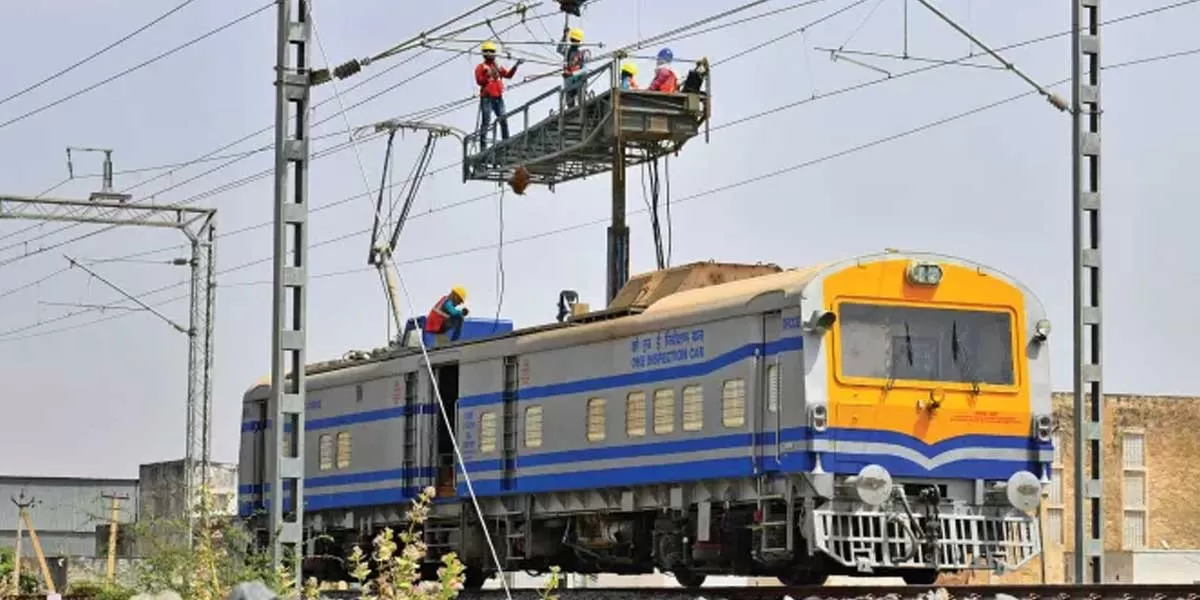
ITMS is a state-of-the-art system installed on Track Recording Cars (TRCs), capable of recording and monitoring various track parameters in real-time while traveling at speeds ranging from 20 km/h to 200 km/h. By incorporating advanced technologies, ITMS ensures the safe and smooth operation of the Indian Railways network.

The system features several innovations, such as contactless laser sensors that assess track alignment and geometry, high-speed cameras for identifying track defects, and light detection and ranging (LiDAR) for 3D mapping of the track surface.

The data collected by the onboard sensors is processed through advanced analytics software and integrated into the Track Management System (TMS). This provides railway officials with detailed reports on track conditions, accessible through the TMS portal.

According to the release, the ITMS is composed of critical subsystems that analyze track conditions. These include systems that measure track geometry with laser sensors and cameras, monitor rail wear, and assess parameters like gauge, cant, and alignment.

ITMS was first introduced during 2022-23 and 2023-24, with three ITMS units already operational across Indian Railways.

These units form part of a broader fleet of seven TRCs, which are set to monitor approximately 2.54 lakh kilometers of track in the fiscal year 2024-25. The supplier firm will maintain and operate the ITMS systems for seven years, ensuring long-term reliability and continuous updates to the technology.

The deployment of ITMS represents a significant milestone in modernizing India's railway infrastructure. By utilizing real-time data for track condition monitoring and predicting maintenance needs, ITMS significantly enhances both safety and operational efficiency. As the technology evolves, ITMS will be central to ensuring the sustainability and safety of the country's expansive railway network, the statement said.

The Railway Minister also emphasized that the introduction of ITMS aligns with the government's goal of leveraging technology to create smarter, safer, and more efficient railway operations, benefiting not only trackmen but all passengers who rely on the railway system.

Union Railway Minister Ashwini Vaishnaw has unveiled the plan to implement the Integrated Track Monitoring System (ITMS) across all railway zones, a step aimed at modernising India's railway infrastructure, as per an official statement. The initiative is designed to enhance the safety and efficiency of India's vast railway network by using cutting-edge technology to improve track inspections and maintenance processes. At a New Delhi Station event, the Minister underscored the importance of modernizing technology to enhance the working conditions for trackmen, the key personnel responsible for maintaining the tracks. Vaishnaw explained that the ITMS will provide trackmen with real-time, precise data, making their work safer, more efficient, and more manageable. ITMS is a state-of-the-art system installed on Track Recording Cars (TRCs), capable of recording and monitoring various track parameters in real-time while traveling at speeds ranging from 20 km/h to 200 km/h. By incorporating advanced technologies, ITMS ensures the safe and smooth operation of the Indian Railways network. The system features several innovations, such as contactless laser sensors that assess track alignment and geometry, high-speed cameras for identifying track defects, and light detection and ranging (LiDAR) for 3D mapping of the track surface. The data collected by the onboard sensors is processed through advanced analytics software and integrated into the Track Management System (TMS). This provides railway officials with detailed reports on track conditions, accessible through the TMS portal. According to the release, the ITMS is composed of critical subsystems that analyze track conditions. These include systems that measure track geometry with laser sensors and cameras, monitor rail wear, and assess parameters like gauge, cant, and alignment. ITMS was first introduced during 2022-23 and 2023-24, with three ITMS units already operational across Indian Railways. These units form part of a broader fleet of seven TRCs, which are set to monitor approximately 2.54 lakh kilometers of track in the fiscal year 2024-25. The supplier firm will maintain and operate the ITMS systems for seven years, ensuring long-term reliability and continuous updates to the technology. The deployment of ITMS represents a significant milestone in modernizing India's railway infrastructure. By utilizing real-time data for track condition monitoring and predicting maintenance needs, ITMS significantly enhances both safety and operational efficiency. As the technology evolves, ITMS will be central to ensuring the sustainability and safety of the country's expansive railway network, the statement said. The Railway Minister also emphasized that the introduction of ITMS aligns with the government's goal of leveraging technology to create smarter, safer, and more efficient railway operations, benefiting not only trackmen but all passengers who rely on the railway system.

Next Story
Infrastructure Transport

MMRDA advances 250 m on Orange Gate–Marine Drive tunnel

The Mumbai Metropolitan Region Development Authority (MMRDA) has completed 250 m of underground tunnelling for the Orange Gate–Marine Drive Urban Road Tunnel using India’s largest slurry shield tunnel boring machine (TBM) deployed for an urban road project.The project involves twin tunnels extending over 7 km beneath critical transport corridors, including Central Railway, Western Railway and Metro Line 3. The work requires high-precision engineering to navigate densely developed urban infrastructure.Once completed, the tunnel is expected to reduce travel time between Orange Gate and Marin..

Next Story
Infrastructure Urban

Hindustan Zinc Pays Rs 188.46 Billion in FY26

Hindustan Zinc contributed Rs 188.46 billion to the public exchequer in FY 2025-26, according to its 9th Tax Transparency Report. The contribution, equivalent to 46 per cent of the company’s revenue, included direct and indirect taxes, government royalties, dividends to the Government of India, withholding taxes and other statutory levies.The company’s five-year cumulative contribution to the exchequer stood at Rs 915.72 billion. In FY26, Hindustan Zinc reported revenue of Rs 408.44 billion, EBITDA of Rs 221.62 billion and profit after tax of Rs 138.32 billion. It also achieved its highest..

Next Story
Infrastructure Urban

World of Concrete India 2026 Opens in Mumbai

Informa Markets in India will host the 12th edition of World of Concrete India 2026 from 3–5 June 2026 at the Bombay Exhibition Centre, Mumbai. The specialised B2B exhibition will bring together manufacturers, suppliers, contractors, developers, architects, consultants, infrastructure companies, project leaders and government stakeholders.The event is expected to feature over 350 brands and more than 18,000 trade professionals. It will cover concrete and cement, dry mortar, precast technologies, formwork, construction chemicals, industrial and commercial flooring, scaffolding, safety solutio..

Advertisement

Subscribe to Our Newsletter

Get daily newsletters around different themes from Construction world.

STAY CONNECTED

Advertisement

Advertisement

Advertisement