+
Railways Follow Up Land Acquisition for Angamali Sabarimala Line
RAILWAYS & METRO RAIL

Railways Follow Up Land Acquisition for Angamali Sabarimala Line

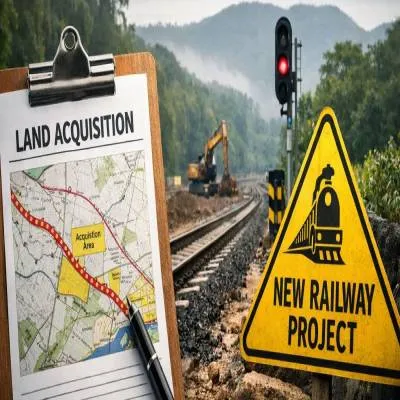
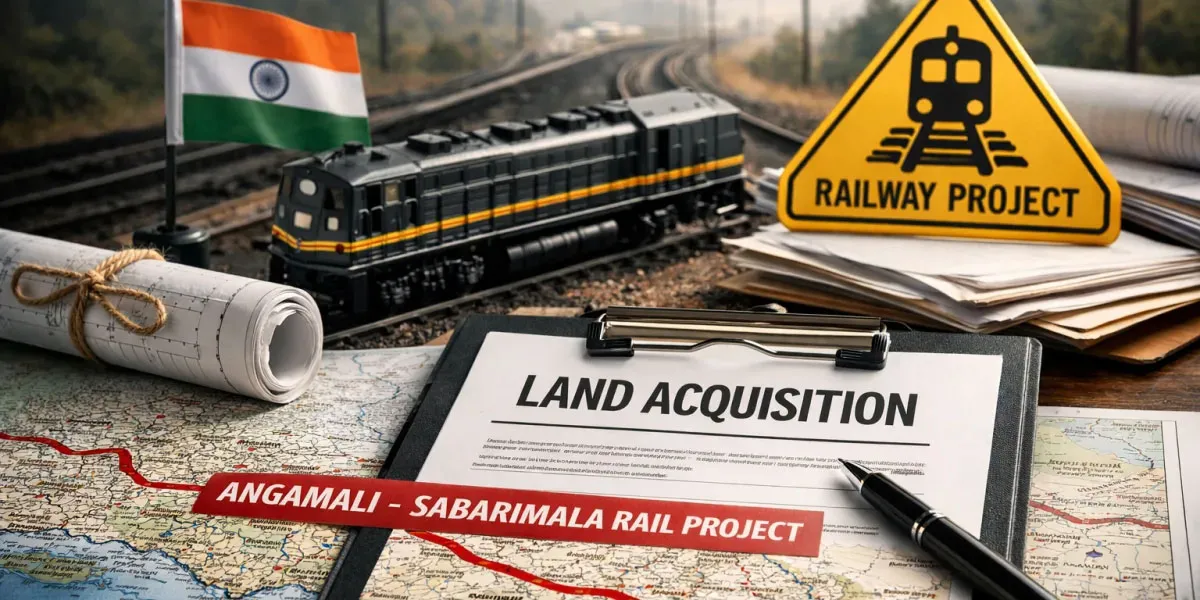
The Ministry of Railways said it is following up land acquisition proceedings initiated by the Government of Kerala for the Angamali–Sabarimala new line project, which had been kept under abeyance in September 2019. The project was sanctioned in 1997–98 on a 50:50 cost sharing basis and preliminary works on the Angamali–Kaladi and Kaladi–Perumbavoor sections were undertaken before progress halted amid protests over land acquisition, alignment disputes and legal cases. Survey work on an alternative Chengannur–Pamba alignment was carried out but was found not feasible.

The estimate for the Angamali–Sabarimala via Erumeli project was updated at Rs 38.01 billion (bn) and submitted to the Government of Kerala for acceptance and willingness to share the cost. The Railways requested unconditional consent and urged the State to acquire land using its 50 per cent share so that work can proceed. Following the request, the State has initiated land acquisition proceedings and the Ministry is following up to facilitate progress.

Tirur in Kerala is presently served by 90 train services, including the 20631/20632 Mangaluru Central–Thiruvananthapuram Central Vande Bharat Express, and additional stoppages have been provided to enhance connectivity. Stoppage of the 22475/22476 Hisar–Coimbatore Express has been provided at Tirur with effect from 28 January 2026 and the 16329/16330 Nagercoil–Mangaluru Junction Amrit Bharat Express was introduced with effect from 27 January 2026. The provision of stoppages depends on traffic justification, operational feasibility including availability of extra time and matching infrastructure such as platform length.

Budget allocation for infrastructure and safety works falling fully or partly in Kerala has risen markedly, from Rs 3.72 bn per year in 2009–14 to Rs 30.42 bn in 2025–26, which represents more than eight times increase. The former amount corresponds to Rs 3.72 bn per year and the latter corresponds to Rs 30.42 bn. Under the Amrit Bharat Station Scheme, 1,337 stations have been identified for development and works have been completed at 172 stations to date, the Minister informed the Rajya Sabha in a written reply.

The Ministry of Railways said it is following up land acquisition proceedings initiated by the Government of Kerala for the Angamali–Sabarimala new line project, which had been kept under abeyance in September 2019. The project was sanctioned in 1997–98 on a 50:50 cost sharing basis and preliminary works on the Angamali–Kaladi and Kaladi–Perumbavoor sections were undertaken before progress halted amid protests over land acquisition, alignment disputes and legal cases. Survey work on an alternative Chengannur–Pamba alignment was carried out but was found not feasible. The estimate for the Angamali–Sabarimala via Erumeli project was updated at Rs 38.01 billion (bn) and submitted to the Government of Kerala for acceptance and willingness to share the cost. The Railways requested unconditional consent and urged the State to acquire land using its 50 per cent share so that work can proceed. Following the request, the State has initiated land acquisition proceedings and the Ministry is following up to facilitate progress. Tirur in Kerala is presently served by 90 train services, including the 20631/20632 Mangaluru Central–Thiruvananthapuram Central Vande Bharat Express, and additional stoppages have been provided to enhance connectivity. Stoppage of the 22475/22476 Hisar–Coimbatore Express has been provided at Tirur with effect from 28 January 2026 and the 16329/16330 Nagercoil–Mangaluru Junction Amrit Bharat Express was introduced with effect from 27 January 2026. The provision of stoppages depends on traffic justification, operational feasibility including availability of extra time and matching infrastructure such as platform length. Budget allocation for infrastructure and safety works falling fully or partly in Kerala has risen markedly, from Rs 3.72 bn per year in 2009–14 to Rs 30.42 bn in 2025–26, which represents more than eight times increase. The former amount corresponds to Rs 3.72 bn per year and the latter corresponds to Rs 30.42 bn. Under the Amrit Bharat Station Scheme, 1,337 stations have been identified for development and works have been completed at 172 stations to date, the Minister informed the Rajya Sabha in a written reply.

Next Story
Infrastructure Urban

Implementation Status of Jal Jeevan Mission

Since August 2019 the Government has implemented Jal Jeevan Mission to provide assured potable water through household tap connections in rural India. At the start of the mission only 32.3 million (mn) rural households, representing 16.7 per cent, were reported to have tap water connections. States and union territories have reported that 125.8 mn additional rural households have since been provided with tap connections. As a result, of about 193.6 mn rural households roughly 158.2 mn, or 81.71 per cent, are reported to have tap water supply at home.\n\nThe State, district and village level st..

Next Story
Infrastructure Urban

Jal Jeevan Mission Reaches Eighty One Per Cent Rural Coverage

The Government reported substantial progress under the Jal Jeevan Mission, launched in August 2019 to provide tap water to every rural household. At launch only 32.3 million (mn) rural households had tap connections and states and Union territories reported provision of 125.8 mn additional households by March 2026. Consequently, out of about 193.6 mn rural households around 158.2 mn, or 81.71 per cent, are reported to have tap water at home. The Finance Minister announced extension of the mission until 2028 in the 2025-26 budget speech. The Swachh Bharat Mission Grameen, launched in October 20..

Next Story
Infrastructure Urban

Empowering Local Governance for Sustainable Rural Water Supply

The Ministry of Jal Shakti has aligned the Jal Jeevan Mission (JJM) with the 73rd Amendment to strengthen village level planning and community ownership of water supply. Gram Panchayats, village water and sanitation committees and Pani Samitis are to plan, implement, manage and maintain piped water systems, with gram sabha processes formalising handover and oversight. Implementation support agencies including non government organisations, community based organisations and self help groups have been empanelled to train local committees and promote women participation. Under JJM, the department ..

Advertisement

Subscribe to Our Newsletter

Get daily newsletters around different themes from Construction world.

STAY CONNECTED

Advertisement

Advertisement

Advertisement