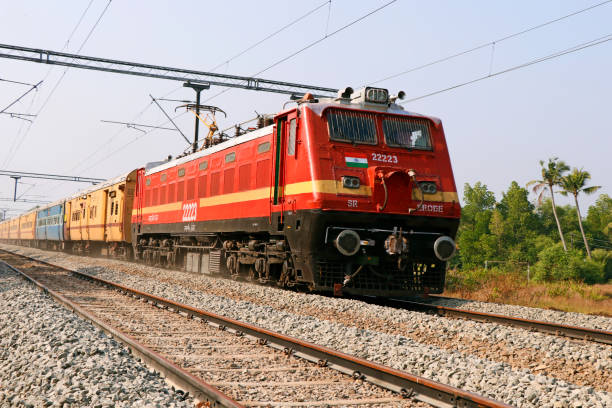
Railways to cut travel time between New Delhi-Kolkata by 2.5 hours
RAILWAYS & METRO RAIL

Railways to cut travel time between New Delhi-Kolkata by 2.5 hours

The Indian Railways will shorten the travel time between New Delhi-Kolkata by at least two and a half hours by improving the highest speed of trains to 160 km per hour.

The project along the 1,525-km route will be carried out under project Mission Raftar, which strives to decrease travel time along busy stretches by running passenger trains at 160 km per hour speed. An identical plan under the project is already being executed, along the 1,483-km long New Delhi-Mumbai route.

Presently, the Rajdhani Express is the fastest train between New Delhi-Howrah. It takes 17.05 hours to finish the journey through Gaya in Bihar.

Passengers travelling along the New Delhi-Howrah route will be able to reach their destination at least two and a half hours to three hours before as the train speed will be improved from the current 85 km per hour to a maximum of 160 km per hour.

With the execution of Mission Raftar, the Rajdhani Express operating along this route will reach its destination in less than 15 hours.

The highest speed on this route was increased to 130 km per hour in July 2020. Work for increasing the sectional speed to 160 km per hour along New Delhi-Howrah has been approved, and efforts to enhance the tracks via overhead equipment modification, fencing, and automatic train protection are in different stages of progress.

The Rajdhani Express between Howrah-New Delhi operates at an average speed of 85 km per hour, which is expected to grow to 160 km per hour.

While over two hours is likely to be saved, the exact decreased travel time will be known only when an upsurge in speed is implemented and the timetable of trains is modified keeping in mind these elements, the official said.

Officials said the travel time taken by Rajdhani between New Delhi-Mumbai would also be decreased by over an hour. At least 35% of the work to attain this purpose has already been completed.

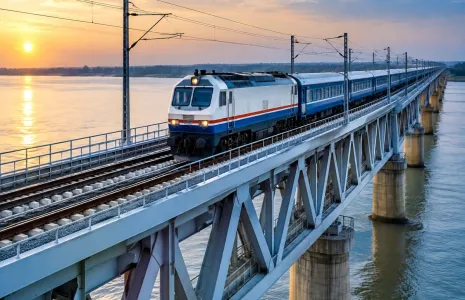
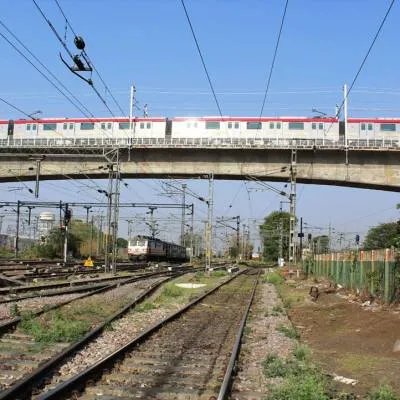
Image Source

Also read: Railway Board plans to improve various rail routes to 160 kmph

The Indian Railways will shorten the travel time between New Delhi-Kolkata by at least two and a half hours by improving the highest speed of trains to 160 km per hour. The project along the 1,525-km route will be carried out under project Mission Raftar, which strives to decrease travel time along busy stretches by running passenger trains at 160 km per hour speed. An identical plan under the project is already being executed, along the 1,483-km long New Delhi-Mumbai route. Presently, the Rajdhani Express is the fastest train between New Delhi-Howrah. It takes 17.05 hours to finish the journey through Gaya in Bihar. Passengers travelling along the New Delhi-Howrah route will be able to reach their destination at least two and a half hours to three hours before as the train speed will be improved from the current 85 km per hour to a maximum of 160 km per hour. With the execution of Mission Raftar, the Rajdhani Express operating along this route will reach its destination in less than 15 hours. The highest speed on this route was increased to 130 km per hour in July 2020. Work for increasing the sectional speed to 160 km per hour along New Delhi-Howrah has been approved, and efforts to enhance the tracks via overhead equipment modification, fencing, and automatic train protection are in different stages of progress. The Rajdhani Express between Howrah-New Delhi operates at an average speed of 85 km per hour, which is expected to grow to 160 km per hour. While over two hours is likely to be saved, the exact decreased travel time will be known only when an upsurge in speed is implemented and the timetable of trains is modified keeping in mind these elements, the official said. Officials said the travel time taken by Rajdhani between New Delhi-Mumbai would also be decreased by over an hour. At least 35% of the work to attain this purpose has already been completed. Image Source Also read: Railway Board plans to improve various rail routes to 160 kmph

Next Story
Infrastructure Urban

India, Russia Hold 22nd Defence Commission Meet in New Delhi

Raksha Mantri Rajnath Singh and Russia’s Defence Minister Mr Andrei Belousov co-chaired the 22nd India–Russia Inter-Governmental Commission on Military and Military Technical Cooperation (IRIGC-M&MTC) at the Manekshaw Centre in New Delhi on 4 December 2025. Both sides reaffirmed that the longstanding bilateral relationship is anchored in mutual trust, shared principles and deep respect. The meeting comes ahead of the 23rd India–Russia Annual Summit between Prime Minister Narendra Modi and President Vladimir Putin.During the session, Rajnath Singh reiterated India’s commitment t..

Next Story
Infrastructure Urban

ITU–TRAI Workshop on QoS and QoE Begins in Bhubaneswar

The Telecom Regulatory Authority of India (TRAI), in collaboration with the International Telecommunication Union (ITU), inaugurated the ITU–TRAI Workshop on Performance, Quality of Service and Quality of Experience in Bhubaneswar. The two-day international programme convened National Regulatory Authorities (NRAs), service providers and technical specialists from around the world to strengthen collaborative approaches to telecom service-quality frameworks. The inaugural ceremony featured a lamp-lighting, followed by a welcome address from Atul Kumar Chaudhary, Secretary, TRAI, and the inaugu..

Next Story
Infrastructure Urban

CEC Gyanesh Kumar Addresses UI, Assumes IDEA Council Chairship

Chief Election Commissioner of India, Shri Gyanesh Kumar, delivered an address at the Swedish Institute of International Affairs (UI) in Stockholm, where he participated in a round-table discussion titled ‘Inside India’s Democracy’. Former Swedish Foreign Minister Ms Ann Linde joined him as a co-speaker during the session. The engagement formed part of his official visit to Sweden, which concludes later today. Shri Gyanesh Kumar assumed the Chairship of the Council of Member States of the International Institute for Democracy and Electoral Assistance (International IDEA) for the year 20..

Advertisement

Subscribe to Our Newsletter

Get daily newsletters around different themes from Construction world.

STAY CONNECTED

Advertisement

Advertisement

Advertisement

Advertisement

Open In App