
Shaping Mumbai’s evolution with MMRDA
RAILWAYS & METRO RAIL

Shaping Mumbai’s evolution with MMRDA

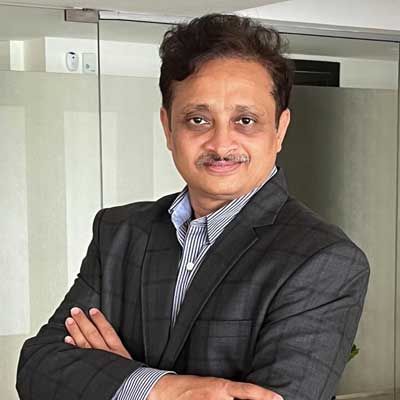
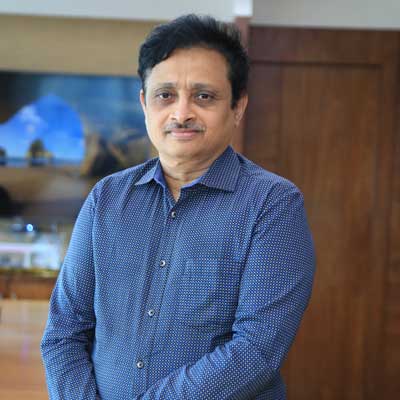
In an exclusive interaction with CW, the go-getter and highly inspirational SVR Srinivas, Metropolitan Commissioner, MMRDA, shares the various challenges faced, rigorous project management practices implemented, thrust given to technological advancements and recent developments on the various metro lines commissioned in Mumbai.
Read on to decode the mind of the man who is set to shape Mumbai’s evolution...

Please share your journey since taking charge.
When I took on the mantle of the chief, MMRDA had already achieved a lot of milestones. And it is my highest privilege now to take this legacy forward. I am a firm believer in the philosophy of enjoying the journey, rather than worrying about the goals, and I am enjoying every bit of this journey. It is a given that there will be a certain set of obstacles on every path we choose. As long as we work, obstacles will always be there, and they will only stop when we stop working. It is how we respond to these obstacles that gives us a sense of satisfaction, and sets us apart from the rest.

Making the first phase of metro line 2A and metro line 7 operational this April, after these many years, has been among the key milestones for us, while the second phase is slated to be commissioned in the next couple of months. This year itself, we completed and commissioned around three to four major flyovers within the Mumbai Metropolitan Region (MMR) which was a big boost for the residents of Mumbai. Additionally, we have managed to conceptualise certain major projects as well. Notably, we have launched a well-thought-out long-term vision plan for the MMR, in addition to the transportation plan that will be valid for the next 20 years. The third part that completes this tripod is managing resource mobilisation for the financial closures of various projects commissioned by MMRDA. All these form a strong foundation for reaching MMRDA’s goals.

What is your mantra for adhering to stringent project implementation?
At MMRDA, we have well-equipped, capable and time-tested teams. The three pillars of our strong unit comprise the project, planning and finance departments. These highly efficient teams have been instrumental in delivering the desired results for MMRDA on all fronts. With the project management team, we started with some of the best practices in the industry. We have a stand-up meeting every day for each ongoing projects. Similarly, we also have a catch-up plan for all projects. We make swift use of innovative tools like s-curve, PERT, CPM, etc, which are not generally used in government organisations. We rigorously follow the best global practices to ensure all our projects take off smoothly.

To read the full interview, CLICK HERE.

In an exclusive interaction with CW, the go-getter and highly inspirational SVR Srinivas, Metropolitan Commissioner, MMRDA, shares the various challenges faced, rigorous project management practices implemented, thrust given to technological advancements and recent developments on the various metro lines commissioned in Mumbai. Read on to decode the mind of the man who is set to shape Mumbai’s evolution... Please share your journey since taking charge. When I took on the mantle of the chief, MMRDA had already achieved a lot of milestones. And it is my highest privilege now to take this legacy forward. I am a firm believer in the philosophy of enjoying the journey, rather than worrying about the goals, and I am enjoying every bit of this journey. It is a given that there will be a certain set of obstacles on every path we choose. As long as we work, obstacles will always be there, and they will only stop when we stop working. It is how we respond to these obstacles that gives us a sense of satisfaction, and sets us apart from the rest. Making the first phase of metro line 2A and metro line 7 operational this April, after these many years, has been among the key milestones for us, while the second phase is slated to be commissioned in the next couple of months. This year itself, we completed and commissioned around three to four major flyovers within the Mumbai Metropolitan Region (MMR) which was a big boost for the residents of Mumbai. Additionally, we have managed to conceptualise certain major projects as well. Notably, we have launched a well-thought-out long-term vision plan for the MMR, in addition to the transportation plan that will be valid for the next 20 years. The third part that completes this tripod is managing resource mobilisation for the financial closures of various projects commissioned by MMRDA. All these form a strong foundation for reaching MMRDA’s goals. What is your mantra for adhering to stringent project implementation? At MMRDA, we have well-equipped, capable and time-tested teams. The three pillars of our strong unit comprise the project, planning and finance departments. These highly efficient teams have been instrumental in delivering the desired results for MMRDA on all fronts. With the project management team, we started with some of the best practices in the industry. We have a stand-up meeting every day for each ongoing projects. Similarly, we also have a catch-up plan for all projects. We make swift use of innovative tools like s-curve, PERT, CPM, etc, which are not generally used in government organisations. We rigorously follow the best global practices to ensure all our projects take off smoothly.To read the full interview, CLICK HERE.

Next Story
Infrastructure Transport

Pune To Build Nine Km Link Road Between Highways

The Pune Municipal Corporation (PMC) has decided to appoint an expert to plan the development of a nine km long, 60 metre wide road from Khadi Machine chowk to Wadki chowk as an extension to the Katraj-Kondhwa road to link the Mumbai-Satara and Pune-Solapur national highways. The scheme is intended to divert heavy vehicle traffic away from the city and improve access between the two arterial routes. The project has been prioritised by the PMC and forms part of a larger set of schemes in which 19 roads have been identified for development at a combined cost of Rs 9.82 billion (bn) to address c..

Next Story
Infrastructure Transport

Barabanki Bahraich Six Lane Highway Approved in Uttar Pradesh

The Uttar Pradesh government has approved construction of a new six-lane highway linking Barabanki and Bahraich as part of National Highway 927, and the cabinet has cleared the project. The alignment will pass through Mustafabad and Kaiserganj and extend for about 101.5 km, creating a key corridor for local and long-distance movement. The National Highways Authority of India will oversee the work and has signalled the scheme is intended to strengthen regional connectivity and cross-border access to Nepal. The project carries an estimated total cost of Rs 69,690 million, equivalent to Rs 69.69..

Next Story
Infrastructure Transport

Toll At Kharegaon Likely As Highway Upgrade Nears Completion

A section of the highway at Kharegaon has undergone an upgrade and is approaching completion, and authorities have indicated plans for a toll to be introduced once works finish. The project has focused on strengthening the carriageway, improving drainage and upgrading intersections to enhance safety and capacity. Officials have said the toll will be used to recover construction costs and fund ongoing maintenance. The upgrade included resurfacing of the pavement, widening of certain stretches and installation of modern signage and lighting to reduce accident risk. Contractors completed most ma..

Advertisement

Subscribe to Our Newsletter

Get daily newsletters around different themes from Construction world.

STAY CONNECTED

Advertisement

Advertisement

Advertisement